Rights Group Says Mines Have Killed or Injured Nearly 3,000 Yemeni Civilians in Eight Years
 Yemen Herald News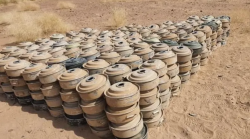
Landmines and improvised explosive devices have killed or injured nearly 3,000 civilians in Yemen over the past eight years, a third of them children, according to the Mayyun Organization for Human Rights. The Aden-based group set out the figures in a statement issued on 5 April, a day after the world marked the International Day for Mine Awareness, and warned that mine-related incidents continue to occur almost daily, endangering lives across much of the country.
In its accounting, the organisation said that between 2018 and March 2026 mines and explosive devices had killed 1,367 civilians and wounded 1,622 others, with children making up just over 30 percent of the injured. Mayyun placed full responsibility for the widespread planting of these devices on the Houthi movement, whose forces control large areas of the north and have been repeatedly accused by monitoring groups of laying mines in farmland, roads and residential districts. The organisation said the pattern of incidents pointed to contamination on a scale that will take many years to address, even in areas no longer touched by active fighting.
The toll on the young is especially stark. Working alongside demining partners, Mayyun has reported that more than 6,700 children have been killed or injured by landmines since the start of the current conflict, a figure that captures both the immediate deaths and the life-altering wounds, including amputations, that survivors carry for the rest of their lives. Mines do not distinguish between combatants and civilians, and children playing or herding animals in contaminated ground are among the most frequent victims.
The danger is being compounded by the changing climate. Mayyun and other groups have warned that floods and heavy rains increasingly wash mines from the places where they were originally laid into populated areas, scattering them unpredictably. This movement makes casualties more random and complicates both the immediate humanitarian response and the longer-term work of mapping and clearing contaminated land, since cleared areas can become dangerous again after a single season of severe weather.
Concern is also mounting over the maritime dimension of the threat. Rising tensions in the Red Sea have heightened fears that naval mines could be deployed as weapons of war, endangering not only coastal communities but also the international shipping lanes that carry a large share of global trade through the region. Any serious contamination of these waters would compound the risks already facing vessels in one of the world’s most sensitive maritime corridors.
Against this background, Mayyun has called for an immediate halt to the use of mines and for all parties to abide by international humanitarian law. The organisation urged that clearance operations be accelerated, particularly in densely populated residential districts, in agricultural land where farmers must work the soil to survive, and in coastal areas where the naval threat is most acute. It also pressed for international action to counter the danger of sea mines and to hold those responsible for laying them to account.
Beyond clearance, the group stressed the need for comprehensive support for those who survive mine incidents. Victims frequently require long-term medical care, physical rehabilitation and prosthetic limbs, as well as psychosocial assistance to help them cope with trauma and disability. In a country whose health system has been hollowed out by years of war, providing that level of sustained care is a formidable challenge, and many survivors are left without the help they need to rebuild their lives.
Amid the grim statistics, Mayyun pointed to progress on the ground, acknowledging the demining work carried out under the Saudi-funded Masam project. The organisation said the initiative had removed more than 551,000 landmines, items of unexploded ordnance and other explosive devices from Yemeni soil. Launched in 2018, Masam deploys trained clearance teams across the country and has become one of the largest humanitarian demining operations in the region, though the scale of contamination means the task is far from complete. The project is financed through Saudi Arabia’s King Salman Humanitarian Aid and Relief Centre, and its teams routinely publish weekly tallies of the devices they recover, ranging from small anti-personnel mines to larger improvised charges built to destroy vehicles.
The mine crisis sits within a wider humanitarian emergency produced by a war that escalated in 2015. Years of fighting have shattered infrastructure, driven millions from their homes and left the country reliant on outside aid, while recurring outbreaks of cholera and measles add to the strain. Humanitarian agencies estimate that more than 18 million Yemenis require some form of assistance, a population living with layered dangers of which mines are only one.
Mayyun and other advocates argue that without immediate and coordinated action, the cycle of death and injury will continue for years, long after any ceasefire is agreed. Mines and unexploded ordnance can remain lethal for decades, quietly contaminating fields and neighbourhoods until they are found and destroyed. For the organisation, the message accompanying this year’s mine-awareness observance was blunt: protecting Yemeni civilians will require not only an end to the laying of new devices, but a sustained international commitment to clearing those already in the ground and caring for the people they have harmed.
About the Author