Al-Alimi Praises Egypt’s Role in Regional Stability in Meeting With Its Ambassador
 Yemen Herald News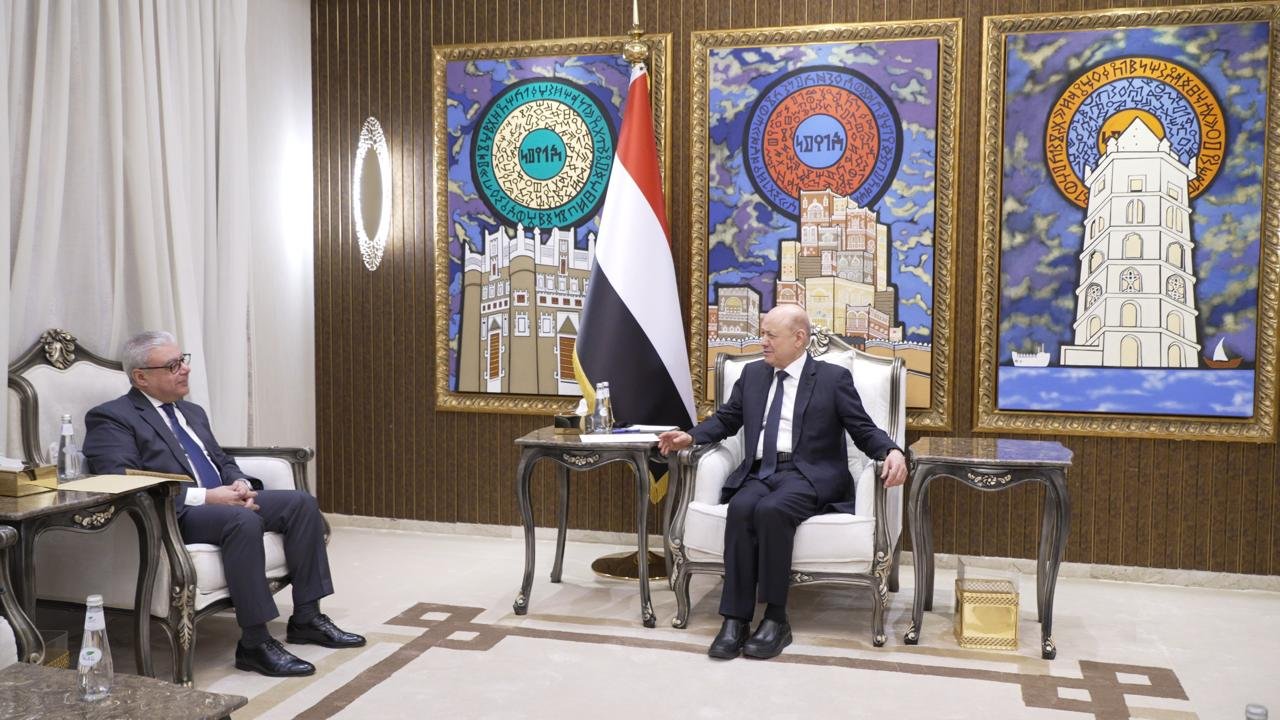
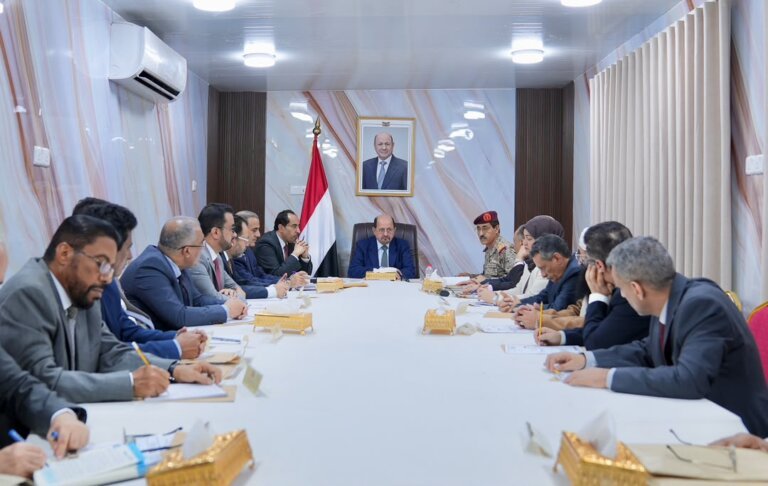
Yemen’s President Rashad al-Alimi, who chairs the Presidential Leadership Council, has praised Egypt for what he described as its significant contribution to security and stability across the region during a meeting with Egypt’s ambassador to Yemen, Ihab Ahmed Abu Srie. In his remarks, al-Alimi emphasised the depth of relations between Aden and Cairo and expressed gratitude for Egyptian support through the successive phases of Yemen’s long civil war and political upheaval, framing the relationship as a cornerstone of his government’s regional diplomacy.
Al-Alimi has led the Presidential Leadership Council since it was formed in April 2022, when Yemen’s internationally recognised government was restructured to bring together a range of anti-Houthi factions under a single body. The eight-member council was tasked with unifying military and political decision-making and negotiating an end to a war that has fractured the country. Much of its leadership operates from the interim capital, Aden, as it struggles to assert authority over territory divided between rival forces and to present a united front to the outside world.
In recent months, al-Alimi has pointed to what he presents as tangible progress in unifying the security and military structures under his council’s authority, including steps to withdraw armed forces and factions from Aden and other main cities. Those moves are intended to reduce the internal fragmentation that has long undermined the recognised government, and the president has briefed the ambassadors of countries sponsoring Yemen’s political process on such developments as he seeks to demonstrate momentum toward a more coherent state.
The Egyptian envoy, Abu Srie, presented his credentials to al-Alimi at al-Ma’shiq Palace in Aden earlier in his posting, and subsequent meetings between the two have served to keep channels of communication open. In the latest discussion, al-Alimi conveyed appreciation for what he called Egypt’s steadfast backing of the Yemeni people, and both sides pointed to a shared reading of the challenges facing the wider Middle East as the basis for continued coordination.
Egypt, for its part, has repeatedly reaffirmed its support for Yemen’s unity, independence and territorial integrity. Cairo has stressed that Yemen’s security and stability are closely bound up with its own national security and with the security of the Arab region and the Red Sea, a linkage that reflects long-standing Egyptian concern about developments on the southern approaches to the waterways it depends upon. Egyptian officials have also highlighted their country’s hosting of thousands of Yemenis who have sought refuge or opportunity there during the conflict.
The Red Sea dimension gives the relationship a concrete strategic edge. Egypt’s economy relies heavily on revenue from the Suez Canal, and the disruption to shipping caused by Houthi attacks on vessels in the Red Sea and the Gulf of Aden has cut sharply into traffic through the canal, costing Cairo substantial income. That vulnerability reinforces Egypt’s stake in restoring calm to the route and lends practical weight to its calls for a stable, unified Yemen able to help secure the surrounding waters.
Al-Alimi has also acknowledged Egypt’s broader regional diplomacy, including its role, alongside Qatar, Saudi Arabia and the United States, in efforts to broker and sustain a ceasefire in the Gaza Strip. For Yemen’s leadership, aligning with Cairo on such issues serves both to affirm solidarity on questions that resonate deeply across the Arab world and to position the recognised government within a bloc of states pursuing negotiated settlements rather than open-ended conflict. It also reflects a calculation that visible cooperation with major Arab capitals strengthens the council’s own legitimacy.
Domestically, al-Alimi used the exchange to underline his government’s push for economic reform. Despite the disruption caused by continued fighting with Houthi forces, the authorities and the Central Bank have sought to stabilise public finances, curb the collapse of the currency and ease the burden on a population worn down by years of war. Officials present these measures as evidence of resilience and as a foundation for eventual recovery, while acknowledging that the gains remain fragile in the absence of a comprehensive political settlement and steady external financing.
The meeting fit a familiar pattern of diplomacy through which the Presidential Leadership Council seeks to shore up international backing. By receiving and consulting the ambassadors of states involved in Yemen’s peace process, al-Alimi aims to keep his government visible as the legitimate interlocutor and to reassure partners that it remains committed to reform and to a negotiated end to the war. Egypt, as one of the Arab world’s most populous and diplomatically active states, is a valued audience for that message.
For both Aden and Cairo, the relationship rests on overlapping interests rather than sentiment alone. Yemen needs sustained Arab and international support to survive the war and rebuild, while Egypt needs a stable southern flank on the Red Sea to protect the trade that flows through the Suez Canal. Meetings such as the one between al-Alimi and Abu Srie are the routine machinery through which those interests are aligned, signalling continuity in a partnership that both governments regard as central to their wider strategies. Such carefully choreographed encounters rarely produce dramatic announcements, yet they matter for a government whose survival depends on demonstrating that it retains the confidence of its regional partners.
About the Author