Civilian Killed by Sniper Fire in Maqbanah District West of Taiz, Local Sources Say
 Yemen Herald News
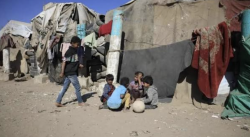
A civilian was shot dead on Saturday in the Maqbanah district west of Taiz while riding a motorcycle with his young son, according to local sources cited by Yemeni news outlets, which said the shot was fired by a sniper positioned on the Houthi side of the front line.
The sources named the man as Abdullatif Jamil and said he was hit in the head in the Al-Qash’ah area of the district and died immediately, collapsing in front of his child. No independent confirmation of the account was available, and no comment from the Houthi authorities on the incident had been reported at the time of writing. Reports of sniper fire in Taiz typically originate with local residents and with outlets aligned to the internationally recognised government, and the identification of the shooter is contested in most such cases.
Maqbanah is a large, largely rural district on the western side of Taiz governorate, on the approaches between the city and the Red Sea coastal plain. It has sat close to a static front line for much of the war, with agricultural land and the roads that cross it exposed to positions on high ground.
That configuration is what has made sniping such a persistent feature of the conflict in Taiz specifically. Where front lines have barely moved for years, fighters hold elevated positions overlooking roads, water points and farmland used daily by people who have nowhere else to go. Casualties reported from this pattern are frequently civilians going about routine tasks, and a Yemeni monitoring organisation says it has documented more than 1,800 sniper attacks on civilians in the governorate over the course of the war.
Reports of the same kind have come out of Maqbanah repeatedly. Yemeni outlets have carried accounts of a woman killed by sniper fire in the governorate, of an elderly man critically wounded, and of villagers hit while moving between hamlets, alongside reports of raids on settlements near the lines. Each individual case is difficult to verify independently, but the accumulation over years has been substantial enough that humanitarian organisations treat the western districts of Taiz as an area where civilian exposure to direct fire is a routine planning consideration rather than an exceptional risk.
Taiz city itself has been among the most heavily affected urban areas in Yemen. It was encircled in 2015, and for years the main roads in and out were closed, forcing residents onto long detours over mountain tracks. Some routes have reopened since, including the road linking the city to the industrial area of Hawban, which was reopened in 2025 after prolonged closure. The wider governorate, however, remains divided, and the reopening of a road has not removed the exposure of people living close to the lines.
Civilian casualties in Yemen have been documented over the course of the war by United Nations bodies and by Yemeni and international monitoring groups, though the count has become harder to maintain as the conflict has fragmented and access has narrowed. Alongside direct fire, landmines and unexploded ordnance remain a major cause of civilian death and injury, particularly in agricultural districts of Taiz, Hodeidah and the west of the country, where clearance work has been slow and heavily dependent on external funding.
The practical effect of sustained sniper fire is a steady contraction of ordinary life. Roads that cross exposed ground are avoided or used only at particular hours. Fields close to the lines go unfarmed, which matters in a governorate where many households depend on smallholder agriculture and where food insecurity is already severe. Schools near the front lines lose pupils whose families judge the journey too dangerous, and clinics report patients arriving late because the direct route was not usable.
Accountability for such incidents is limited. The United Nations Group of Eminent Experts on Yemen, which had been the principal international mechanism examining alleged violations by all parties, ceased operating after its mandate was not renewed in 2021. Since then, documentation has fallen largely to Yemeni organisations and to international rights groups working with restricted access, and no party to the conflict has faced a functioning judicial process for attacks on civilians.
Local violence of this kind has continued through periods when the national picture looked calmer. The truce brokered by the United Nations in 2022 reduced front-line fighting and air strikes across much of the country, but it did not end shooting along static lines, and reports of civilians killed by sniper fire in Taiz continued through the years that followed. The pattern has persisted as the wider regional confrontation has drawn attention towards the Red Sea and away from the internal fronts.
For families in Maqbanah, the consequence is a form of risk that cannot be planned around. Movement is necessary; farming, trading, taking a child to school or a relative to hospital all require crossing ground that may be observed. Residents in front-line districts have described adapting by travelling at speed, by using indirect routes, and by relying on informal warnings passed between neighbours about which stretches are being watched.
No arrest or investigation had been announced in connection with Saturday’s shooting. In the great majority of comparable incidents reported from Taiz over the past decade, none has followed.
About the Author