France condemns Taiz siege after Barrot meets Yemen’s foreign minister in Paris
 Yemen Herald News
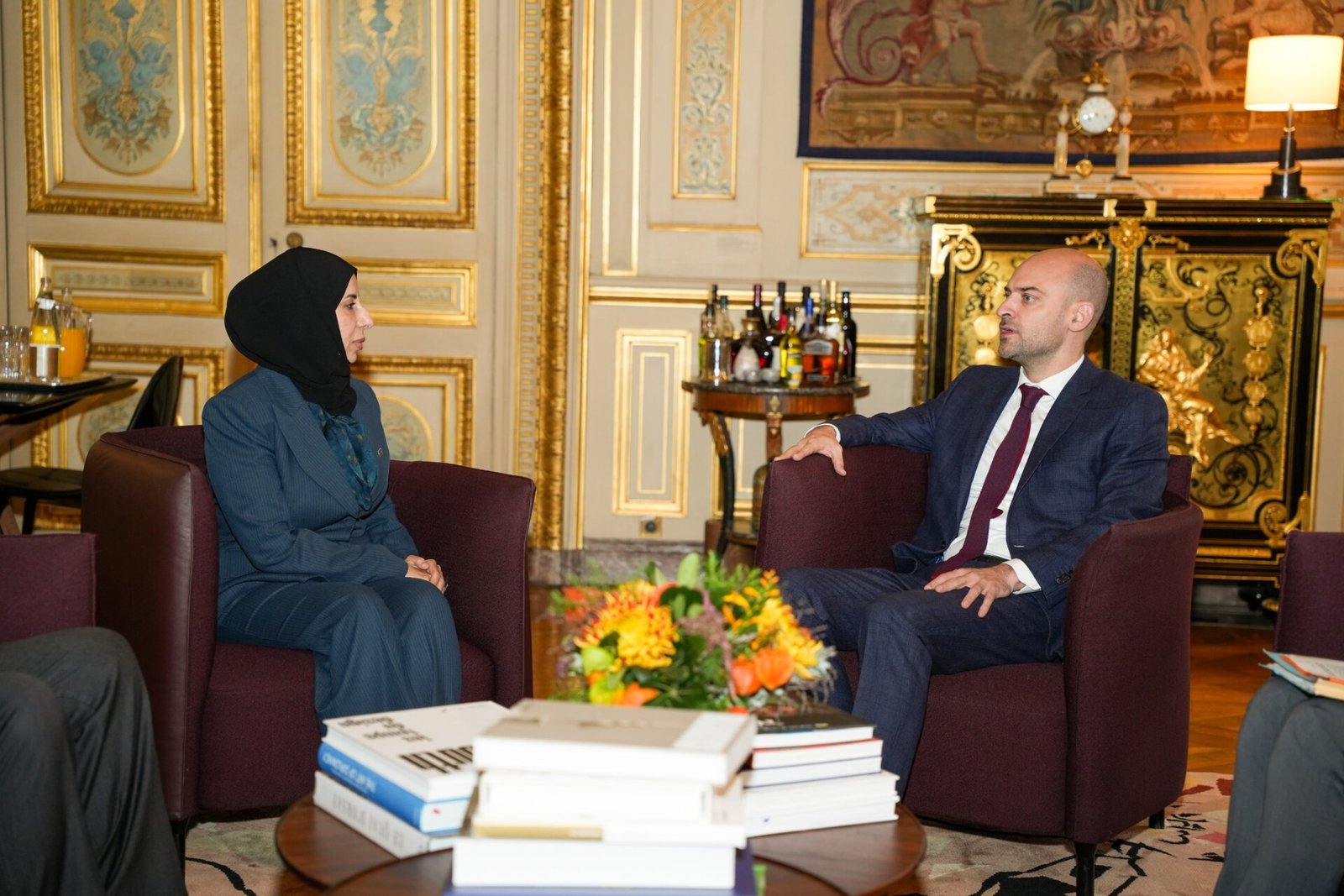
PARIS, France — France condemned the Houthi siege of Taiz as a violation of international law on Tuesday after its foreign minister met his Yemeni counterpart in Paris.
Jean-Noël Barrot, the Minister for Europe and Foreign Affairs, hosted Afrah al-Zouba on 3 November, the French foreign ministry said in a statement.
Barrot called the siege a flagrant violation of international law, according to the statement.
He also condemned what the ministry described as destabilising actions and attacks by the Houthis, listing strikes on the presidential palace in Aden on 15 and 20 October.
France reaffirmed its support for Yemen’s government and its sovereignty, the ministry said, along with humanitarian and cooperation assistance.
This account of the French position rests on that ministry statement. No independent account of it has been published.
Yemen’s state news agency gave a fuller account of the talks. Saba said al-Zouba delivered a written message from President Rashad al-Alimi to Emmanuel Macron.
The message dealt with developments in Yemen, Houthi attacks, relations between the two countries and French support, the agency said.
That account rests on Saba, the Yemeni government’s own news agency, and no independent confirmation has been published. The French statement recorded the meeting but made no reference to any message from al-Alimi.
Al-Zouba told the meeting that Yemen’s humanitarian situation had deteriorated since June, Saba reported. She pointed to the continued siege of Taiz.
She said Houthi expansion along Yemen’s western coast threatened shipping in the Red Sea and the Bab al-Mandab strait, and with it global trade and supplies of energy and food, according to the agency.
Al-Zouba also said the Houthis were cooperating with armed groups in the Horn of Africa, including al-Shabaab in Somalia, Saba reported. The Houthis have rejected similar accusations before, and Yemen Herald found no independent account of such cooperation.
The two ministers discussed French support for Yemen’s maritime and air security, the protection of vital facilities and measures to stop weapons reaching the Houthis, the agency said.
Neither side set out what that support would involve.
Al-Zouba took office in July. Al Jazeera reported at the time that she was the first woman to serve as Yemen’s foreign minister.
Conditions in Taiz have drawn repeated international criticism. Human Rights Watch said on 29 October that Houthi forces were depriving civilians in the city of food and medicine.
The rights group said separately in late October that a Houthi attack on a road into Taiz threatened the lives and welfare of civilians.
The United Nations reported the same month that aid was being blocked from entering Taiz. Amnesty International called on the Houthis to reopen the roads around the city.
Al Jazeera reported on 10 October that food and fuel prices in Taiz had risen as the siege tightened.
Al Jazeera reported on 20 October that the siege had turned deadly as the death toll in Shabwah governorate rose.
The attacks on the Aden palace cited by the French ministry killed at least five people on 15 October, Al Jazeera and France 24 reported. The government uses the Maashiq palace as its seat in the city.
Aden’s airport has been struck repeatedly. Al Jazeera reported an attack on 7 October, and Gulf News recorded two missile strikes that raised aviation safety concerns.
The Khaleej Times reported that two missiles landed about 500 metres from a Yemenia flight as it took off. No one was hurt. The airport resumed operations in late October after a suspension.
The Houthis said before that strike that a Saudi military cargo aircraft was at the airport, and told people to leave the area.
Saudi forces shot down a missile near Riyadh the same day, Al Jazeera reported.
Fighting has intensified since August. The World Health Organization recorded 1,677 deaths and 7,395 injuries linked to hostilities in that period and said about 276,000 people had been displaced.
Yemen Herald could not independently verify the tally. The agency had put the toll at 1,574 killed and 6,939 injured a week earlier.
Houthi detentions of aid workers have strained relations with the United Nations. Secretary-General António Guterres condemned the death of a UN staff member in Houthi custody on 1 November and called for an impartial investigation.
Al Jazeera reported that the death drew renewed attention to Houthi detentions of humanitarian staff.
The United Nations also reported a cholera outbreak in Yemen last month, alongside cuts to aid funding.
The United Nations Office for the Coordination of Humanitarian Affairs said in its 2026 humanitarian needs and response plan, published in March, that more than 22 million people in Yemen needed assistance.
The plan put the number of acutely food insecure at 18.3 million and the internally displaced at 5.2 million. It recorded more than 2.2 million children under five as acutely malnourished, 516,157 of them severely.
OCHA sought 2.16 billion dollars under the plan to reach 12 million people.
France has taken part in European naval operations in the Red Sea since Houthi attacks on merchant shipping began. The European Union mission Aspides, which escorts vessels through the corridor, has operated there since February 2024.
The European Union extended the mission through 2026 and widened intelligence sharing under its mandate.
Macron said in March that France would send two warships to the Red Sea.
Barrot did not say whether France would commit further naval assets.
The French statement gave no date for further talks.
About the Author


 Adel Haddad