Health minister Qasim Buhaibeh asks MSF Belgium to expand emergency services in Yemen
 Yemen Herald News
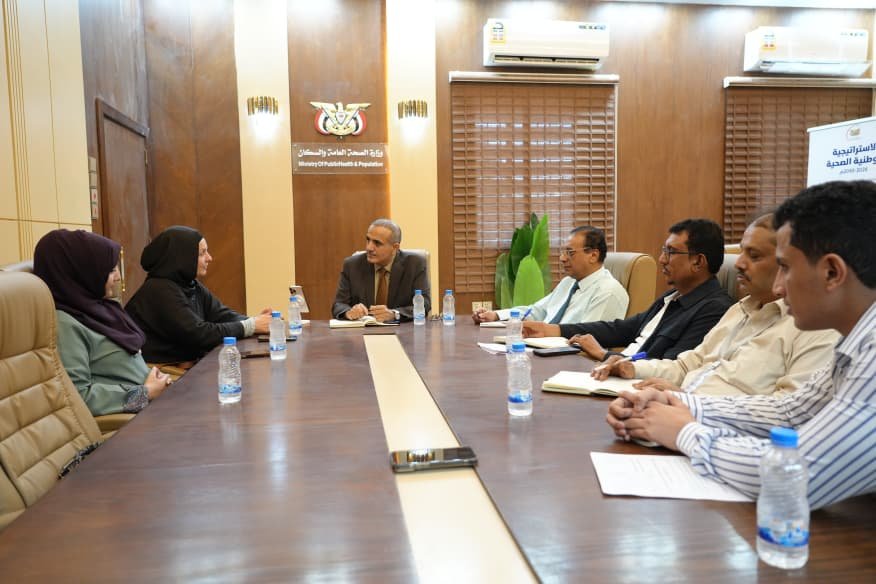
ADEN, Yemen — Yemen’s health minister asked Médecins Sans Frontières to expand emergency services in talks with the head of its Belgium mission in Aden, state news agency Saba said Sunday.
Qasim Buhaibeh, the minister of public health and population, met the head of the MSF Belgium mission to Yemen in the interim capital. Saba did not name the mission head.
The two sides reviewed the organisation’s medical and humanitarian work in Yemen, including its geographic coverage, its emergency response services and its support for health facilities, the agency said.
Buhaibeh asked MSF to direct support to emergency and ambulance services, the treatment of wounded people, and essential medicines and supplies, according to Saba.
He also asked for help with the capacity of health facilities and medical staff, and for closer coordination between the ministry and the organisation to identify needs in the field.
The talks covered the response to acute watery diarrhoea, the agency said. It said the two sides discussed treatment and prevention measures, including medicines, medical supplies and intravenous fluids.
Buhaibeh called for an integrated response covering early detection, treatment, infection prevention, epidemiological surveillance and community awareness, Saba reported.
The ministry said it would strengthen partnerships with humanitarian organisations and align their work with national health plans. It said it would work to avoid duplication, facilitate the movement of teams and remove obstacles facing them.
The account of the meeting rests on Saba, the government’s news agency, which is the only source to have reported it. No independent confirmation of what was discussed has been published.
Saba gave no figures for funding, case numbers or the facilities covered, and set no timetable for any expansion.
Aden has served as the seat of the internationally recognised government since 2015. Yemen’s health administration is divided, with a separate ministry operating in Houthi-held Sanaa.
MSF has expanded parts of its work in southern Yemen during the current escalation. The organisation said in September that it had scaled up support to the emergency room at Al-Gamhouria hospital in Aden.
More than 60 wounded people from the west coast were admitted to that hospital from Sept. 10, MSF said. It said it had helped staff triage arrivals so the most critical were treated first.
The organisation supplies the hospital’s emergency room, operating theatres and wards with emergency medicines and materials, it said.
MSF has supported the hospital’s orthopaedic department since June. That support covers nurse training, infection prevention and control, microbiology testing and safe antibiotic use, the organisation said.
It said it also helped the department prepare a plan for mass-casualty arrivals.
In Hodeidah, MSF supplied hospitals with medicines and materials for people wounded in the fighting, in coordination with health authorities. It provided trauma kits to hospitals in Taiz, Al-Bayda and Al-Jawf.
A small MSF team supports the maternity and paediatric units at the general hospital in Mocha, on the west coast, despite what the organisation described as a severe shortage of health professionals.
Twenty-three patients were receiving care at that hospital on Sept. 13, including 10 babies in neonatal intensive care, MSF said.
The organisation handed over its trauma centre in Aden in 2025, after 12 years treating and rehabilitating injured people.
MSF teams work in 10 of Yemen’s 22 governorates, according to the organisation.
It also handed the Mother and Child Hospital in Al-Houban, in Taiz governorate, to the health ministry in 2025, after running it for a decade.
The 168-bed hospital treated more than a million patients over that period, MSF said. It assisted 67,000 births and recorded more than 200,000 emergency room admissions.
Teams there treated 13,846 malnourished children and babies and carried out more than 10,000 surgical operations, the organisation said. About 185,000 children under five were treated through its ambulances.
The hospital also provided postnatal care to 133,000 patients and admitted 32,165 children to its paediatric and neonatal wards, MSF said.
The hospital served a catchment of about 940,000 people in Taiz city and the surrounding area, according to MSF. The organisation said it would support the authorities there for six months after the handover with staff incentives, medicines and other supplies.
MSF said the current escalation risks pushing Yemen’s health system past the point of recovery. It called for sustained and flexible funding.
More than 90,000 people have been newly displaced, the organisation said, citing the International Organization for Migration. It said displaced families had little access to food, clean water, shelter, sanitation and medical care.
The UN humanitarian office put displacement since August at more than 290,000 people in a report published Friday.
The office said 6,100 pregnant women were among those recently displaced, including 600 due to give birth within two weeks. It said aid agencies had reached about 249,000 people with food, hygiene supplies and emergency cash.
Yemen’s humanitarian response plan for 2026 identified more than 22 million people in need of assistance. It said 18.3 million were acutely food insecure.
More than 2.2 million children under five were acutely malnourished, including 516,157 with severe acute malnutrition, according to the plan. It sought $2.16 billion to reach 12 million people.
Al-Gamhouria is one of the main referral hospitals in Aden.
About the Author


 Adel Haddad