Human Rights Minister Mashdal Omar asks Dutch donors to raise Yemen funding
 Yemen Herald News
THE HAGUE, Netherlands — Yemen’s human rights minister asked the Netherlands and European donors on Thursday to increase humanitarian funding for Yemen.
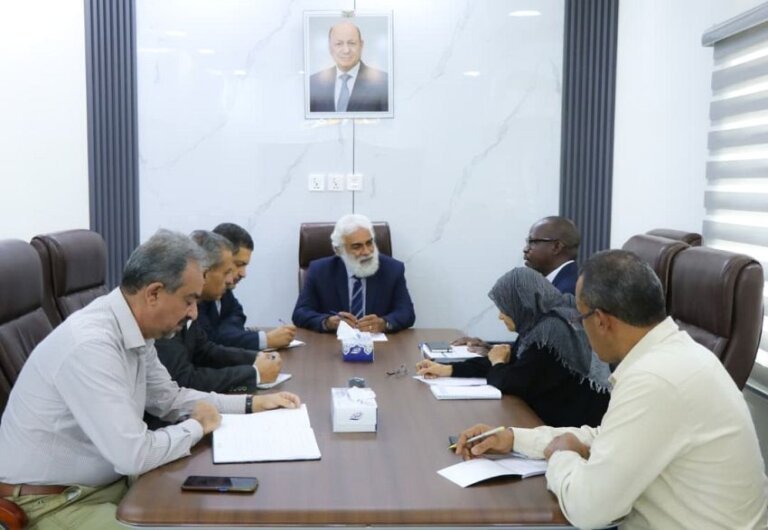
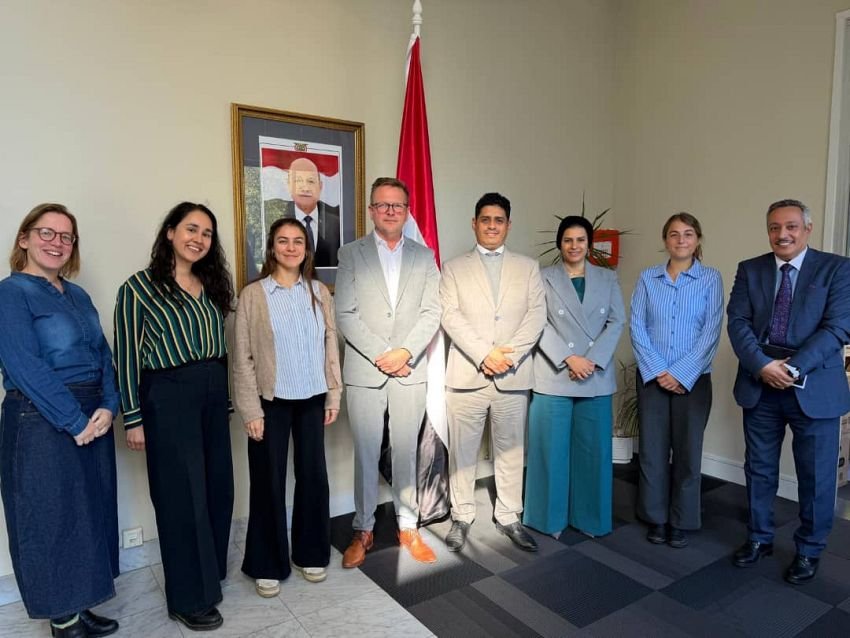
Mashdal Omar met representatives of the Dutch Coalition for Relief in Yemen in The Hague, the state news agency Saba reported.
He asked that life-saving programmes be kept running, and that children, women and the most vulnerable groups be given priority.
The meeting looked at ways to widen the response to humanitarian needs, support displaced people and build partnerships with Yemeni civil society organisations.
The coalition includes more than 14 Dutch non-governmental organisations, according to Saba.
Its representatives said Yemen would remain a priority in their programmes and in a multi-year plan starting in 2027, despite the funding pressures facing international aid.
They work in food, water, health, shelter and psychosocial support, and operate with 13 local Yemeni partner organisations.
They said they aimed to raise funding for those local partners and to bring them into planning, evaluation and decision-making.
Omar praised the coalition’s work in easing the suffering of Yemenis and supporting affected communities.
The account of the meeting rests on Saba, the agency run by the internationally recognised government. Yemen Herald found no independent report of the session.
The United Nations humanitarian needs and response plan for Yemen, published in March, put the number of people needing aid and protection this year at more than 22 million.
That figure includes 10.95 million women and girls.
It listed 18.3 million people as acutely food insecure.
More than 2.2 million children under five are acutely malnourished, the plan said, among them 516,157 with severe acute malnutrition.
It counted 5.2 million internally displaced people.
The appeal seeks 2.16 billion dollars, of which 1.6 billion is for prioritised life-saving work.
Aid agencies aim to reach 12 million people under the plan, with 9.4 million prioritised for targeted assistance on the basis of severity.
Omar is one of the ministers named in the cabinet announced in February under Prime Minister Shaya al-Zindani.
Hans Grundberg, the UN special envoy for Yemen, told the Security Council on Oct. 9 that the country had slid back into full-scale war.
Hostilities were spreading across multiple frontlines, he said.
Civilians, especially women and children, were again bearing the brunt of the violence, Grundberg told the council.
He said heavy clashes were continuing in the uplands west and south of Taiz city and extending into Lahj.
Fighting had also intensified in Marib, al-Jawf and Hajjah.
The government has appealed for aid to Taiz, where it says a Houthi siege has cut off food, fuel and medicine.
Foreign Minister Afrah al-Zouba wrote to UN and humanitarian officials on Oct. 14 warning that a tightening of the siege could affect more than four million people, counting residents of the city and displaced families in nearby districts.
Taiz is Yemen’s third-largest city. It has been under siege in some form since 2015.
Food prices in the city have risen by about 50 percent, the UN Office for the Coordination of Humanitarian Affairs said on Oct. 13.
Wheat and flour supplies could run out in under three weeks, the office said.
Petrol prices have tripled, and fuel shortages threaten the city’s water supply. Cooking gas is largely unavailable.
The World Food Programme says wheat flour stocks in Taiz are close to exhausted.
At least 600,000 people in the city depend on aid, among them more than 200,000 children, according to the agency.
The International Committee of the Red Cross says front-line hospitals in Marib, Taiz and on the Red Sea coast are taking in large numbers of war-wounded, with some admitting more than 700 casualties in a week.
“Trauma care staff are under enormous pressure,” said Feras Abusamra, an ICRC health coordinator.
Hospitals are short of surgical supplies, anaesthesia, oxygen and medicine, the organisation said.
The International Organization for Migration says more than 200,000 people have been displaced since fighting resumed in recent weeks.
The UN and its partners have given emergency assistance to nearly 148,000 people across Yemen since hostilities began in August, the humanitarian affairs office said.
The World Health Organization has recorded more than 8,000 suspected cholera cases this year, a quarter of them in the four weeks to mid-October.
It has recorded more than 22,800 suspected measles cases and 128 deaths this year. Vaccination coverage is low.
More than 130,000 migrants had entered Yemen by the end of September, the migration organisation said.
The European Union has called on the Houthis to lift the siege. It asked that food, water, medicine and fuel be allowed in, and that civilians, civilian infrastructure and aid workers be protected.
The government asked the UN to press for the blockade to be lifted immediately, for access routes to reopen and for deliveries to be sustained. It also asked for violations to be documented.
The Houthis dispute the government’s account of conditions around the city.
Grundberg told the council that 72 United Nations staff remain detained in Yemen. One detainee had been released, he said.
He noted that the International Monetary Fund has ranked Yemen the world’s poorest country.
Yemen’s war has run since 2014, when the Houthis took Sanaa. A Saudi-led coalition intervened the following year.
The Netherlands has funded relief work in Yemen through Dutch aid organisations for several years.
About the Author