Maradona’s Shadow Followed Argentina Through Their World Cup Semi-Final Win Over England
 Yemen Herald News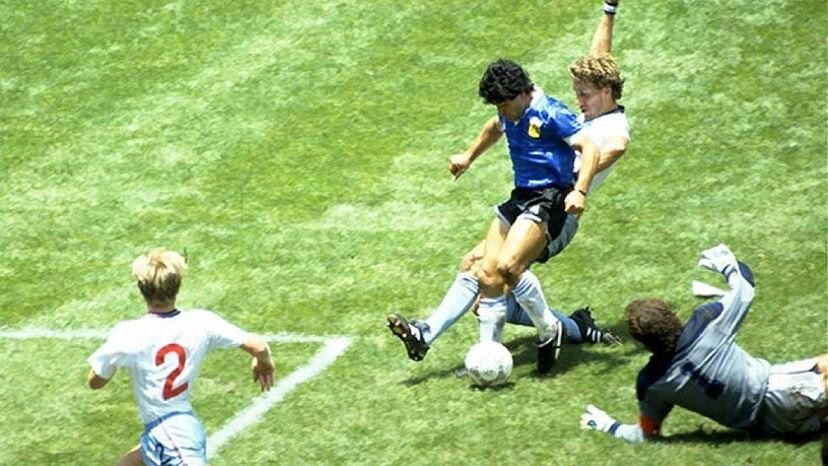
When Argentina and England met in Atlanta in the semi-finals of the 2026 World Cup, far more than a place in the final was at stake. Few fixtures in international football carry as much historical freight, and in the days before kick-off the buildup was dominated less by tactics than by memory: of Diego Maradona, of Mexico City in 1986, and of a rivalry that has never been only about sport for Argentines.
Head coach Lionel Scaloni found himself fielding those questions moments after Argentina’s quarter-final victory over Switzerland, and he worked hard to lower the temperature. He insisted the semi-final should be treated as a football match and nothing more, declining every invitation to link it to past conflicts. His restraint echoed the public line Maradona himself took before the 1986 quarter-final against England, when a similar narrative built around that game even as the historical context loomed over it.
That context was the Falklands War of 1982, a 74-day conflict between Argentina and the United Kingdom over the South Atlantic islands that Argentines call the Malvinas, which cost hundreds of lives on both sides. Four years later, Maradona beat England almost single-handedly in Mexico City with two of the most famous goals ever scored: the illicit punch known as the Hand of God, and a slaloming solo run voted among the greatest goals in World Cup history. Argentina went on to lift the trophy that summer, beating West Germany in the final, and Maradona’s campaign is still cited as perhaps the greatest individual World Cup ever played. For many Argentines, that afternoon in Mexico City became inseparable from national identity.
Four decades on, the emotional charge has not fully faded. For English supporters the fixture has largely settled into a sporting rivalry, but in Argentina the memory of 1982 and 1986 is still passed between generations, kept alive through storytelling, murals and social media. Throughout the 2026 tournament, Maradona’s image was everywhere in Argentine sections of American stadiums, often displayed alongside that of Lionel Messi, the man long cast as his heir.
Argentina’s route to Atlanta had been anything but serene. In the quarter-final in Kansas City on July 11, Alexis Mac Allister gave them an early lead before Dan Ndoye equalized for Switzerland after the hour. Only after Breel Embolo was sent off for a second bookable offense did the holders reassert control, with Julian Alvarez and Lautaro Martinez striking deep in extra time to seal a 3-1 win over the ten-man Swiss.
The semi-final on July 15 followed a similarly dramatic script. Anthony Gordon put England ahead ten minutes after half-time, and Thomas Tuchel’s side appeared on course for the final until the closing stages. Then the holders found their late surge. Enzo Fernandez equalized with a strike from distance in the 85th minute, and deep in stoppage time Messi crossed for substitute Lautaro Martinez to head the winner, completing a 2-1 comeback that sent Argentina into a second consecutive World Cup final.
The night carried personal significance for Messi, who had never before faced England at a World Cup despite a two-decade international career. Afterwards, Scaloni observed that his team seems to play its best football in adversity, a pattern that had defined its entire tournament and, arguably, his whole tenure, which has brought Argentina two Copa America titles and the 2022 World Cup in Qatar. The defending champions had repeatedly looked vulnerable, yet found resilience precisely when elimination threatened.
The city of Atlanta had prepared for the occasion with heightened security, mindful of the passion the fixture generates, and the atmosphere inside the stadium matched expectations. Argentine fans, who traveled in enormous numbers throughout the tournament, turned large sections of the ground blue and white, and their chants wove together tributes to Maradona, to Messi and to the 2022 triumph in Qatar.
There was to be no repeat of that triumph, however. In the final at MetLife Stadium on July 19, Argentina fell 1-0 to Spain, with Ferran Torres scoring the decisive goal in the 106th minute of extra time. Goalkeeper Emiliano Martinez kept Argentina alive almost alone, setting a record for saves in a World Cup final with eleven, but a late red card for Enzo Fernandez capped a bruising evening. Spain claimed their second world title, sixteen years after their first in 2010.
The defeat ended Argentina’s bid to become the first back-to-back world champions since Brazil in 1962, and it may have marked Messi’s final World Cup match, though he left the question of his future unanswered in the immediate aftermath. Even in loss, his tournament reinforced the parallel with Maradona that has followed him throughout his career: an aging captain dragging his country to the brink of glory through moments of individual genius.
The semi-final against England, though, will endure as one of the defining nights of the tournament. It added a new chapter to one of football’s great rivalries, and it did so in a manner Argentines will savor: a comeback authored by Messi against the old rival, under the gaze of Maradona’s image in the stands. The rivalry’s next installment, whenever it arrives, will carry the same weight of history, and likely the same impossible expectations.
About the Author