Public Works Minister and German Ambassador Discuss Infrastructure
 Yemen Herald News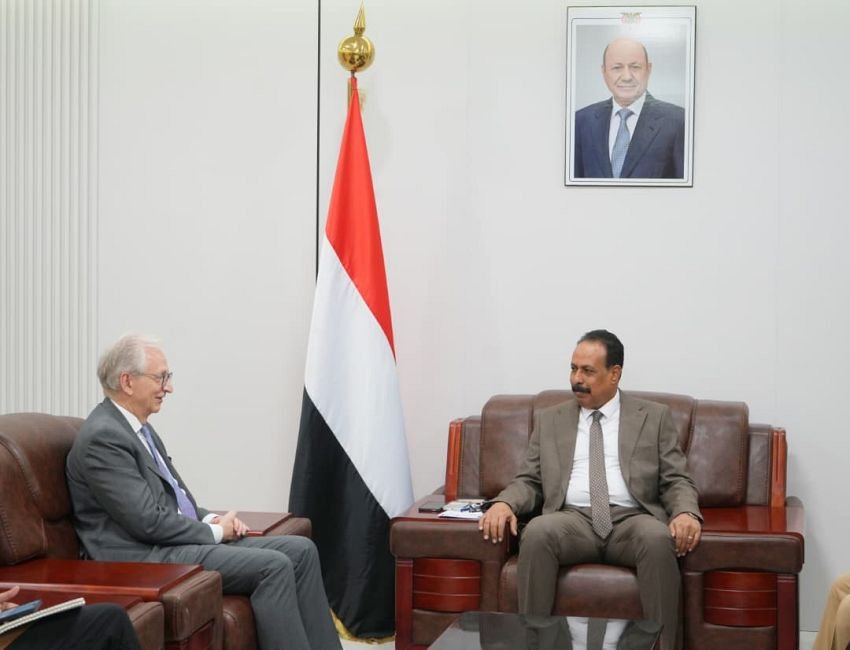
Yemen’s Public Works Minister and Germany’s ambassador have discussed infrastructure and roads, in talks framed as significant for the country’s efforts at economic revival and stability. The meeting between Minister Hussein al-Aqrabi and Ambassador Thomas Schneider focused on cooperation to address the dire state of public works in a country whose infrastructure has been severely damaged by conflict.
Yemen has been embroiled in conflict since 2015, a war that has produced a humanitarian crisis and left much of its infrastructure in ruins. The fighting has damaged roads, bridges and public facilities and crippled the economy, making international partnerships important to the enormous task of rebuilding and recovery.
Germany, known for its engineering expertise and its long engagement in development cooperation, represents a potential partner in addressing Yemen’s infrastructure needs. Its involvement could contribute resources and technical capacity to the rebuilding effort, and the discussions reflected a growing recognition of the importance of international cooperation to the recovery of public works.
Infrastructure encompasses the physical systems on which society and the economy depend, from roads and bridges to public buildings and utilities. The extensive damage inflicted on these systems during the conflict has had profound consequences for the functioning of the country and for the daily lives of its people, making their restoration a priority.
Roads, a particular focus of the discussions, are essential to the movement of people and goods and to the functioning of the economy. The damage to Yemen’s road networks has hampered transport, commerce and the delivery of assistance, and their repair and development are central to reconnecting communities and supporting economic activity.
The rebuilding of infrastructure is a demanding undertaking requiring substantial resources, planning and coordination. The scale of the damage in Yemen is immense, and addressing it will require sustained effort over an extended period, as well as the engagement of partners able to contribute the resources and expertise involved.
The connection between infrastructure and economic revival, emphasised in the discussions, reflects the foundational role of physical systems in the economy. Functional infrastructure supports commerce, investment and the delivery of services, and its restoration is central to reviving economic activity and to creating the conditions for recovery and stability.
Germany’s engineering expertise offers particular relevance to efforts to rebuild infrastructure. Cooperation drawing on this expertise could support the planning and execution of construction and the development of physical systems, contributing technical capacity to a rebuilding effort that requires both resources and know-how.
The Ministry of Public Works plays a central role in the rebuilding of infrastructure, overseeing construction and the development of physical systems. Its engagement with partners such as Germany reflects the collaborative effort required to address the extensive needs, drawing on both national leadership and international support and expertise.
The crippling of the economy by the conflict underscores the importance of infrastructure to recovery. Reviving economic activity depends in part on functional infrastructure, and the rebuilding of roads and public works can support the economy while restoring the systems on which daily life and commerce depend, reinforcing its importance.
Germany’s commitment to development aid, reflected in its broader international engagement, lends significance to its potential role in Yemen. Its involvement in infrastructure could serve as an example of international cooperation with the country, contributing to the rebuilding effort and potentially encouraging broader engagement in support of recovery.
Cooperation with international partners is essential to the rebuilding effort, given the constraints on the government’s own resources. The support of partners such as Germany can help mobilise the resources and expertise required for infrastructure development, complementing the government’s efforts and contributing to the broader work of recovery.
The restoration of public works also carries economic significance beyond the infrastructure itself, as construction and development can generate employment and activity. Infrastructure projects can thus contribute to economic recovery as well as to the restoration of physical systems, reinforcing their importance to the broader effort at revival.
Realising the goals discussed will depend on resources, planning, security and the trajectory of the conflict. Infrastructure development is a long-term undertaking, and progress will require sustained commitment and favourable conditions, though the engagement of the ministry and its partners reflects a shared determination to advance the effort.
Roads occupy a special place in the calculus of recovery because of the disproportionate effect their condition has on almost every other sector. A single damaged bridge or impassable highway can sever a farming region from its markets, delay the delivery of aid, raise the cost of fuel and goods and isolate communities from health and education services. Restoring key routes, engineers note, therefore tends to yield benefits that ripple far beyond the immediate stretch of road repaired, which is why transport links are often prioritised in the early phases of reconstruction.
Germany’s potential contribution was framed in this light, as an investment whose returns would be felt across the economy rather than confined to the construction sector itself. For Yemeni officials, securing the engagement of a partner with Germany’s technical depth also carries a signalling value, suggesting to other prospective donors and investors that credible international actors regard the country’s reconstruction as a serious undertaking worth supporting, even while the conflict endures and the obstacles remain formidable.
For now, the meeting between al-Aqrabi and Schneider reaffirmed the importance of infrastructure to Yemen’s recovery and the value of international cooperation, including with Germany, in addressing it. As the country works to rebuild after years of conflict, the development of roads and public works remains a central element of its efforts to revive the economy and achieve stability.
About the Author