IOM says more than 300,000 people displaced in western Yemen in two months
 Yemen Herald News
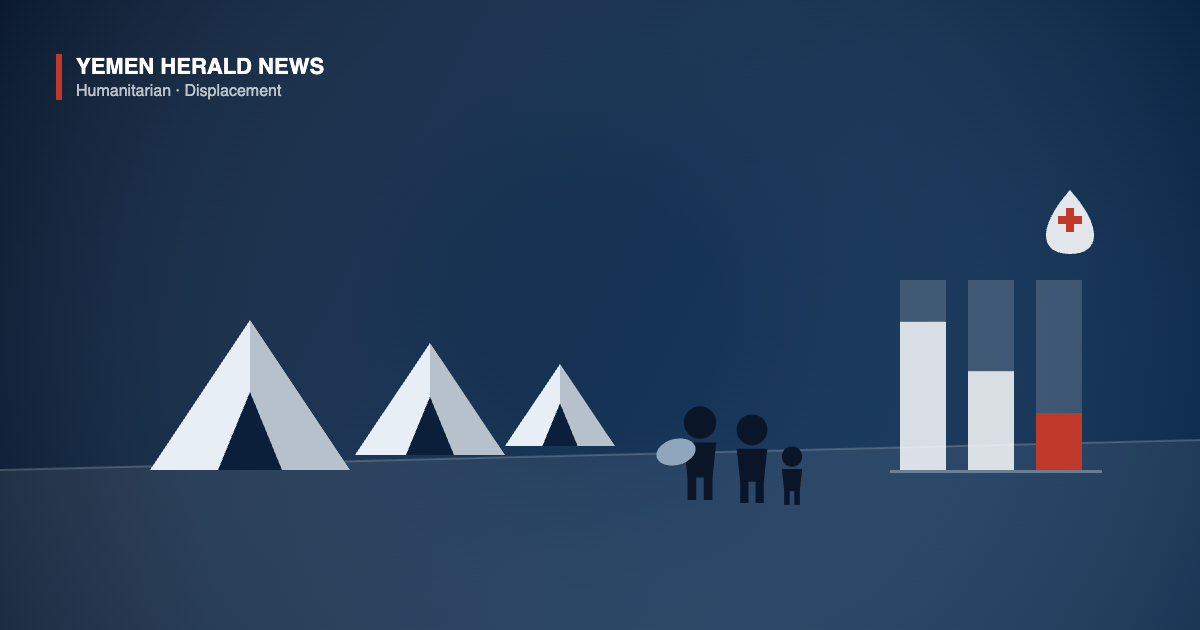
ADEN, Yemen — More than 300,000 people have fled their homes in western Yemen, almost all of them in the past two months, the International Organization for Migration said Sunday.
The agency released the figure as fighting continued across several fronts in the country’s west and south-west.
The total rests on IOM’s own displacement tracking. No independent count of the same figure has been published.
The largest concentration of recent movement was in Al-Madaribah Wa Al-Aarah district in Lahj governorate, the agency said. More than 43,000 people have left that district since the start of October.
IOM said that is the highest number recorded in any district in the country.
Aden is hosting more than 56,000 displaced people, according to the agency.
“After years of conflict, families in Yemen are being forced to flee yet again,” said Abdusattor Esoev, IOM chief of mission in Yemen.
“They urgently need shelter, food, clean water and healthcare,” he said.
Esoev said funding was the constraint on the response.
“Without more funding, thousands of families could be left without the help they urgently need,” he said.
IOM said it needs $45 million over the next six months to deliver emergency assistance to people displaced by the current fighting.
The agency said it has five mobile medical teams working across Taiz, Marib, Lahj and Aden.
It called on all parties to the conflict to protect civilians and humanitarian workers, and to allow safe and unhindered humanitarian access. It named hard-to-reach areas of Taiz in particular.
Prices for some essential goods in Taiz city have risen up to fivefold, IOM said.
The agency did not break the total down by governorate beyond the figures it gave for Lahj and Aden. It did not say how many of those displaced are children.
IOM said people displaced in recent weeks are arriving in areas already hosting families uprooted in earlier rounds of the conflict. Many moved with few possessions, the agency said.
The figure released Sunday follows a series of smaller counts the agency published as the fighting spread.
IOM said in early September that about 18,500 people were displaced in 72 hours as fighting flared along Yemen’s west coast.
Later that month the agency reported about 16,000 people displaced over a single week.
The agency said its mobile teams provide primary health care, and that it is also distributing shelter materials and water.
IOM gave no estimate for when it expects the displacement to level off.
Separately, the World Health Organization has recorded 1,677 deaths and 7,395 injuries linked to the hostilities since August. WHO did not attribute the casualties to any party. Yemen Herald could not independently verify that tally.
WHO put the number of displaced at 276,000 in a statement issued at the end of October, below the figure IOM gave on Sunday. The two agencies use different counting methods and did not reconcile the totals.
The UN Population Fund briefed reporters in Geneva on Friday on the effect of the fighting on women and girls.
Taiz governorate is among the areas affected. Nabil Shamsan, the governor of Taiz, has appealed for support for the health system there.
Yemen’s Ministry of Public Health and Population said 42 health facilities in the governorate could suspend operations within days without emergency supplies, naming shortages of medicines and fuel. That account rests on the ministry and has not been independently confirmed.
Fighting has been reported in recent weeks in al-Jawf, Marib, Taiz and Lahj.
Yemeni government forces said last weekend that they had taken positions east of al-Hazm, in al-Jawf. The Houthis said they had thwarted advances in al-Jawf and Marib. Neither account has been independently confirmed.
Humanitarian needs in Yemen were already among the largest in the world before the current escalation.
The UN humanitarian plan published in March said more than 22 million people in Yemen need assistance, and put the number who are acutely food insecure at 18.3 million.
The plan said more than 2.2 million children under five are acutely malnourished, including 516,157 with severe acute malnutrition.
It recorded 5.2 million internally displaced people in the country before this year’s escalation.
The plan sought $2.16 billion to reach 12 million people during 2026.
IOM runs displacement tracking across Yemen and publishes periodic counts of newly displaced families. Sunday’s total came from that system.
Al-Madaribah Wa Al-Aarah is a coastal district in the south-west of Lahj governorate, close to the west coast front lines.
Aden is the seat of Yemen’s internationally recognised government and has absorbed displaced families throughout the conflict.
The combined WHO count is about 9,072 people killed or injured since August.
The UN refugee agency has warned about conditions facing families who have been displaced more than once.
IOM said the movement has been concentrated in the west of the country, where front lines have shifted in recent weeks.
IOM said the $45 million it is seeking covers shelter, health care, water and sanitation for the newly displaced over six months.
The agency said its teams in Lahj and Aden are registering new arrivals as they reach host communities.
The agency did not say how much of that sum it has received.
About the Author


 Adel Haddad