Social Fund for Development board meets in Aden to settle contracts after move to the interim capital
 Yemen Herald News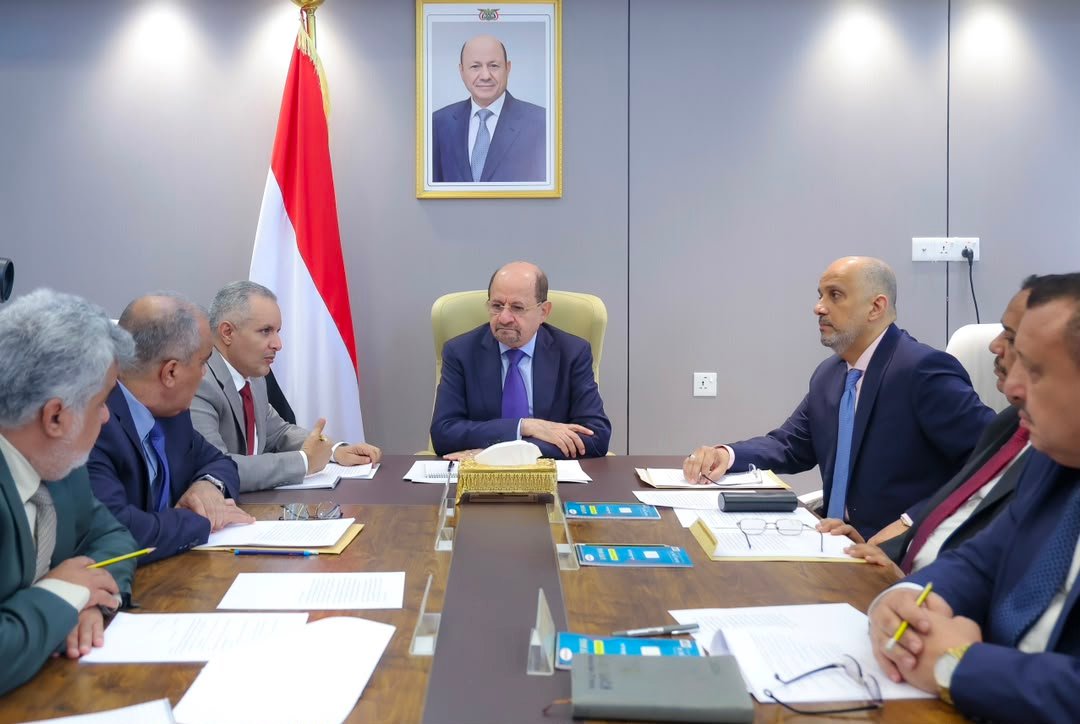
The board of Yemen’s Social Fund for Development met in Aden on Wednesday to review the institution’s operations and settle the administrative questions left over from the relocation of its headquarters to the interim capital, with Prime Minister Dr Shaya Mohsen al-Zindani in the chair.
Al-Zindani, who also chairs the fund’s board, led a session focused on the continuity of its development programmes and on tightening standards of governance and transparency. The board reviewed the technical and administrative requirements attached to the fund’s commitments to donors and development partners, and worked through the procedures for managing existing contracts and agreements now that the executive management has moved to Aden.
The relocation is the central issue facing the fund. Its main administration operated for years from Sanaa, the capital held by the Houthis, while its projects ran across the country on both sides of the front lines. Moving the executive management south was intended to place the institution under the authority of the internationally recognised government and to reassure donors about where their money is administered.
When the board last convened in July, al-Zindani described completing that transfer as a sovereign decision of the Yemeni state, falling within the government’s constitutional authority to manage national institutions. He said at the time that the fund would continue implementing its programmes from Aden to the highest standards of management and governance, and accused the Houthi movement of having interfered in the fund’s affairs in recent years in ways that eroded its independence and weakened partners’ confidence in it. The Houthis have rejected government characterisations of their role in state institutions.
On Wednesday the prime minister returned to the same theme, telling the board that the government remains committed to strengthening strategic partnerships with donors and supporting international institutions, and that creating a stable institutional and administrative environment is what will expand funding for priority projects. He described the fund’s independence as essential to its success and to donor trust, and said the government intends to preserve it alongside the principles of governance, transparency and accountability on which the fund was founded.
Created in 1997, the Social Fund for Development has long been regarded as one of Yemen’s more effective public institutions. It channels donor and government money into small-scale infrastructure, cash-for-work schemes, water and sanitation projects, school rehabilitation and support for small enterprises, and it kept operating through years of conflict when much of the rest of the state apparatus did not. That record is the asset the government is trying to protect, because it is the reason multilateral lenders and bilateral donors have continued to route funding through the fund rather than around it.
The institution has also been under direct strain. Its acting executive director, engineer Wissam Qaed, was killed in an assassination in Aden, and the board opened its July session with a minute of silence in his memory. Mohammed al-Ban, who has taken over in an acting capacity, briefed that meeting on the fund’s position and on a strategic plan intended to secure the continuity of its work and strengthen the legal and institutional protections around its programmes.
Al-Zindani has been prime minister since February, having previously served as foreign minister. He retained the foreign affairs portfolio for a period before Dr Afrah al-Zouba was appointed to it in late July, in a reshuffle that made her the first woman to hold the post.
The wider context is a humanitarian caseload that continues to grow. The United Nations estimates that more than 22 million people in Yemen will need humanitarian assistance and protection during 2026, including 5.2 million internally displaced people. Around 18.3 million are acutely food insecure and more than 2.2 million children under five are acutely malnourished. The 2026 response plan seeks 2.16 billion dollars, of which 1.6 billion is earmarked for prioritised life-saving work, and agencies are targeting 12 million people rather than the full caseload.
Development funding of the kind the Social Fund administers sits alongside that emergency response and is meant, over time, to reduce dependence on it. Yemeni officials argue that the distinction matters: relief keeps people alive, but restored water networks, functioning schools and paid local labour are what allow households to stop relying on monthly distributions. Donors have generally accepted the argument while remaining cautious about disbursing through institutions whose governance they cannot fully verify.
Those concerns have sharpened as the economy has deteriorated. The riyal has lost much of its value in government-held areas over the past two years, and attacks on oil export terminals have cut off the revenue the government in Aden used to pay public sector salaries. The Houthi maritime blockade declared on 20 July, which the group says is aimed at Saudi shipping in the Bab al-Mandab Strait, has added a further layer of risk to the import routes that supply most of the country’s food and fuel.
The board closed by backing the government’s steps to complete the transfer of operations to Aden and to reinforce the fund’s independence, so that it can continue supporting recovery and improving services and livelihoods across Yemen. Whether donors respond with the multi-year commitments the government has asked for will be the practical test of whether the move has achieved what it was intended to.
About the Author