Taiz emergency committee approves resuming waste transport to al-Dhabab landfill
 Yemen Herald News
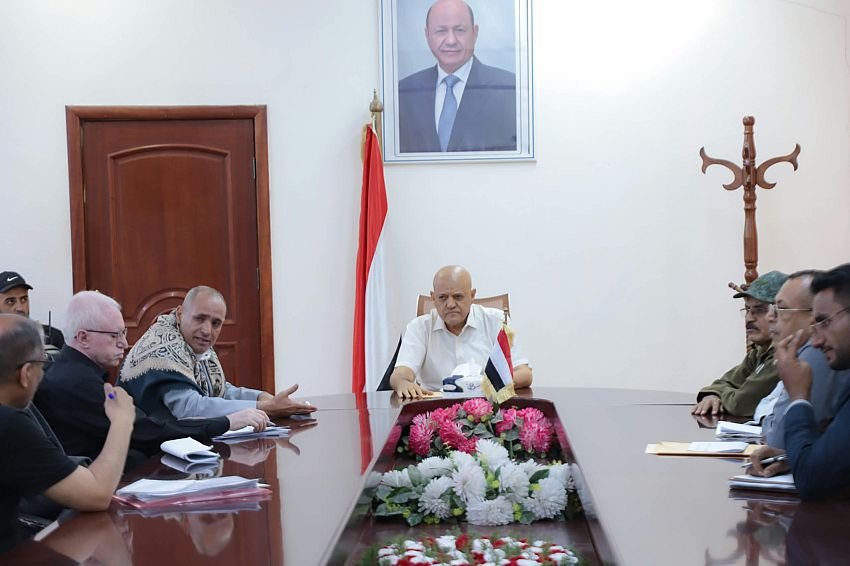
TAIZ, Yemen — Taiz governorate’s emergency committee approved a resumption of waste transport to a temporary landfill, the state news agency Saba reported.
Governor Nabil Shamsan chaired the expanded meeting on Tuesday, the agency said.
The committee reviewed the security, service and humanitarian situation in the governorate.
It went over food and medicine supplies and the condition of hospitals and health facilities, according to Saba.
Shamsan told the meeting that field visits should continue and that officials should keep track of what residents need.
He said food and essential services had to remain available, and asked for coordination with the relevant authorities.
The committee examined problems facing the Cleaning and Improvement Fund, the body that runs waste collection in the city.
Saba said the discussion focused on the risks to workers hauling waste to the temporary landfill at al-Dhabab.
The agency said Taiz has relied on that site for more than 11 years.
It attributed the arrangement to Houthi obstruction of access to the main landfill at Sharaab Junction.
Saba said waste trucks had recently been stopped from reaching the al-Saleh Gardens site, and described that as evidence the siege of the city continues.
The account of the meeting rests on Saba, the government’s own news agency. No independent confirmation of it has been published.
The authorities administering Houthi-held parts of Taiz give a different account of the waste problem.
Ahmed al-Masawi, named as Taiz governor by the Houthi-aligned outlet Yemen Extra, announced an initiative on Nov. 2 to open roads for cleaning trucks.
He said the aim was to move waste from streets and flood channels to the main landfill at Sharaab Junction.
The outlet said he called for three routes to be opened: City of Light Road through al-Khamsin and al-Sittin, al-Ashraf Basin Road through al-Kamb, al-Qasr, al-Hawban and al-Sittin, and Asayfirah Road through al-Sittin.
Al-Masawi said the initiative answered appeals from the leadership of Taiz University and from local sheikhs and dignitaries.
He accused unnamed people in central Taiz of dumping waste in university squares and flood channels.
He said some parties might accept the initiative only if it ran through the private sector, and that the governorate was open to that.
Al-Masawi warned that waste piling up in streets and flood channels was creating environmental and health problems.
He said he had praised the cooperation of the Fourth Military Region, the governorate’s security authorities and the interior ministry leadership in Sanaa. The outlet named no individual officials from those bodies.
The two administrations attribute the obstruction of waste transport to each other. Neither account has been independently verified.
Taiz has been fought over since 2015 and the city has been divided between the two sides for most of that period.
Al Jazeera reported in October that the Houthis launched an offensive on the Red Sea coast of Taiz governorate in early September and took Mocha and Dhubab district.
It said they captured al-Turbah by Oct. 4, cutting the last main road between Taiz city and government-held areas.
Nabil Jamil, director-general of the planning and development office in Taiz governorate, put the population of government-held parts of the governorate at about 2.8 million.
He said about 200,000 more had been displaced by the recent fighting.
Jamil said secondary roads between rural districts had also been cut.
“More comprehensive and its impact more severe than in 2015,” he said of the renewed siege.
He said local authorities had written to the United Nations seeking help and were waiting for a reply.
The price of a 20-litre container of petrol on the black market rose from 30,000 Yemeni riyals to 90,000 riyals in the first week of the renewed siege, Al Jazeera reported. That is about $19 to $58.
Wafiq Saleh, a journalist covering economic affairs, said wheat and flour prices had risen and that vegetable and fruit prices had doubled.
He said traders held several months of stock but began raising prices once the fighting reached the outskirts of the city.
Nabil Sharyan, who heads the Justice for Rights and Development Organization, said patients, children, women and older people faced difficulty reaching hospitals and medicine.
Iskandar Abdullah, a 37-year-old resident of the city who lived through the earlier siege, told Al Jazeera he hoped those days would not return.
Salman al-Maqrami, a journalist covering Houthi affairs, said the renewed siege was intended to weaken the cohesion of the opposition in Taiz.
The United Nations said in its humanitarian plan for 2026 that more than 22 million people in Yemen needed assistance.
The plan put the number of acutely food insecure at 18.3 million and the internally displaced at 5.2 million. It sought $2.16 billion to reach 12 million people.
The plan recorded more than 2.2 million children under five as acutely malnourished, 516,157 of them severely.
Taiz city sits inland from the Red Sea coast the Houthis moved on in September. It is the capital of a governorate that before the war was among Yemen’s most populous.
The eastern crossing linking Taiz to Houthi-held northern Yemen closed after attempted incursions, security sources told Al Jazeera.
Saba did not say when waste transport would resume.
It did not say how many trucks the Cleaning and Improvement Fund has available.
About the Author


 Adel Haddad