UN says 1,790 families displaced in two days as fighting spreads in Yemen’s Taiz
 Yemen Herald News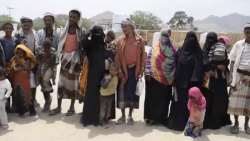
TAIZ, Yemen — About 1,790 families fled their homes in Yemen’s Taiz province over two days as Houthi and government forces fought, the United Nations said.
The UN Office for the Coordination of Humanitarian Affairs issued the count on Friday evening. It said displacement was still under way.
Fighting intensified on the Taiz fronts in the early hours of Thursday, Sept. 3, OCHA said, alongside heavy shelling and clashes in the districts of Maqbanah and Jabal Habashi.
The account of the displacement figures rests on OCHA’s own reporting. No independent confirmation of the numbers has been published, and Yemen Herald could not verify them.
Most of those who fled moved within Maqbanah and Jabal Habashi, the office said. Others reached Al-Ma’afer, Al-Shamayateen, Mawza and Dhubab in western Taiz.
Entire displacement sites had been emptied of their residents, OCHA said, setting off a wider wave of secondary displacement.
Continued shelling was limiting families’ ability to move to safer areas, according to the statement. Some families remained trapped in areas where the fighting was taking place.
Disruptions to telecommunications were hampering the collection and verification of information and slowing coordination, the office said.
Emergency stocks were severely depleted, OCHA added, particularly shelter materials, non-food items and food assistance.
The Houthis opened the offensive early Thursday on the western fronts of Taiz governorate, including positions in Maqbanah district, using missiles and drones before ground fighting began, Al Jazeera reported.
Arab News, reporting from Al-Mukalla, said the Houthis had shelled government positions in Taiz and Hodeidah with dozens of artillery rounds hours earlier and fired at least 12 missiles along with drones.
It described Thursday’s assault as the largest since a UN-brokered truce took effect in April 2022.
Houthi forces advanced across several fronts in Maqbanah, Mawzaa and Jabal Habashi, according to Al Jazeera. Government forces say they are confronting the attacks and have retaken some ground.
Army troops recaptured a hilltop position in Jabal Habashi on Friday that had fallen the day before, the army said in a statement carried by Arab News. Troops were also fighting in Maqbanah and Al-Kadaha, west of Taiz.
Abdullah Saeed, 47, left Maqbanah in 2022 and settled at the al-Rahabah camp in Jabal Habashi, about 90km (55 miles) south. He told Al Jazeera he fled a second time this week.
“Fighting erupted suddenly at night. We were far from the battlefield, but in the morning, we were shocked to see the frontlines near our camp,” Saeed said. “There was no solution but to take our basic belongings and flee.”
About 300 families had been sheltering at the camp, he said. People from neighbouring camps and villages left as well.
“We have fled for the second time, but there are also families who fled for the first time. We are all now in dire need of shelter and basic services,” Saeed said.
Saeed had hoped four years of quiet along the frontlines would let him return to Maqbanah. He said he would settle for going back to al-Rahabah, where he had shelter and a source of water.
Yahiya Lutf, a pro-government fighter in Jabal Habashi, told Al Jazeera the Houthis had tried to cut the main road between Taiz city and the Red Sea coast and had failed. He said there were casualties on both sides.
“Our goal is not only to liberate what they took; we will press forward beyond that, as our morale is high and we are fully prepared for battle,” Lutf said. Troops from several military units were taking part, he said.
A Houthi source in Sanaa told the network the battles were part of the group’s efforts to “break the siege on Yemenis”. Houthi media outlets have not published details of the fighting.
Rashad al-Alimi, chairman of the Presidential Leadership Council, said on Thursday night that the government would deliver a “decisive” response. He said the Houthis had failed to make gains on the ground, according to the state news agency Saba.
The frontlines lie near the road linking Taiz city to the Red Sea coast, which serves as the base of the National Resistance Forces, a government-aligned faction led by Tareq Saleh.
Yemeni officials and military analysts said the Houthis had concentrated their attacks west of Taiz city to sever its link with the Red Sea port of Mokha, Arab News reported.
Odai al-Dokhaini, a Yemeni journalist, said cutting the road linking Taiz to al-Makha would affect both cities. The route carries food and goods inland from the port, he said.
Mokha has itself come under drone and missile attack. Houthi forces have pressed against government lines in Marib, Taiz, Hodeidah and al-Dhale since early August.
Both sides have sent reinforcements to the western Taiz fronts, Al Jazeera reported, including fighters and military vehicles.
OCHA’s humanitarian plan for Yemen, published in March, put the number of people needing assistance at more than 22 million. It counted 18.3 million as acutely food insecure and 5.2 million as internally displaced.
The plan also recorded more than 2.2 million children under five as acutely malnourished, 516,157 of them severely. It sought 2.16 billion dollars to reach 12 million people.
The conflict began in 2014, when the Houthis seized Sanaa and much of northwest Yemen.
Saba said al-Alimi spoke by telephone with local military commanders before making his remarks.
About the Author