US embassy cites UN port data to reject Houthi blockade claim and points to Taiz
 Yemen Herald News
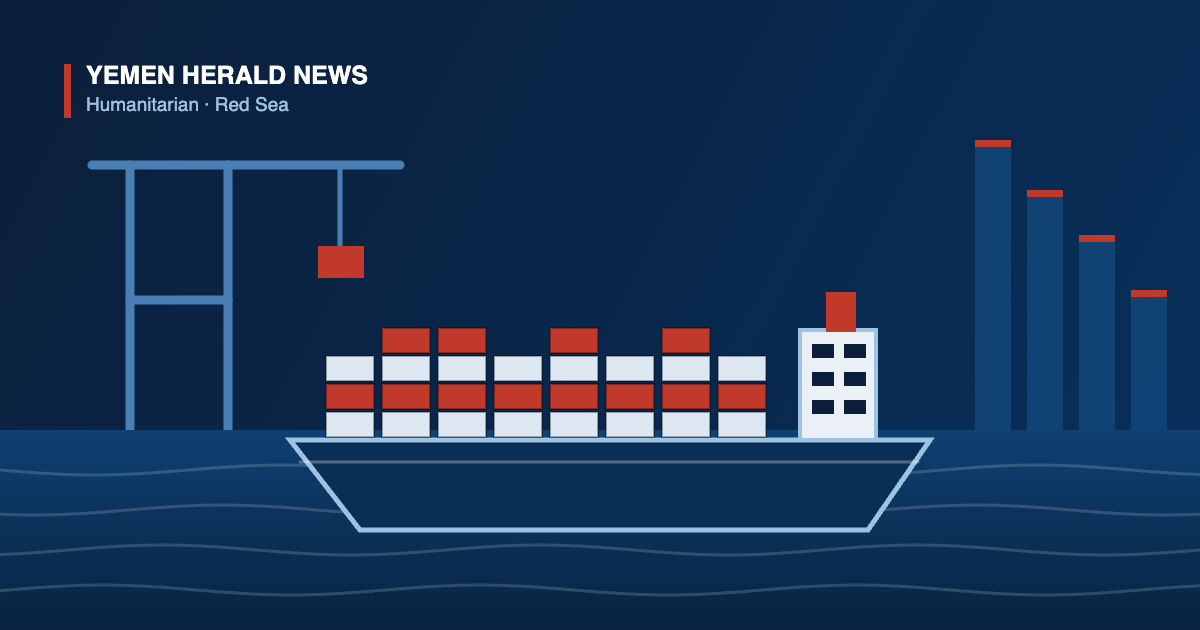
ADEN, Yemen — The U.S. Embassy in Yemen rejected Houthi assertions of a Saudi-led blockade on Tuesday, citing United Nations figures showing 272 ships unloaded at Houthi-held ports this year.
Embassy spokesman Khaled Wolfsberg made the case in an Arabic-language video posted to the mission’s official Instagram account on Tuesday evening, Al Jazeera reported.
Wolfsberg said the vessels discharged cargo at Hodeidah, as-Salif and Ras Isa between January and September. All three ports are held by the Houthis.
He said Houthi forces block food and fuel from reaching hospitals and water stations in Taiz, a government-held city their fighters encircle.
“The only real blockade is the one cruelly imposed by the militia on Taiz,” Wolfsberg said.
The Houthis say Saudi Arabia and its allies have closed Yemen’s Red Sea ports and are keeping aid from civilians. No Houthi official answered the video. The two accounts concern the same three harbors.
The figures the embassy used come from the United Nations Verification and Inspection Mechanism for Yemen, which clears commercial and bilateral aid cargo bound for Yemeni Red Sea ports.
The mechanism rests on Security Council Resolution 2216, adopted in 2015. The U.N. Office for Project Services began running it on May 5, 2016, at the Yemeni government’s request and on behalf of the United Nations and member states, according to the mechanism.
It operates from Djibouti. Shippers must ask for clearance at least five days before a vessel reaches the outer limits of those ports, and the mechanism prefers the request before the ship leaves its loading berth.
Where nothing about a vessel’s movements, crew, documents or cargo raises a question under Resolution 2216, it is cleared without inspection. Where something does, inspectors board in territorial or international waters, and board again if the doubts hold.
UNVIM recorded a peak of 34 vessels in January and again in March, according to the data as reported by Al Jazeera. July recorded 25.
Food arrivals ran at about 630,000 metric tons in January and more than 737,000 tons in March, the highest month of the nine.
August recorded more than 511,000 tons. September fell to 495,000.
Container traffic moved in far smaller volumes. January brought 1,231 containers on four vessels, and March 851 on three.
April recorded 1,268 containers on three vessels, the busiest container month in the series. September brought 182 on a single vessel.
Fuel arrivals reached more than 149,000 tons in February. September recorded none.
The mechanism clears vessels before they sail and does not follow cargo once it is landed. Neither the embassy nor UNVIM published a figure for how much of it reached areas outside Houthi control.
Taiz has been fought over throughout the war. Houthi forces encircled it again after taking a road linking the city to southern Yemen.
The United Nations has pressed the same point on Taiz for weeks. Volker Turk, the U.N. human rights chief, said on Oct. 20 that Houthi forces surrounding the city had to let relief in immediately or risk catastrophe.
Turk said closing the only supply route linking Taiz to Aden was putting civilians at grave risk, and that those who wished to leave had to be allowed out. He asked all parties to avoid explosive weapons with wide-area effects in populated areas.
The World Food Programme said shifting front lines and road closures had cut 800,000 people off from assistance, most of them in Taiz.
Yemen’s internationally recognized government asked the United Nations in October to intervene and lift the siege, saying it threatened more than 4 million people.
The government said on Oct. 20 that its forces had stopped Houthi attempts to advance on Taiz at al-Shaqab, al-Misrakh, al-Aqroudh and Jabal Han. The Houthis dispute the government’s account of the fighting.
Rashad al-Alimi, chairman of the Presidential Leadership Council, asked the United Nations in October to designate the Houthis a terrorist organization.
The Yemeni military began an offensive it called Dawn of Yemen on Oct. 5 to reverse Houthi gains.
The U.N. Office for the Coordination of Humanitarian Affairs counted more than 22 million Yemenis in need of aid in its plan for the year, published in March.
That document put 18.3 million people in acute food insecurity and 2.2 million children under five acutely malnourished, 516,157 of them severely.
It recorded 5.2 million people displaced inside the country and sought $2.16 billion to reach 12 million of those in need.
The OCHA total predates the current fighting. UNHCR counted more than 250,000 people newly displaced since the escalation began in August, a separate count the March plan does not carry.
The three ports named by the embassy sit on a Red Sea coast the Houthis have held for most of the war. The group took Sanaa in September 2014 and went on to hold much of western and northern Yemen.
In September the Houthis took Mocha, a port on the approach to Bab al-Mandab.
The United States suspended embassy operations in Sanaa in February 2015 and relocated its staff, the State Department said at the time.
Yemen Herald could not independently verify the monthly tonnages, which UNVIM compiles from shipping declarations rather than from counts on the quayside.
The September container count was the lowest of the nine months the data covers.
About the Author


 Adel Haddad