Houthi Spokesman Yahya Saree Says the Group Will Intensify Military Operations
 Yemen Herald News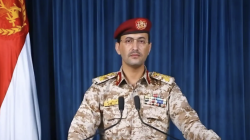
Yahya Saree, the military spokesman for Yemen’s Houthi movement, announced on Saturday that the group intends to intensify its offensive operations in the coming days, signalling a further deepening of its involvement in the regional conflict. The statement, delivered in the televised format the movement has used throughout the campaign, made clear that the leadership regards continued escalation as central to its strategy rather than as a temporary response to particular events.
Saree has become the public face of Houthi military communications. A brigadier general in the movement’s command structure, he has announced the group’s operations against shipping, against Israel and more recently against targets in Saudi Arabia, generally appearing in uniform before a flag to read prepared statements. The consistency of that presentation is itself part of the strategy, projecting the image of a conventional military organisation rather than an insurgent faction.
The announcement follows an intense period of Houthi activity. On 20 July the movement declared a maritime blockade on Saudi Arabia, opening a new front even as mediators were working to salvage ceasefire efforts in the wider war. Two days later Saree said the group had attacked two Saudi oil tankers, identified as the Encelia and the Layla, for what he described as violating the blockade. By late July the movement was claiming strikes on facilities belonging to the Saudi state oil company Aramco in the Red Sea coastal cities of Jizan and Yanbu.
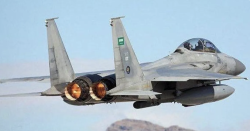
Saudi Arabia has responded militarily. Houthi-run media reported Saudi strikes on the group’s stronghold of Hodeidah on 24 July. The exchange marks a significant reversal after a period in which direct hostilities between the two sides had largely subsided while indirect talks proceeded, and it has effectively returned the Saudi-Houthi relationship to open confrontation.
The movement has also fired missiles and drones towards Israel, a campaign it began during the war in Gaza and resumed after the outbreak of the current conflict between Iran, the United States and Israel. Israeli air defences have intercepted most of those launches, and the material damage has been limited, but the attacks have forced air raid alerts and periodic airspace closures. The Houthi leadership presents these operations as solidarity with Palestinians and as part of a broader alignment with Iran and allied groups.
That alignment is the point on which the group’s critics focus. Yemen’s internationally recognised government describes the movement as an instrument of Iranian regional policy, and officials in Aden and Riyadh have argued that maritime insecurity in the Red Sea cannot be resolved without restoring state authority across Yemeni territory. The Houthi leadership rejects that characterisation and presents itself as an independent national actor defending Yemen against foreign intervention. Both accounts are contested, and the movement’s exact relationship with Tehran remains a matter of dispute among analysts.
Whatever its origins, the movement’s capability has grown markedly. From a force that seized Sanaa in 2014 with limited heavy weaponry, it has developed an arsenal of ballistic and cruise missiles, long-range drones and anti-ship weapons capable of reaching targets hundreds and in some cases thousands of kilometres away. That reach explains why the group’s announcements now attract attention from shipping insurers, energy markets and defence planners far beyond the Arabian Peninsula.
The cost inside Yemen is borne by a population already living through one of the world’s most severe humanitarian emergencies. More than a decade of war has left millions dependent on aid, public sector salaries unpaid across much of the country and basic services barely functioning. Areas under Houthi control face the additional risk of retaliation for operations launched from their territory, and aid organisations must negotiate access with authorities in Sanaa while working in an increasingly dangerous environment.
Escalation also forecloses diplomatic options. The peace process brokered with Omani and Saudi involvement had at points appeared close to producing a roadmap covering salaries, the reopening of ports and airports and a framework for political negotiations. The blockade declaration and the attacks on Saudi territory have suspended that process. Mediators who had been working towards a ceasefire now face a conflict that has widened rather than narrowed.
Saree’s statement gave no specifics about the form the promised escalation will take, naming neither targets nor timing. That ambiguity is characteristic. The movement has generally announced operations after the fact while issuing broad warnings in advance, an approach that maximises uncertainty for shipping operators and defence planners while preserving flexibility about what is actually attempted.
For governments in the region, the practical question is whether the announcement signals a genuine change in tempo or a continuation of the existing campaign under more assertive language. The movement has repeatedly demonstrated that it can sustain operations under sustained military pressure, and previous rounds of strikes against it have not produced a change of course. On the evidence so far, further escalation appears more likely than restraint.
The economic consequences extend well beyond the parties to the fighting. Traffic through the Bab al-Mandab Strait and the Suez Canal has fallen sharply since attacks on commercial shipping began, pushing carriers onto the longer route around the Cape of Good Hope and adding both time and expense to voyages between Asia and Europe. War risk insurance premiums for vessels transiting the corridor have risen accordingly. The extension of the campaign to Saudi energy infrastructure introduces a further variable, since disruption at export terminals affects supply calculations rather than only transit costs.
About the Author