Houthis say they fired dozens of ballistic missiles at Riyadh airport and two Saudi bases
 Yemen Herald News
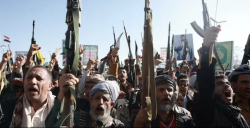
SANAA, Yemen — Yemen’s Houthi movement said Sunday it fired dozens of ballistic missiles at Riyadh’s main airport and two Saudi military sites.
Houthi military spokesman Yahya Sarea said the group carried out three separate attacks. The first targeted King Khalid International Airport in Riyadh, he said.
The other two struck King Khalid Air Base at Khamis Mushait and a Saudi Border Guard naval base at Jazan, according to Sarea.
Sarea said the attack on the Riyadh airport had achieved its objective. Yemen Herald could not independently verify that claim.
The Saudi-led coalition gave a different account. It said it intercepted and destroyed 12 missiles and two drones launched at the kingdom.
One ballistic missile and two drones were aimed at the Riyadh region, the coalition said.
Saudi Arabia’s General Directorate of Civil Defense said debris from two intercepted missiles injured two people in the southwest of the country.
One was a Saudi citizen and the other an Asian resident, the directorate said. Three residential buildings and seven vehicles were damaged.
The debris fell on Khamis Mushait and Ahad Rafidah, in Asir province.
King Khalid International Airport partially reopened Sunday. It had suspended operations after earlier attacks.
Sarea called the airport unsafe and warned airlines and travellers against using Saudi airspace. He excluded Mecca and Medina from the warning.
Saba, the Houthi-controlled news agency, quoted an unnamed military source warning workers and civilians to stay away from Saudi oil facilities.
The same source warned shareholders in Saudi Aramco of losses, Saba reported.
The Houthis said the missile attacks answered Saudi strikes a day earlier on Sanaa and other areas they control.
Sarea said Saudi forces carried out 56 air and missile strikes in 24 hours on civilian sites in Hajjah, Lahj, Amran, Saada, Al-Jawf, Taiz and Ibb.
He said dozens of people were killed or wounded, including women and children. That account rests on Houthi statements alone, and no independent confirmation of the figures has been published.
The exchanges followed three weeks of attacks on Saudi airports.
Between 6 and 12 October the Houthis struck King Khalid, Abha International and King Fahd International at Dammam. At least 20 people were killed and more than 370 injured over that period, according to figures released by Saudi authorities and reported by international outlets.
A combined missile and drone attack on 6 October killed a Sudanese national at the Riyadh airport and injured eight people, the BBC reported. Two women, from Algeria and Morocco, were killed at Abha and 28 people wounded.
Saudi Arabia’s General Authority of Civil Aviation said three Saudi citizens, among them a pilot, were killed on 8 October when a missile destroyed a Saudia aircraft on the ground. Hundreds of flights were cancelled and several airlines suspended services to Riyadh.
A missile hit a complex housing Terminals 3 and 4 at the Riyadh airport on 10 October. Saudi authorities put the toll at 12 dead and more than 300 injured, rising to 13 when an Indian man died of his injuries the following day.
Turki al-Maliki, the coalition spokesman, called that strike a “full-fledged war crime” and said the coalition would respond.
Terminal 4 was struck again on 11 October, starting a fire in a passenger hall. One Pakistani resident was killed and 11 people injured.
The civil aviation authority extended the closure of King Khalid International Airport to 17 October. Three missiles fired on 12 October were all intercepted.
The Houthis date the current round to 13 July, when they say Saudi aircraft struck Sanaa International Airport.
Mohammed al-Bukhaiti, a member of the Houthi political bureau, said the airport attacks were retaliation for Saudi strikes on civilian infrastructure in Yemen.
UN Secretary-General Antonio Guterres condemned the attacks and said strikes on civilian infrastructure must stop. Hans Grundberg, the UN special envoy for Yemen, called them a “grave escalation”.
The US State Department ordered non-essential staff and family members to leave the American embassy in Riyadh last week, and warned that hostilities could escalate quickly.
President Donald Trump called the 10 October attack unacceptable and said Washington would decide on any further involvement. Secretary of State Marco Rubio condemned the attacks and said a US citizen was among the dead.
Bangladesh’s foreign ministry said a mufti was among those killed on 10 October and that 24 of the injured were Bangladeshi nationals.
The Houthis seized Sanaa in 2014. A Saudi-led coalition intervened in March 2015 on the side of the internationally recognised government.
A UN-brokered truce agreed in 2022 collapsed in July. The Houthis declared a blockade on Saudi shipping through the Bab al-Mandab strait the same month.
The Saudi civil aviation authority said the death toll from a strike on King Fahd International Airport on Wednesday evening had risen to two.
Government forces accused the Houthis of striking the airports at Aden and al-Rayyan on Wednesday. Rashad al-Alimi, chairman of the Presidential Leadership Council, condemned the attacks and urged governments to designate the group a terrorist organisation.
Government forces launched a counteroffensive named Dawn of Yemen earlier in October with coalition support.
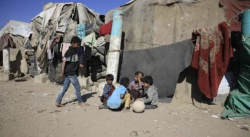
The UN Office for the Coordination of Humanitarian Affairs says nearly 260,000 people have been displaced since August, about half of them in Taiz.
The UN Human Rights Office has verified 251 civilian casualties in Yemen since August, 57 of them killed, OCHA said. It said half of those killed were children.
About the Author