Yemen Joins Arab League Conference on Combating Discrimination Against Muslims
 Yemen Herald News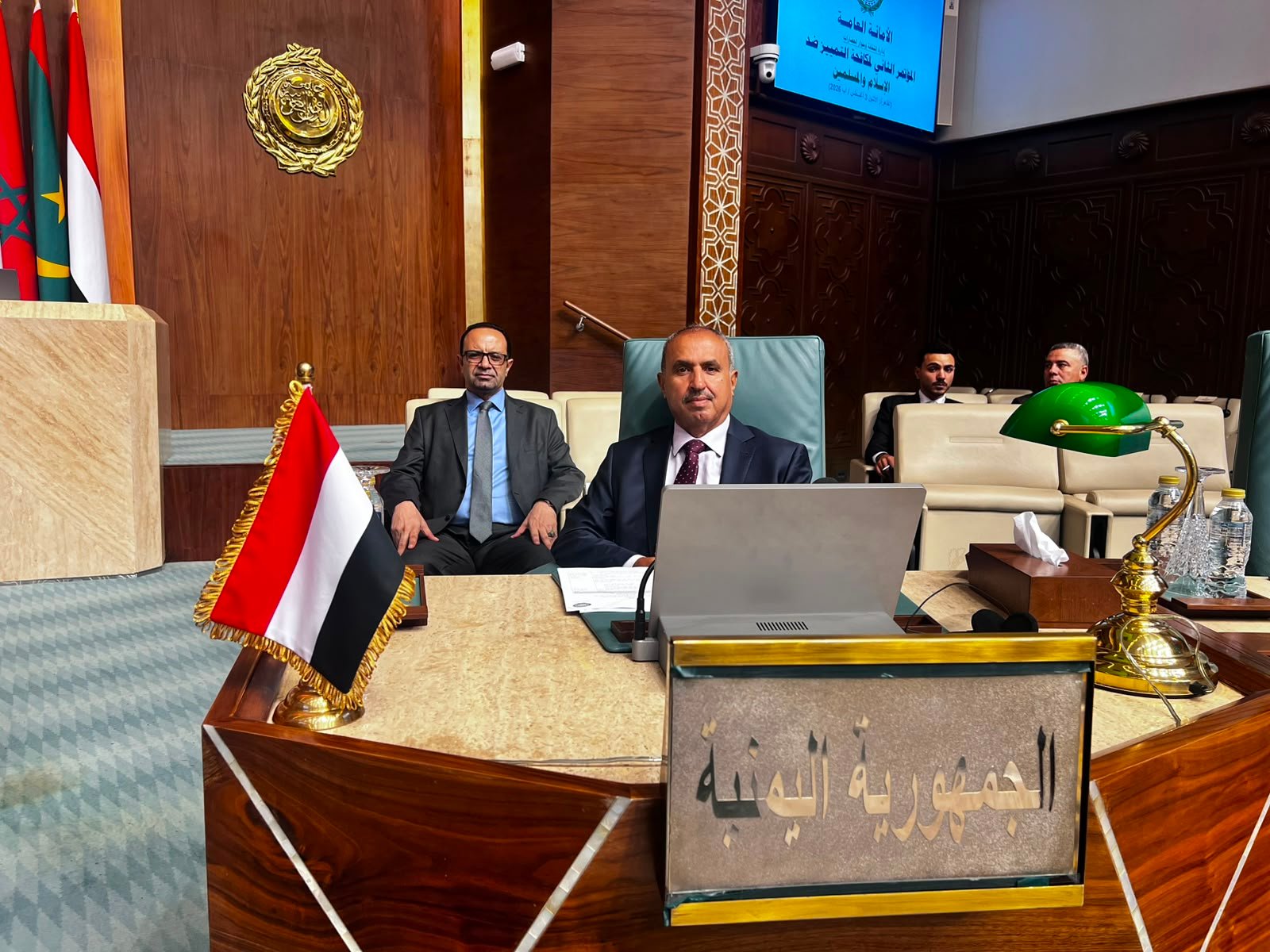
Yemen took part this week in the Second International Conference on Combating Discrimination Against Islam and Muslims, convened at the headquarters of the League of Arab States in Cairo. The two-day gathering was held under the theme “Islamophobia: Concept and Practice in Light of Current Global Conditions”, and drew government delegations, regional organisations, academics and civil society representatives from across the Arab world.
Yemen’s delegation was headed by Abdulmalik Dahan, Chargé d’Affaires and Minister Plenipotentiary at Yemen’s Permanent Mission to the League of Arab States. Dahan has represented the internationally recognised government at a series of Arab League meetings in Cairo over the past year, among them the preparatory session for the sixth Arab-European ministerial meeting, and his mission handles Yemen’s routine multilateral business at the bloc.
Qatar was among the other member states represented at the conference, which the Arab League has now staged for a second time. The organisers structured the programme around practical questions rather than declaratory statements, dividing the sessions between religious, educational, legal and civil society approaches to anti-Muslim discrimination. That the League has repeated the exercise suggests it intends the conference to become a standing fixture rather than a single response to a particular incident.
One session examined the role of religious institutions and Islamic centres in promoting moderate religious discourse. Speakers argued that mosques, seminaries and community centres in Europe and North America occupy a position that governments cannot easily replicate, because they reach audiences directly and can address distorted readings of Islamic teaching at the point where those readings take hold.
A second strand of the agenda dealt with national, regional and international practices for combating hate speech. Delegates compared the different legal instruments Arab and Western states have adopted, and the persistent difficulty of separating unlawful incitement from protected expression, an issue that has slowed legislative responses in several jurisdictions.
Educational institutions formed a third theme. Participants discussed how school curricula, teacher training and university programmes shape attitudes towards religious minorities long before adults encounter political rhetoric about them, and pressed for material that presents Muslim communities as part of the societies they live in rather than as a subject studied from outside.
The final sessions turned to civil society organisations and to young people. Organisers highlighted the contribution non-governmental bodies make in documenting incidents of discrimination and supporting those affected, and called for the empowerment of young Muslims to spread a culture of coexistence and mutual respect within their own communities and beyond them.
Running through the discussions was an argument about contribution rather than grievance. Several participants pointed to the part Muslim communities in Western societies play in fostering peaceful coexistence, cultural dialogue and the rejection of both extremism and racial discrimination, and said that record is rarely reflected in the way those communities are described in public debate.
Delegates also returned repeatedly to the media. The conference heard calls for educational and media initiatives designed to raise public awareness, on the argument that sustained, accurate coverage does more to dislodge stereotypes than periodic official statements. Organisers framed such initiatives as practical tools against bigotry and against incitement grounded in religion or belief.
The participants collectively reaffirmed that Islam, at its core, embodies principles of peace, tolerance and respect for human dignity — a message repeated across the panels and intended to counter the association of the faith with violence that surfaces in some media and political discourse.
The Cairo meeting sits within a wider international effort. In March 2022, the United Nations General Assembly adopted a resolution designating 15 March as the International Day to Combat Islamophobia, the first time the world body had set aside a day specifically for the issue. The date marks the anniversary of the 2019 attacks on two mosques in Christchurch, New Zealand, in which 51 worshippers were killed.
For the Arab League, the conference series is part of a broader push to coordinate member states’ positions on the treatment of Muslim minorities abroad, a file that has grown more prominent as migration and religious identity have moved to the centre of political argument in several European countries and in North America. Officials have argued that a coordinated Arab position carries more weight with European institutions than individual démarches from separate capitals.
For Yemen, participation carries a particular weight. The country has been consumed since 2015 by a war that has displaced millions and left much of the population dependent on aid, and its diplomatic capacity has been stretched accordingly. Multilateral meetings of this kind remain one of the more reliable channels through which the government keeps a presence in regional decision-making.
Yemen’s mission in Cairo has been active across a range of Arab League files in recent months, from the bloc’s statements on Yemeni sovereignty to preparatory work for ministerial meetings with European counterparts. Attendance at the Islamophobia conference places the country alongside other member states on a question that sits outside its own conflict but touches its citizens abroad.
Conferences of this type produce recommendations rather than binding commitments, and their effect depends on what individual states and institutions choose to carry forward. The organisers closed by urging follow-through on the educational, media and civil society measures raised over the two days, and on continued coordination between Arab governments and Muslim communities living in the West.
About the Author