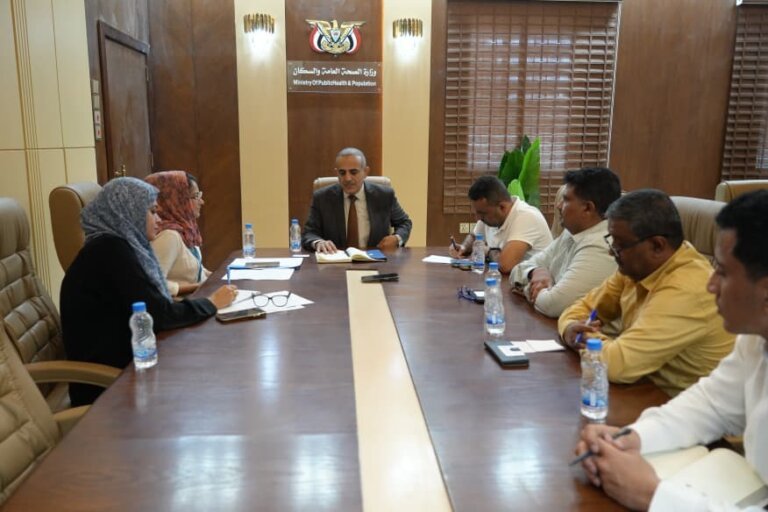
Yemeni rights network says Houthi attacks killed or injured 58,904 civilians since 2015
 Yemen Herald News
ADEN, Yemen — A Yemeni rights group said Houthi forces killed or injured 58,904 civilians between January 2015 and mid-2026, a figure no independent body has confirmed.
The Yemeni Network for Rights and Freedoms published the tally in a report covering January 2015 to the first half of 2026.
The organisation said 15,478 civilians were killed, among them 1,216 women and 943 children.
A further 35,654 civilians were injured, including 6,348 women and 4,283 children, according to the report.
The network attributed a separate set of casualties to landmines it said Houthi forces planted in residential areas, villages, farms and roads.
It recorded 1,637 civilian deaths from those devices, among them 213 children and 198 women.
Another 6,135 civilians were wounded by landmines, including 741 children and 362 women, the report said.
More than 798 people were left with permanent disabilities, about 397 of them children, according to the same figures.
The two sets combine to produce the headline total. Direct casualties account for 51,132 of the 58,904, and landmine casualties for the remaining 7,772.
The network called on the international community and the United Nations to take measures to protect civilians.
It asked those bodies to press the Houthis to comply with international humanitarian and human rights law.
Landmines continue to threaten civilians and to obstruct their return to their communities, the report said.
The findings were carried by the state news agency Saba and by the Anadolu Agency.
Both outlets reported the network’s figures. Neither published independent verification of them.
No United Nations body, international monitoring mission or independent wire has published its own count matching the network’s total.
The summaries published by Saba and Anadolu do not set out the methodology behind the network’s classifications.
It is not clear from those summaries how the network separated casualties it attributes to Houthi forces from those caused by other parties.
Yemen Herald could not independently verify the figures.
The Houthi authorities did not issue a public response in the reports reviewed.
The Yemeni Network for Rights and Freedoms is a Yemeni organisation that has documented alleged abuses through the war.
It has previously called on governments to designate the Houthi movement a terrorist group, according to material published by Yemen’s foreign ministry.
A separate report carried by Saba recorded close to 30,000 violations against children since 2015.
The United Nations runs its own civilian casualty monitoring in Yemen through the Civilian Impact Monitoring Project.
The project operates as a service of the UN Protection Cluster for Yemen and has reported since August 2018.
It records incidents across five hubs covering Hodeidah, Saada, Sanaa, Aden and Ibb.
Its counts are drawn from open-source reporting and are not organised around which party a monitor holds responsible.
The UN High Commissioner for Human Rights, Volker Türk, said on Aug. 17 that he was alarmed by the rising civilian toll as hostilities escalated.
Türk said at least 17 civilian casualties from Ansar Allah attacks had been reported in government-controlled areas since Aug. 6.
Two casualties were reported in Ansar Allah-controlled areas in late July, according to the same statement.
Ansar Allah is the formal name of the Houthi movement.
Türk urged all parties to exercise restraint.
Those figures cover recent weeks only and do not speak to the network’s cumulative total.
The network’s reporting period ends in the first half of 2026 and does not cover the escalation the United Nations described in August.
Human Rights Watch documented abuses by all parties to the conflict in its World Report 2026, including by Houthi forces and by government-aligned forces.
Independent estimates of Yemen’s war dead are produced on a different basis and are not directly comparable.
The United Nations Development Programme estimated 377,000 deaths by the end of 2021 from combat and from indirect causes such as disease and hunger.
That estimate counted deaths caused by all parties to the conflict.
The network’s tally, by contrast, attributes casualties to Houthi forces alone.
Yemen remains among the countries worst affected by landmines and unexploded ordnance, Human Rights Watch said in its World Report 2026.
Separate monitoring data covering 2018 to March 2026 recorded 1,367 civilians killed and 1,622 wounded by landmines and explosive remnants of war.
That series covers a shorter period and counts incidents regardless of which party laid the devices.
The differing methods make the two landmine counts difficult to reconcile.
The war has displaced 5.2 million people, according to the March 2026 Humanitarian Needs and Response Plan.
That plan recorded more than 22 million people in need of humanitarian assistance.
It listed 18.3 million people as acutely food insecure.
More than 2.2 million children under five are acutely malnourished, 516,157 of them severely, the plan said.
The plan seeks $2.16 billion to reach 12 million people.
Yemen has been divided since 2014, when the Houthis took Sanaa.
The internationally recognised government operates from Aden.
A Presidential Leadership Council chaired by Rashad al-Alimi has held executive authority since April 2022.
Exchanges of fire continue in Marib, al-Jawf, Taiz and along the Red Sea coast.
A UN-brokered truce that began in April 2022 lapsed that October and has not been formally renewed.
The United Nations has continued to seek a renewed political process since.
About the Author