Yemen’s Foreign Ministry Condemns Deadly Houthi Missile Strike on Cargo Ship Tihamah
 Yemen Herald News
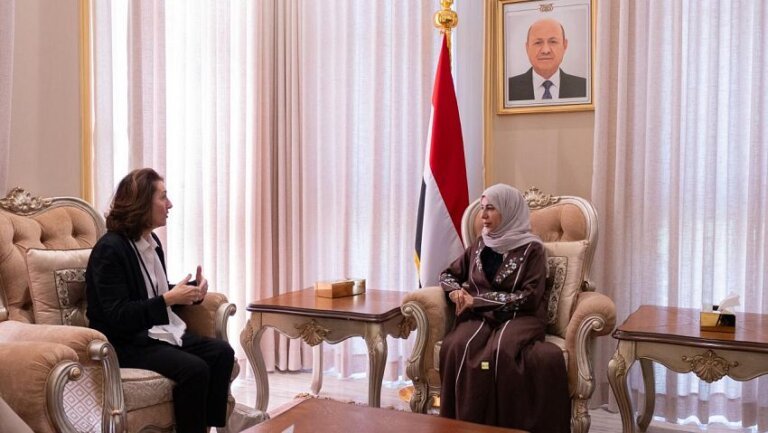
Yemen’s Ministry of Foreign Affairs and Expatriates has condemned the missile attack that struck the commercial vessel Tihamah in the Bab al-Mandeb Strait on Tuesday, calling it a deliberate assault on the country’s maritime lifeline and on the legal protections that shield civilian shipping. The ministry said the strike formed part of a widening pattern of Houthi aggression against Yemeni ports, trade routes and food supplies, and it urged the international community to move beyond statements of concern to enforceable measures.
The Yemeni government’s transport ministry said the Tihamah was hit by three successive ballistic missiles as it transited the strait, one of the busiest maritime chokepoints in the world. The vessel, which was carrying food supplies, caught fire and sustained heavy material damage. Four crew members were killed, three of them Pakistani nationals and one an Indonesian sailor, and four others were wounded. The government later put the overall toll at six, saying two members of the allied National Resistance Forces also died in the attack and its aftermath.
Rescue teams that reached the burning ship came under fire as well. Yemeni officials said a further missile was launched at the vessel while the rescue operation was under way, wounding a member of the rescue crew. The foreign ministry described that second strike as a deliberate attempt to obstruct a humanitarian rescue, and said it showed disregard for the protections that international maritime and humanitarian law extend both to seafarers and to those who go to their aid.
The casualties appear to be the first deaths among ships’ crews from attacks off the Yemeni coast in the current round of fighting. Earlier strikes in the Red Sea and the Gulf of Aden damaged and in some cases sank vessels without killing anyone on board. The Tihamah incident marks an escalation in both lethality and choice of target: a Yemeni-flagged ship carrying food towards Yemeni ports, rather than a foreign-owned carrier passing through on an international route.
The attack came two days after an assault on the port of Mokha on the Red Sea coast. According to the transport ministry, an explosive-laden boat was used against an oil tanker anchored there, in what the ministry called a terrorist attempt targeting civilian infrastructure. The National Resistance Forces said at least seven people were killed at Mokha, four of them troops and three civilians, and that 15 civilians were wounded. Authorities in Taiz governorate described the strike as a war crime aimed at the economic and relief lifeline serving government-held areas.
Mokha, Aden and the smaller Red Sea anchorages have become the principal entry points for commercial and relief cargo bound for territory outside Houthi control, and officials argue that damage there is felt far beyond the quayside. The foreign ministry said that by striking port facilities and food-carrying ships the Houthis are targeting the food supply of ordinary Yemenis, and that using humanitarian need as political leverage compounds a crisis already among the most severe in the world.
The scale of that crisis is set out in the United Nations humanitarian needs and response plan for Yemen published in March. It estimates that 22.3 million people, the large majority of the population, will need humanitarian assistance and protection services during 2026, including 5.2 million people displaced inside the country. Acute food insecurity affects 18.3 million people, and more than 2.2 million children under the age of five are acutely malnourished. Aid agencies are seeking 2.16 billion dollars to reach 12 million people, with priority given to the 9.4 million living in areas of highest severity.
Because Yemen imports the great majority of its staple food, sustained disruption to shipping feeds quickly through to prices and availability in local markets. Higher insurance premiums and the reluctance of owners to send crews through the strait compound the effect.
The government is pressing for a firmer international response. It has called on the United Nations Security Council to go beyond condemnation and apply concrete measures, including sanctions on those responsible and strict enforcement of the arms embargo intended to limit the weapons reaching the Houthis. Officials argue that the ballistic and naval capabilities used in recent attacks point to a supply chain that existing restrictions have failed to close.
It has also asked for greater support for the Yemeni navy and Coast Guard, which it says lack the vessels, radar coverage and trained personnel needed to patrol a coastline running for roughly two thousand kilometres. Strengthening those forces, the foreign ministry said, is essential if the state is to exercise effective sovereignty over Yemeni waters.
Bab al-Mandeb, barely 30 kilometres across at its narrowest point, links the Red Sea to the Gulf of Aden and carries traffic bound for the Suez Canal. Attacks in the corridor since late 2023 have already pushed many operators onto the longer route around the Cape of Good Hope.
The Houthis claimed responsibility for the attack on Mokha port. The government attributes the Tihamah strike to the group as well, and no independent international investigation had been announced at the time of writing. The foreign ministry said the two incidents should be read together rather than as isolated events, and as evidence of a sustained threat to commercial navigation that reaches well beyond Yemeni waters.
About the Author