Yemen’s National Defence Council orders higher readiness after Houthi strikes on Marib and Hadramout
 Yemen Herald News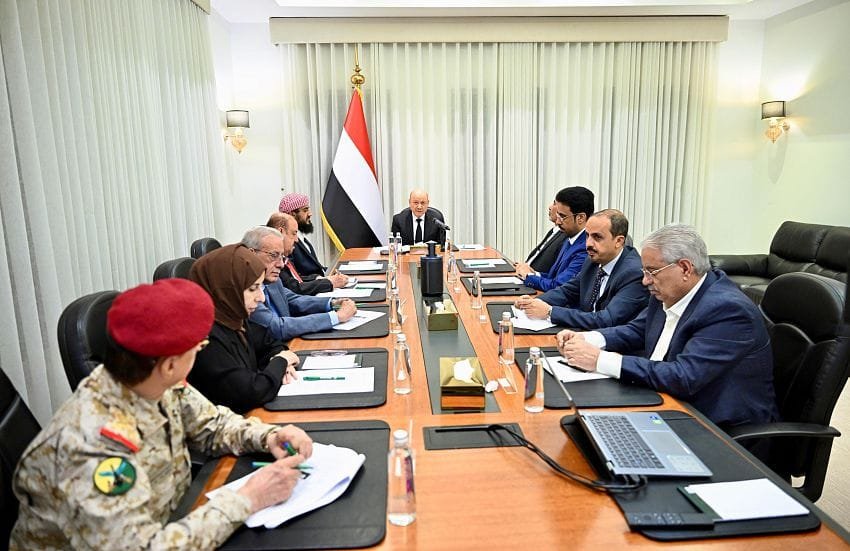
Rashad al-Alimi, chairman of Yemen’s Presidential Leadership Council and supreme commander of the armed forces, convened an emergency session of the National Defence Council on Friday and approved a set of measures raising military readiness, following a week of Houthi missile and drone attacks on government-held areas in Marib, Hadramout and Shabwa.
The session brought together members of the Presidential Leadership Council, among them Sultan al-Aradah and Tariq Saleh, alongside the speaker of the House of Representatives, the prime minister and the chairman of the Shura Council. The council decided to remain in permanent session, an arrangement intended to let it take decisions as events develop rather than waiting for a scheduled meeting.
The government said the attacks were carried out with ballistic missiles and armed drones and struck military sites, vital installations, residential districts and camps sheltering displaced families. News reports earlier in the week put the toll at more than 30 government soldiers killed and around 15 wounded. The Houthis said they had targeted military deployments. Casualty figures in Yemen are routinely contested and none of the tallies has been independently verified.
The council offered condolences to the families of those killed and said the government would cover the treatment of the wounded and continue support to bereaved households. Al-Alimi had spent the preceding days in contact with council members and provincial governors, instructing government, military, security and health authorities to move resources toward caring for casualties, according to official accounts of the meeting.
Members framed the losses as reinforcing rather than weakening the government’s position, saying the sacrifices would strengthen the resolve of the armed forces and the wider public against an insurgency the government describes as backed by Iran. The Houthis reject that characterisation of their relationship with Tehran, presenting themselves as an independent national movement.
The directives adopted at the session cover three areas: raising the readiness of military units, improving civil protection for populations near the front lines, and tightening coordination between the military, security and intelligence services so that warnings are acted on more quickly. The council also called for stronger action against arms and drug smuggling, which officials say funds armed groups and moves weapons across the country’s long and thinly policed borders.
Much of the discussion turned on unity. Yemen’s anti-Houthi camp is a coalition of forces with distinct commands, regional bases and political objectives, and the difficulty of coordinating them has shaped the course of the war. The council urged political and social constituencies to hold together and warned that attempts to widen internal divisions would be treated as part of the military campaign against the government rather than as separate political disputes.
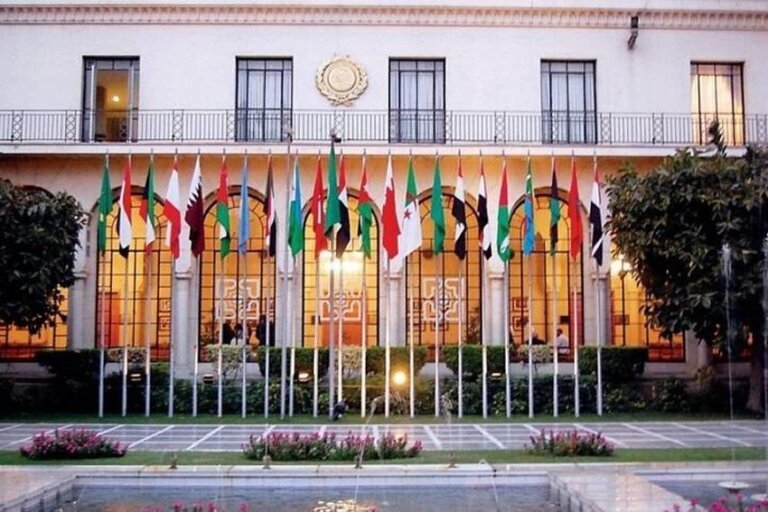
The council also welcomed the Mecca Joint Defence Agreement, signed on 7 August in Mecca by Saudi Arabia, Turkey and Pakistan. Under the pact an armed attack on any one of the three states is to be treated as an attack on all three, and the signatories committed to broadening defence cooperation. It was signed by Saudi Crown Prince Mohammed bin Salman, Turkish President Recep Tayyip Erdogan and Pakistan’s prime minister at a summit in the city, and it extends to Turkey a mutual-defence commitment Saudi Arabia and Pakistan agreed bilaterally in September 2025.
For Yemen’s internationally recognised government the agreement matters mainly through Saudi Arabia, which leads the coalition that has backed it since 2015 and hosts much of its leadership. The council praised the Saudi role in assembling the pact. The agreement was concluded against the background of a wider regional confrontation involving Iran that began earlier this year, during which Gulf states came under repeated missile and drone attack.
Marib, one of the governorates struck this week, has been the government’s most important stronghold in northern Yemen and the site of its heaviest fighting. It holds the country’s main onshore oil and gas facilities and has absorbed a very large displaced population, which makes attacks there costly in both military and humanitarian terms. Hadramout, Yemen’s largest governorate by area, covers the eastern desert and a long southern coastline and has generally been quieter, so strikes on units stationed there indicate a widening of the campaign.
The humanitarian backdrop remains severe. United Nations agencies estimate that more than 18 million people in Yemen require assistance and that roughly four and a half million are displaced. Outbreaks of cholera and measles have recurred in areas where water systems and clinics have been damaged, and aid agencies have reported funding shortfalls that have forced reductions in food distributions.
The armed forces announced on Saturday that they had begun operations against Houthi positions along several front lines, describing them as a response to the week’s attacks. There is no active negotiating track between the two sides at present, and the truce arrangements brokered by the United Nations in 2022 have long since lapsed as a formal framework, leaving the front lines quiet in some areas and contested in others.
What the council’s decisions produce in practice will depend on capabilities rather than declarations. Readiness orders and coordination directives have been issued before without markedly changing conditions on the ground, and the government’s ability to protect camps and installations from missile and drone fire depends on air-defence and early-warning systems it does not fully control. The permanent-session arrangement at least shortens the interval between an incident and a decision.
About the Author