Yemen’s Prime Minister Praises US Support and Urges a Broader Partnership
 Yemen Herald News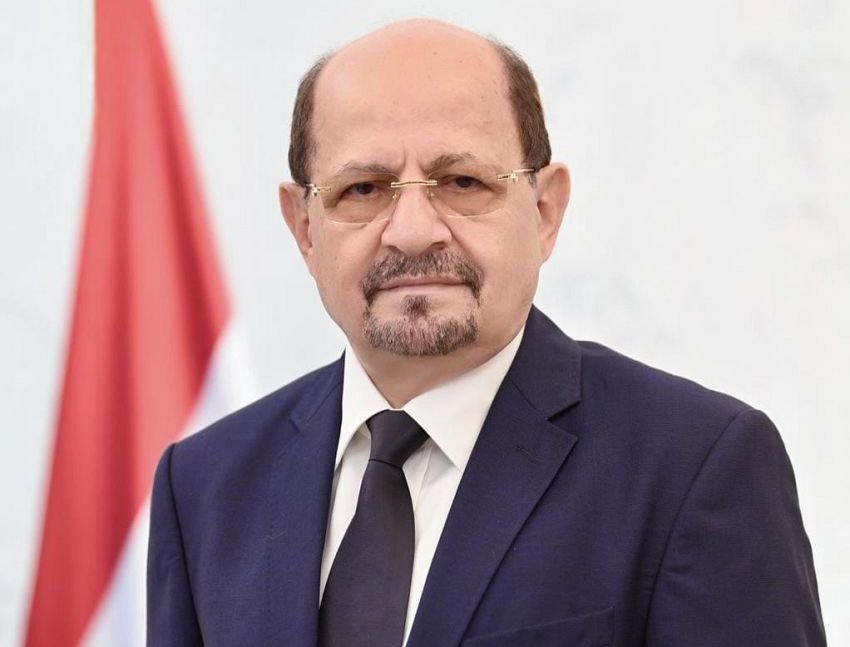
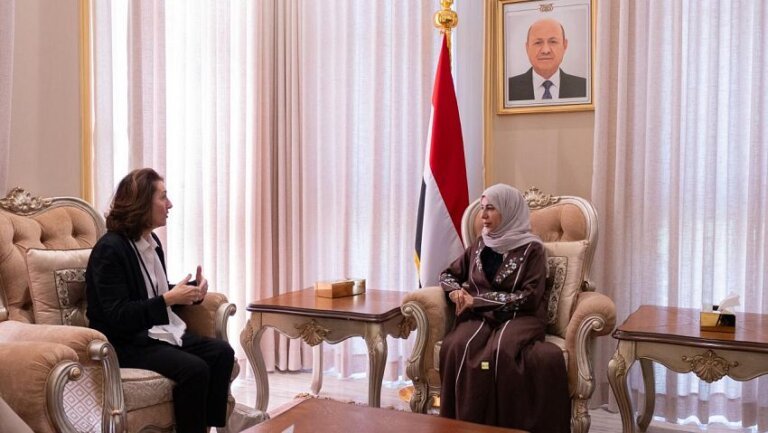
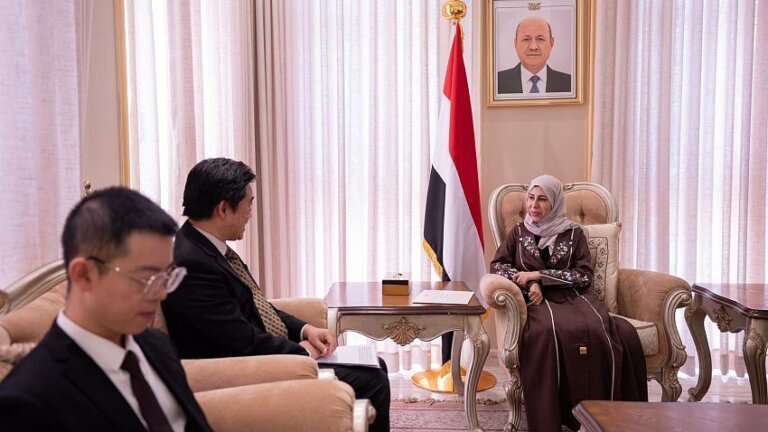
ADEN — Yemeni Prime Minister Shaya Mohsen al-Zindani has praised the United States for what he called its constant support for the Yemeni government and state institutions, and urged both sides to broaden their partnership. His remarks came during a video call on Wednesday with Neil Hop, the Chargé d’Affaires of the United States Mission to Yemen, according to a readout published by the official Yemeni news agency Saba.
“We are grateful to the U.S. for its constant support for the government and the state institutions, looking forward to further broaden the joint cooperation and partnership,” Saba quoted the prime minister as saying. The agency said the two men reviewed bilateral relations, the military escalation that the government attributes to the Houthi movement, and the steps the cabinet is taking in response to current developments.
The American diplomat, in the same account, said Washington was interested in supporting the Yemeni government’s efforts to establish security and stability and to counter threats to navigation and international trade. The readout was issued by the government’s own news agency and has not been independently confirmed; no statement describing the call had been published by the United States Mission to Yemen at the time of writing.
The exchange was among the first publicly reported contacts between the prime minister and the new American chargé d’affaires. Neil Hop took up the post on 5 August 2026, according to the United States Mission to Yemen, which described him as a career member of the Senior Foreign Service with the rank of Counselor and more than 24 years in State Department and interagency foreign policy and national security roles. The mission said his priorities include freedom of navigation in the Red Sea, counter-terrorism and the security of American partners.
Contacts of this kind are routinely held by video link. The United States suspended operations at its embassy in Sanaa in February 2015 as the conflict escalated, and its diplomatic mission to Yemen has since worked from outside the country. Yemen’s internationally recognised government is based in the southern port city of Aden, while the Houthi authorities administer Sanaa and much of the densely populated north-west.
Al-Zindani is himself relatively new in the job. He was named prime minister in January 2026 after the Presidential Leadership Council accepted the resignation of Salem Saleh bin Braik, who had held the office since May 2025 and was subsequently appointed an adviser to council chairman Rashad al-Alimi for financial and economic affairs. Al-Zindani had previously served as foreign minister, a background that has shaped a premiership heavy on external engagement, and he continues to court donors and diplomatic partners at a moment when the government’s finances remain under acute strain.
The call took place against a backdrop of renewed fighting. In reports published the same week, Saba said Houthi forces had struck the Red Sea port of al-Mokha, commercial vessels and civilian facilities, and had attacked civilians and displaced people in several governorates. The agency also reported that Pakistan had condemned an attack on a commercial ship in the Bab al-Mandab strait, and that government forces in Shabwa had repelled an assault on their positions. Those accounts come largely from the government side and the Houthi movement disputes the way its operations are characterised.
Geography explains much of Washington’s interest. Yemen’s long western coastline runs along the Red Sea and terminates at Bab al-Mandab, the narrow strait separating the Arabian Peninsula from the Horn of Africa and one of the busiest chokepoints in global shipping. Traffic through the strait feeds the Suez Canal, and sustained attacks on merchant vessels since late 2023 have pushed many operators to reroute around southern Africa, adding time and cost to Asia-Europe voyages.
The humanitarian picture remains severe. The United Nations Office for the Coordination of Humanitarian Affairs estimates that 22.3 million people in Yemen require humanitarian assistance and protection in 2026, among them 5.2 million internally displaced people as well as migrants and refugees. Some 18.3 million people face acute food insecurity, more than 2.2 million children under five are acutely malnourished, and over half a million of those children suffer from severe acute malnutrition. Nearly 40 per cent of health facilities are only partly functional or not functioning at all, and 14.4 million people need water, sanitation and hygiene support.
Funding has not kept pace. The United Nations and its partners have appealed for 2.16 billion dollars this year to reach 12 million people, including 9.4 million prioritised for targeted assistance based on the severity of their needs. Aid agencies warn that shortfalls force them to cut rations, close clinics and suspend water trucking.
For the government in Aden, foreign backing is as much economic as military. Officials have made restoring public revenues, stabilising the currency and improving basic services the central test of the cabinet’s credibility, and have consistently linked progress on those fronts to external assistance. Al-Zindani used Wednesday’s call to press that argument.
What the meeting did not produce was any sign of movement toward a political settlement. United Nations-led efforts to convert a fragile truce into a durable agreement have been stalled for a considerable period, and the Presidential Leadership Council, formed in April 2022 to unify the anti-Houthi camp, still governs a country split between rival administrations. Exchanges such as this one signal continuity of support; they do not, on their own, alter the balance on the ground.
About the Author