Yemen’s water minister and FAO’s Adam Yao discuss expanding cooperation in Aden talks
 Yemen Herald News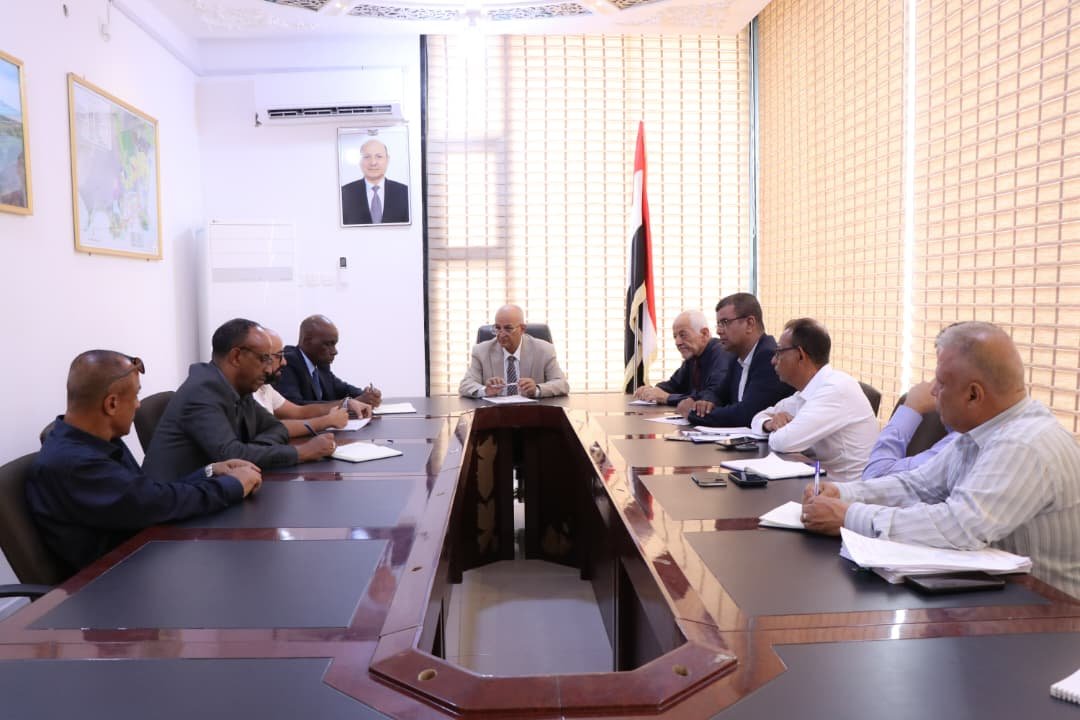
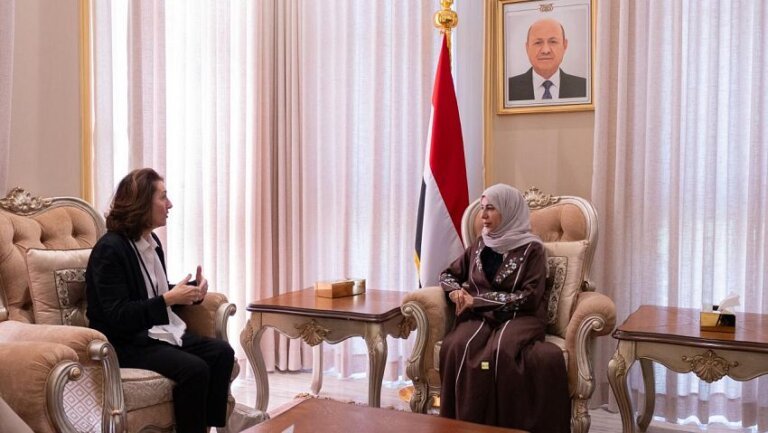
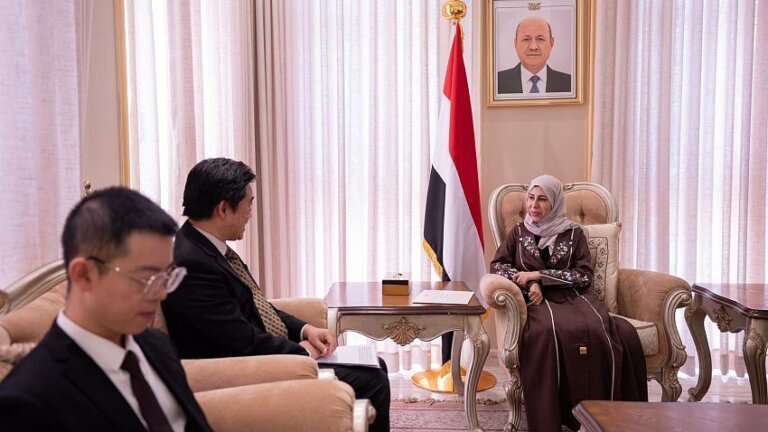
Yemen’s Minister of Water and Environment, Eng. Tawfiq al-Sharjabi, held talks in Aden on Wednesday with Dr. Adam Yao, the Resident Representative in Yemen of the Food and Agriculture Organization of the United Nations, on avenues for joint cooperation across a number of projects and programmes in the water, environment and natural resources sectors. The state news agency Saba, which reported the meeting, said the two sides reviewed both the work already under way between the ministry and the agency and the scope for opening new lines of cooperation.
Much of the discussion centred on the General Authority for Water Resources, the government body charged with regulating and monitoring the country’s water resources. According to Saba, the two sides examined supporting the authority with capacity-building programmes intended to help restore its activities and strengthen its technical and institutional capabilities in water resources management. Years of conflict and constrained public finances have left many Yemeni state institutions operating well below their pre-war capacity.
The meeting also addressed the procedures for transferring an existing project to the ministry, a step the two sides agreed to expedite, along with preparations for that project’s Steering Committee meeting, which is scheduled for the end of August. Saba did not identify the project by name. The two sides further agreed to begin preparing and planning new projects, building on the continuing discussions and coordination between the ministry’s technical team and the FAO.
Institutional support for the ministry itself formed a further item on the agenda. The talks covered assistance being provided in the light of a request the ministry has submitted to the FAO, with the stated aim of strengthening its capabilities and improving its performance in the fields of water and the environment.
Al-Sharjabi underscored the importance of deepening the partnership with the FAO and of drawing on the organisation’s expertise and programmes to support priorities in the two sectors. He stressed the need to maintain close coordination in order to accelerate the implementation of projects already running and to prepare the ground for future ones, and he expressed appreciation for the support the organisation has extended to the ministry and its affiliated institutions.
Yao, for his part, affirmed the FAO’s commitment to continuing its cooperation and partnership with the Ministry of Water and Environment and to supporting the ministry’s priorities in water, the environment and natural resources. He pointed to the importance of joint coordination in advancing the implementation of current projects, preparing for future ones and strengthening the institutional and technical capacities of the relevant national authorities.
The exchange takes place against a backdrop of acute water stress. Yemen is among the most water-scarce countries in the world, with renewable freshwater availability per person far below the threshold conventionally used to define absolute scarcity, and groundwater in several of its basins has been drawn down faster than it can recharge. Damage to pumping stations, pipe networks and treatment plants during the war, together with fuel shortages and unreliable electricity, has compounded a problem that predates the fighting.
The humanitarian consequences are set out in the United Nations planning documents for this year. The UN Office for the Coordination of Humanitarian Affairs estimates that more than 22 million people in Yemen will need humanitarian assistance and protection during 2026, and that 14.4 million of them require water, sanitation and hygiene support, with water scarcity and damaged infrastructure heightening health risks. OCHA also reports that 18.3 million people are acutely food insecure and that more than 2.2 million children under the age of five are acutely malnourished.
Funding remains the binding constraint. The United Nations and its partners have appealed for 2.16 billion dollars to reach 12 million people in Yemen this year, a target that has historically outrun what donors provide. Close to 40 per cent of health facilities are only partially functional or not functioning at all, according to OCHA, which leaves water-borne disease with little treatment backstop and makes preventive work on water and sanitation correspondingly more valuable.
The FAO has maintained a substantial presence in Yemen throughout the conflict, working on agriculture, fisheries, food security and the natural resource base that underpins them. Al-Sharjabi and Yao have appeared together at earlier events, including the inauguration of fish landing centres in al-Mahrah governorate reported by Saba, and the minister led Yemen’s delegation in discussions with the FAO on food security and water scarcity at the COP28 climate conference.
Aden has served as the interim seat of the internationally recognised government since 2015, and most ministries, including Water and Environment, run their operations from the city. Much of the government’s engagement with international organisations now turns less on emergency relief than on whether national bodies can be restored to the point where they are able to plan, licence and supervise work themselves.
No timetable beyond the end-of-August Steering Committee meeting was announced, and neither side put a figure on the institutional support under discussion. What was set out is a direction of travel: transferring an existing project into the ministry’s hands, restoring the General Authority for Water Resources to working order, and lining up a further round of projects on the strength of that. Whether those intentions translate into measurable improvements in water supply will depend on funding decisions and on conditions on the ground that Wednesday’s meeting in Aden did not attempt to resolve.
About the Author