Yemen’s Prime Minister Meets Save the Children Chief in Aden to Discuss Humanitarian Cooperation
 Yemen Herald News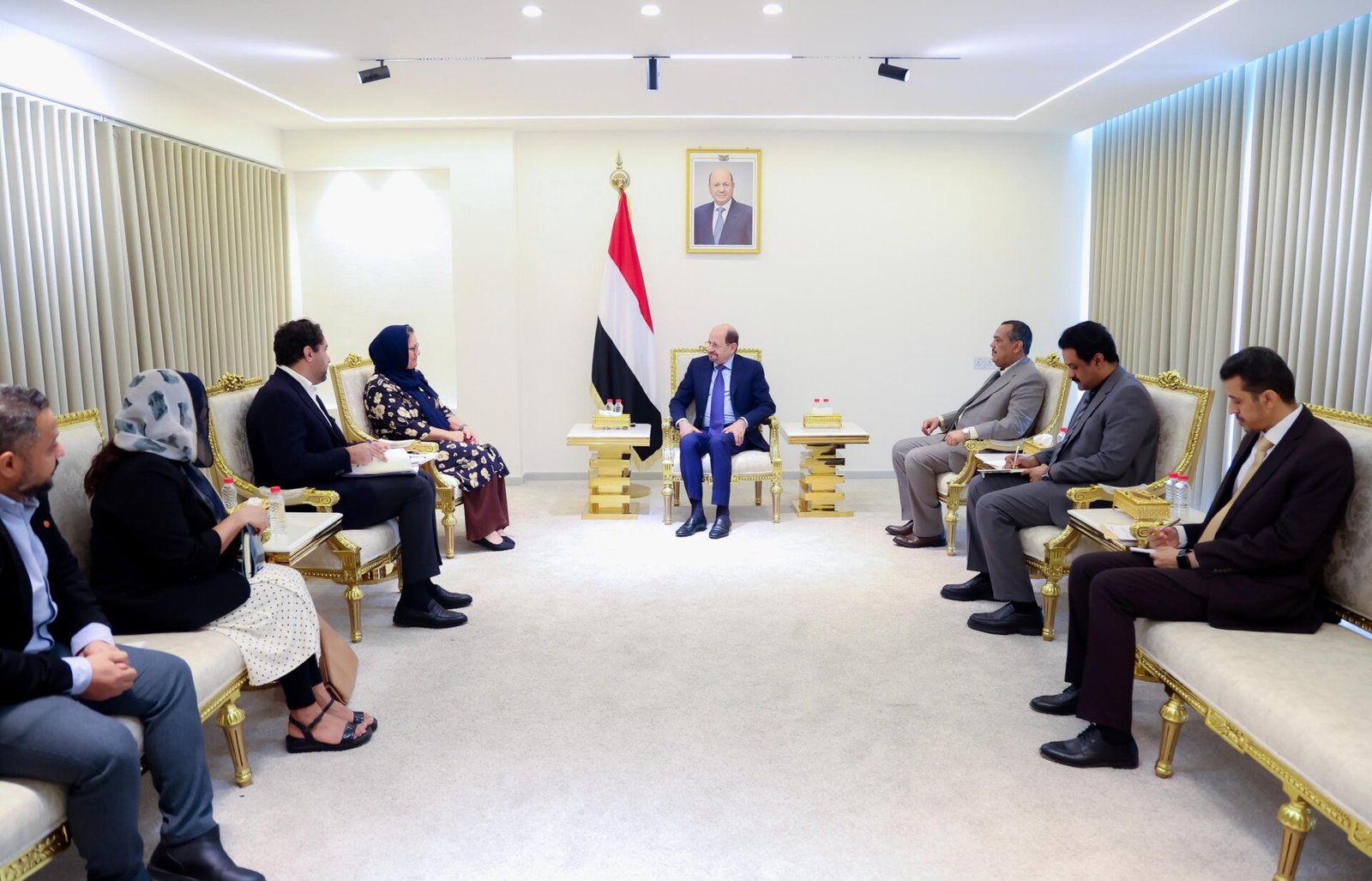
Yemen’s Prime Minister, Shaya Mohsen al-Zindani, who also serves as foreign minister, met in Aden with Inger Ashing, the chief executive of Save the Children International, and the organisation’s regional director, Ahmed al-Hindawi, to discuss deepening cooperation on humanitarian relief and development at a time of acute need. The talks, held in the country’s interim capital, brought together the head of Yemen’s internationally recognised government and one of the largest child-focused aid organisations working in the region, and signalled a mutual interest in expanding practical collaboration on the ground.
According to the government, the discussions focused on identifying areas where the authorities and international partners could work together to strengthen essential services and support vulnerable communities. Save the Children describes itself as the world’s largest independent organisation devoted to children’s rights, working to ensure that children survive, learn and are protected, and its involvement in Yemen has long centred on health, nutrition, education and child protection in a country where the young have borne much of the cost of prolonged conflict.
Ashing has led Save the Children International in recent years and has been associated with the organisation for much of her career, bringing a long record in child rights advocacy to its engagement with governments and donors. Her presence in Aden, alongside the group’s regional leadership, signalled the importance the organisation attaches to its work in Yemen, even as insecurity and funding pressures continue to constrain what aid agencies can achieve across the country.
Yemen’s humanitarian situation remains among the most severe in the world. Since the escalation of the civil war in 2015, when the internationally recognised government relocated to Aden after losing control of the capital, Sanaa, years of fighting have shattered the economy, damaged infrastructure and left millions dependent on outside assistance for food, clean water and basic health care. Aid agencies operating in the country must contend with insecurity, restricted access and chronic underfunding, all of which complicate the delivery of relief to those most in need.
Against that backdrop, the government has sought to present itself as a willing and active partner for international organisations. Officials indicated that cooperation with Save the Children could help reinforce a health system weakened by years of neglect and conflict, and support programmes aimed at children, who remain especially exposed to malnutrition, disease and disrupted schooling. Strengthening service delivery, the authorities argue, depends on aligning the government’s priorities with the expertise and resources that established aid groups can bring.
Food security featured prominently in the exchange. The prolonged conflict has driven widespread hunger, with large numbers of families reliant on humanitarian support to meet daily needs. By coordinating with partners experienced in child welfare and community health, the government said it hoped to back programmes that address immediate shortages while also building more durable resilience, so that communities become less vulnerable to future shocks.
Children have been among the most severely affected by Yemen’s war. Aid organisations have repeatedly warned that large numbers of Yemeni children are acutely malnourished, out of school or exposed to preventable disease, and that a collapse in routine services has compounded the dangers they face. For an organisation whose mandate is squarely focused on children, the government said, cooperation on nutrition, immunisation and education could help address some of the most pressing gaps, provided that funding and access can be secured.
Save the Children’s engagement in Yemen has not been without difficulty. The organisation has previously reported that a large share of its programming in parts of the country was suspended amid security concerns, including following the death of a staff member held in detention, a reminder of the risks that aid workers face in conflict zones. Such interruptions can have immediate consequences for the children and families who depend on nutrition, health and protection services, underscoring why safe and unimpeded humanitarian access is so central to discussions of this kind.
The talks also touched on the broader context in which aid is delivered. Yemen’s war has drawn in regional powers and become entangled with wider rivalries, a dynamic that has complicated humanitarian efforts and shaped international engagement with the country. Officials said that sustained cooperation with experienced organisations was essential not only to meet urgent needs but also to lay foundations for longer-term recovery, and that progress would depend on continued commitment from both national authorities and their international counterparts.
For the government, meetings such as this form part of an effort to coordinate the many actors involved in Yemen’s relief and development landscape and to demonstrate that it can serve as a reliable interlocutor for donors and agencies. For Save the Children and similar bodies, engagement with the authorities is a necessary step toward securing the access and guarantees that allow programmes to operate. Both sides, according to the government, framed the encounter as a constructive step, while acknowledging that the scale of Yemen’s needs far outstrips the resources currently available.
What such cooperation ultimately delivers will depend on the follow-through. Aid officials have repeatedly cautioned that high-level meetings must translate into concrete access, funding and protection for humanitarian staff if they are to make a difference in the lives of ordinary Yemenis. With the country’s children remaining acutely vulnerable, the practical test of the Aden discussions will be whether they help expand services, ease bureaucratic and security obstacles, and channel international support to the communities that need it most.
About the Author