Aden Governor and UNOPS Adviser Review Development Projects to Strengthen Public Services
 Yemen Herald News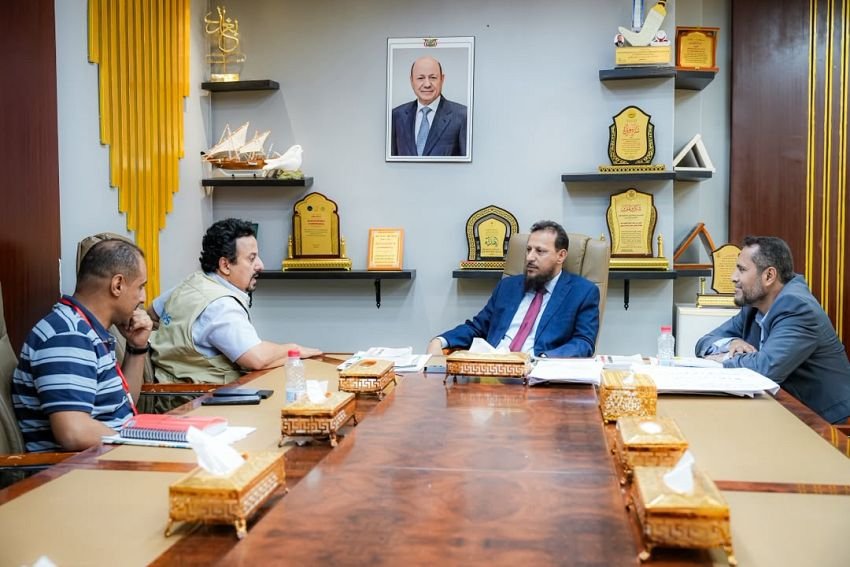
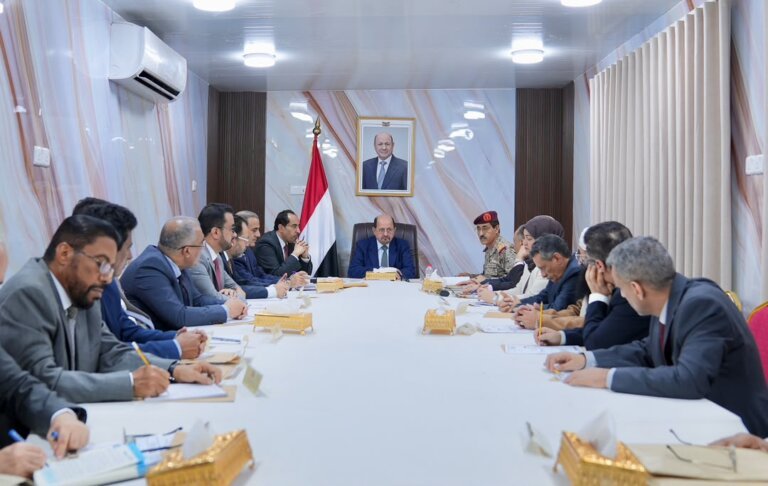
The Minister of State and Governor of Aden, Abdulrahman Sheikh al-Yafei, held talks on Thursday with Khaldoun Salem, an adviser to the United Nations Office for Project Services (UNOPS), to review the progress of ongoing projects and explore ways to deepen cooperation on development and public services across Yemen’s interim capital. The meeting reflected the local administration’s continued reliance on international partners to sustain and rebuild basic services in a city still recovering from years of conflict.
Discussions centred on the state of projects already under way and on how the government and UNOPS might broaden their collaboration in sectors that most directly affect residents’ daily lives. Officials said the priority was to translate international support into visible improvements on the ground, from utilities and roads to health facilities and water systems, at a time when the demands on the local authority far exceed its own resources.
Al-Yafei was appointed Minister of State and Governor of Aden by a decree of the Presidential Leadership Council in early January 2026, succeeding Ahmed Lamlas, who was dismissed and referred for investigation. A founding member of the Southern Transitional Council and a former deputy governor of the city, al-Yafei took the constitutional oath before the Council’s chairman, Rashad al-Alimi, shortly after his appointment. Since assuming office he has made the delivery of public services a stated priority.
The meeting with UNOPS formed part of a wider effort to coordinate the many development actors operating in the governorate. The governor reiterated the local administration’s commitment to working closely with the agency and to broadening the areas of collaboration in ways that could yield tangible progress. In a city grappling with the aftermath of war, he argued, restoring the foundations of daily life demands sustained cooperation between government bodies and experienced international organisations.
For his part, Khaldoun Salem affirmed UNOPS’s dedication to supporting the local authority’s initiatives and to helping rehabilitate infrastructure and deliver services in areas where government capacity has been eroded by the conflict. He pointed to the agency’s record in the governorate as a basis for expanding joint work, while acknowledging the scale of the challenges that remain.
Over the past several years, UNOPS has managed donor-funded programmes covering roads, health facilities and water systems in Yemen, channelling support from institutions such as the World Bank into completed works on the ground. That record has made the agency a familiar presence for local officials seeking to convert international funding into practical results, and it has positioned UNOPS as a significant partner in efforts to stabilise conditions for Aden’s population.
The encounter also highlighted the crowded landscape of organisations working in Aden and the surrounding governorate, where United Nations agencies, development banks and non-governmental groups all operate alongside local authorities. Coordinating their efforts has become a persistent challenge, and officials have argued that clearer alignment between the government’s priorities and international programmes is needed to avoid duplication and to ensure that limited funds reach the projects with the greatest impact. Meetings of this kind, they said, are part of an attempt to bring greater coherence to that effort.
Both sides framed their partnership as essential to delivering results that can foster stability. As Yemen’s political landscape and international relationships continue to shift, officials suggested, coordinated development work becomes ever more important, and successful collaboration could help position Aden as a comparatively stable hub within a turbulent region. The city has served as the seat of Yemen’s internationally recognised government since 2015, after the authorities relocated when the capital, Sanaa, fell under the control of Houthi forces.
That status has placed Aden at the centre of the government’s efforts to demonstrate effective administration, but it has also exposed the city to the strains of hosting state institutions amid limited budgets and recurring crises. Basic services have come under severe pressure, with residents contending with interruptions to electricity, water and other essentials, and with an economy battered by years of war and currency instability. Against this backdrop, partnerships with agencies such as UNOPS are seen as vital.
Officials cautioned that funding constraints continue to threaten essential programmes even as needs remain immense. Initiatives led by UNOPS and similar agencies are regarded as building blocks for the economic and social recovery that Aden and the wider country urgently require, and the local authority has sought to reassure partners that it can provide the coordination and support needed to keep projects on track.
Looking ahead, the prospect of expanding partnerships with international organisations offers a measure of hope for Aden’s recovery. Officials stressed that such collaboration must address not only immediate needs but also lay the groundwork for durable development, ensuring that today’s projects contribute to a more resilient future rather than serving as short-term fixes. The vision for a thriving Aden, they said, depends on navigating a complex political environment while maintaining momentum on service delivery.
Thursday’s meeting, officials indicated, is intended to serve as a foundation for further engagement aimed at revitalising the city and rebuilding the institutions on which its residents depend. While the challenges remain formidable, the continued cooperation between Aden’s administration and partners such as UNOPS reflects a shared determination to improve the lives of ordinary residents and to demonstrate that, even in difficult circumstances, coordinated development work can move forward.
About the Author