Yemen’s Envoy to Spain Warns Madrid Over Iranian Interference
 Yemen Herald News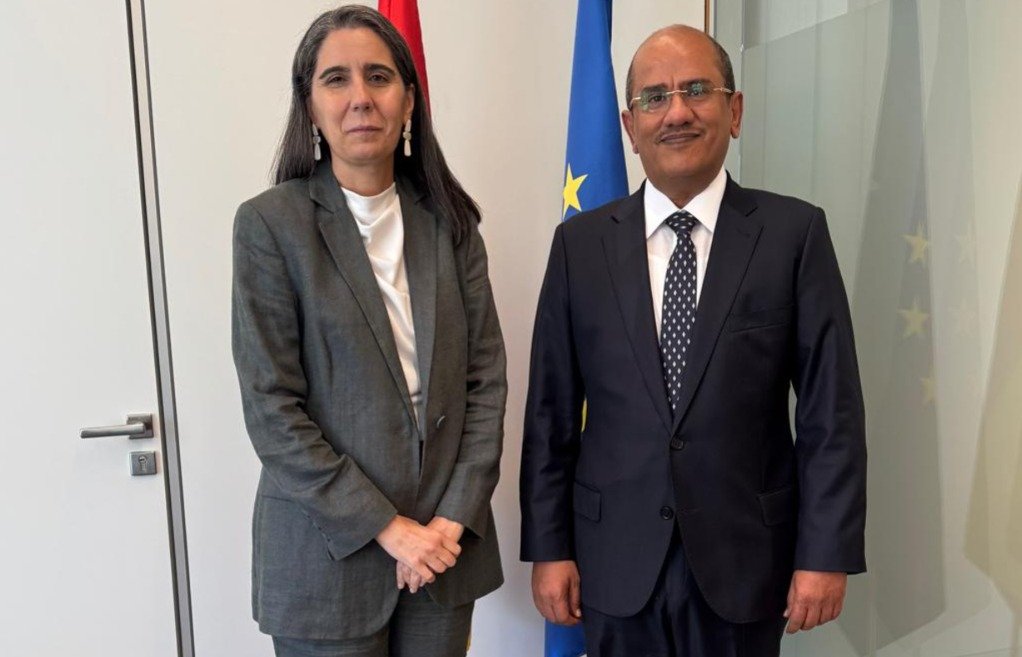
Yemen’s ambassador to Spain, Awsan al-Awd, has held talks with Carmen Casal, director-general for the Middle East and North Africa at Spain’s Ministry of Foreign Affairs, to discuss the situation in Yemen and, in particular, what the ambassador described as Iran’s continued interference in the country’s affairs. The meeting reflected persistent international concern over Yemen’s stability and the wider consequences of foreign involvement in a conflict that has dragged on for more than a decade.
During the discussion, al-Awd set out his assessment of the political and security landscape in Yemen, emphasising the government’s commitment to stability and to advancing the peace process. He voiced particular concern about Iran’s role, characterising its involvement as a breach of Yemeni sovereignty that deepens the challenges to peace both regionally and globally. Tehran’s support for the Houthi movement, he argued, has become one of the central obstacles to ending the war.
The ambassador said that Iran’s provision of military support and resources to the Houthis significantly undermines efforts to reach a settlement and prolongs the fighting. He warned that this involvement endangers not only Yemen’s national security but also international maritime routes, threatening the stability of the Red Sea region and the strategic Bab al-Mandab strait, through which a substantial share of global trade passes. Disruptions there, he noted, carry consequences well beyond Yemen’s shores.
Casal reiterated Spain’s commitment to Yemen’s unity and sovereignty, signalling that Madrid stands behind initiatives aimed at restoring peace. She also underlined Spain’s support for regional and international efforts to reach a comprehensive and lasting political settlement, one grounded in existing agreements and pursued under the auspices of the United Nations. Her remarks echoed the position of many European governments that view a negotiated solution, rather than a military outcome, as the only durable path.
Spain, a member of the European Union and a Mediterranean state with significant maritime interests, has followed the Red Sea crisis closely, given the disruption that attacks on shipping have caused to global trade routes linking Europe and Asia. Madrid has generally aligned itself with EU calls for de-escalation and for renewed United Nations-led mediation, and Yemeni diplomats have sought to keep the country’s cause visible in European capitals.
The talks came against a backdrop of heightened tension in the region. In recent weeks the confrontation between Yemen’s government and the Houthis has sharpened, most visibly after an Iranian aircraft attempted to reach Houthi-held Sana’a and government forces struck the airport runway to prevent it from landing. Episodes of that kind have reinforced Western concerns about Tehran’s reach into Yemen and about the risks such incidents pose to shipping in the Red Sea.
Yemen’s civil war, which escalated in 2015, has produced a humanitarian catastrophe. United Nations agencies estimate that more than 18 million people now require assistance and that over 4.5 million have been displaced within the country. Deteriorating living conditions, compounded by damaged infrastructure and periodic blockades, have fuelled recurrent outbreaks of cholera and measles, leaving an already vulnerable population exposed to disease as well as to the direct effects of the fighting.
The conflict has also evolved into a geopolitical flashpoint drawing in regional powers. Iran’s backing of the Houthis forms part of its wider strategy to extend influence across the Middle East, creating a proxy dynamic in which Yemen’s war is entangled with larger rivalries. The Saudi-led coalition that supports the internationally recognised government in Aden continues to view Iranian involvement as a direct threat to its own security, hardening positions on all sides.
That external involvement has made a settlement more difficult to reach. With both Iranian support for the Houthis and coalition backing for the government firmly entrenched, the cycle of escalation has proved hard to break, and each new incident tends to push the prospect of talks further away. As the international community searches for openings, conditions on the ground remain grim, with armed clashes and humanitarian need overshadowing diplomatic initiatives.
The ambassador’s warnings about Iranian influence came as several governments concerned about Tehran’s ambitions have stepped up diplomatic contacts over the crisis. The strategic importance of the Red Sea and the surrounding waterways, which carry a large volume of global maritime trade, has given those efforts added urgency, since instability off Yemen’s coast can quickly affect shipping and energy flows far beyond the region.
Yemeni officials have in recent months intensified their outreach to European governments, presenting the war less as a purely domestic struggle than as part of a regional security problem with international ramifications. By framing Iranian involvement in those terms, the government hopes to secure firmer diplomatic and material backing at a time when global attention is often pulled toward other crises.
For Yemen’s government, engagements such as the meeting in Madrid are part of a broader campaign to rally international support for its position and to press for sustained pressure on Tehran. Spain’s stated backing for the peace process, al-Awd suggested, could encourage other states to deepen their engagement. Yet without a comprehensive political settlement, officials and aid agencies alike warn, the humanitarian toll is likely to keep mounting, and the path toward lasting stability will remain long and uncertain.
About the Author