Yemen’s cabinet approves relief measures for families displaced by the Houthi advance
 Yemen Herald News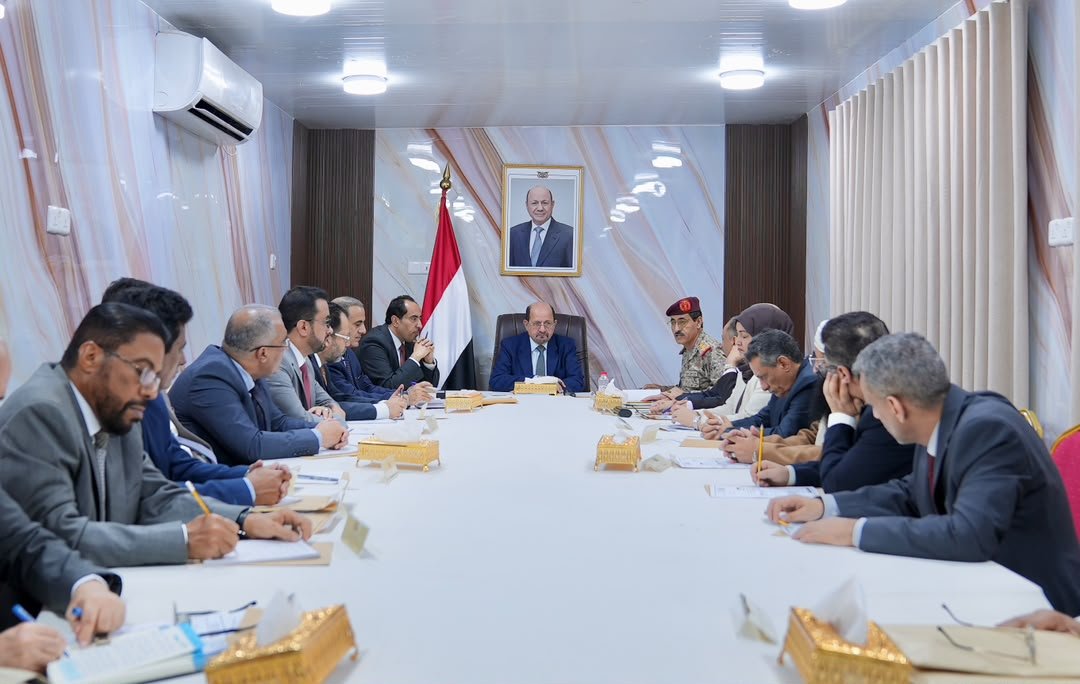
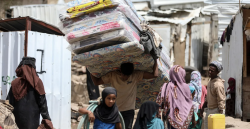
ADEN, Yemen — Yemen’s Council of Ministers approved a package of relief measures on Saturday for families displaced by the Houthi advance in the country’s west, the government said.
The cabinet met in Aden under Prime Minister Shaya Mohsen al-Zindani.
It said the measures address new waves of displacement from districts west of Taiz and south of Hudaydah.
Ministers instructed government bodies to work with local authorities and with regional and international partners on shelter, food, water and health care for the displaced, according to the state news agency Saba.
The cabinet also called for greater efforts to keep electricity, water and health services running in areas it controls.
The account of the session rests on the government’s own readout, distributed by Saba and carried by the independent outlet Yemen Monitor. Yemen Herald found no independent account of what was said in the room.
The defence minister briefed ministers on conditions across the fronts and on the supplies the armed and security forces require, the readout said.
Ministers discussed raising support for the armed forces, the security services and other military formations, Yemen Monitor reported.
The stated aim was to strengthen their ability to protect civilians, confront the escalation and regain the initiative.
The cabinet said the government was committed to supplying those forces, and to caring for the families of the dead and the wounded.
Al-Zindani said the government was managing the period with “the mindset of the state” and full responsibility.
He described the Houthi escalation as part of a wider plan linked to an Iranian agenda directed at international shipping and regional security.
That is the government’s characterisation. The Houthis reject descriptions of their campaign as Iranian-directed.
Al-Zindani said securing livelihoods, public services, health care and basic supplies remained the priority.
He said the escalation would not create a vacuum or a disruption in state institutions.
The session followed a week in which Houthi forces took ground along the Red Sea coast.
Houthi fighters seized the port of Mokha on Thursday, Al Jazeera and CNBC reported.
They reached Mayyun Island, also known as Perim, in the Bab al-Mandab strait the following day, according to CNBC and NPR.
The advance gave the group control of Yemen’s Red Sea coastline as far as the strait, Al Jazeera reported.
Tariq Saleh, whose forces had held the west coast, arrived in Riyadh after leaving Mokha, Yemen Monitor reported. He sits on the Presidential Leadership Council.
The strait carries traffic between the Suez Canal and the Indian Ocean. Bloomberg reported that Houthi control of the approach complicates Saudi crude shipments.
Yemen Monitor reported that the Houthis moved medical equipment from the west coast to Sanaa and sent communications teams to Mokha and al-Khawkha.
The International Organization for Migration said at least 76,000 people had fled their homes in Yemen since July, a quarter of them in the past week.
The agency said the movement was concentrated in the west coast governorates and in Taiz.
The National reported about 80,000 displaced since hostilities surged this month.
IOM said its field movements were suspended on Friday because of the security situation.
The UN Security Council held an emergency session on Yemen on 10 September at the request of Bahrain and the United Kingdom, according to Security Council Report.
The United Kingdom holds the pen on Yemen at the council.
Hans Grundberg, the UN special envoy, told the council that Yemen faced a more serious risk of a return to large-scale conflict than at any point since the 2022 truce.
He said the country and the region risked being pulled back into a prolonged war after more than four years of relative calm.
Gulf states at the council condemned the attacks on Saudi Arabia, The National reported.
The Houthis fired missiles and drones at southern Saudi Arabia on 8 September, targeting what the group called oil and economic facilities and a military air base.
Fires from those attacks briefly disrupted operations at a refinery in Jazan.
Government forces said this week that they struck Houthi positions in al-Dhalea from the air, Yemen Monitor reported.
The army also said it opened an attack on fronts south of Marib, according to the same outlet.
Authorities in al-Dhalea declared a state of emergency and began a security campaign after a series of highway robberies, Yemen Monitor reported.
Al-Zindani took office on 6 February 2026.
The Presidential Leadership Council accepted the resignation of his predecessor, Salem Saleh bin Braik, in January and named al-Zindani, then foreign minister, to replace him.
He had held the foreign ministry since 2024, and earlier served as Yemen’s ambassador to the United Kingdom, Italy, Greece, Serbia, Albania, San Marino, Jordan and Saudi Arabia.
Aden has served as the temporary capital of the internationally recognised government since the Houthis took Sanaa in 2014.
The UN Office for the Coordination of Humanitarian Affairs said in its 2026 response plan, issued in March, that more than 22 million people in Yemen needed assistance.
The plan put the number of acutely food insecure at 18.3 million, and the number of internally displaced at 5.2 million.
It sought $2.16 billion to reach 12 million people.
More than 2.2 million children under five were acutely malnourished, including 516,157 with severe acute malnutrition, according to the same document.
About the Author