Foreign Minister Afrah al-Zouba asks UN rights chief to document Houthi violations
 Yemen Herald News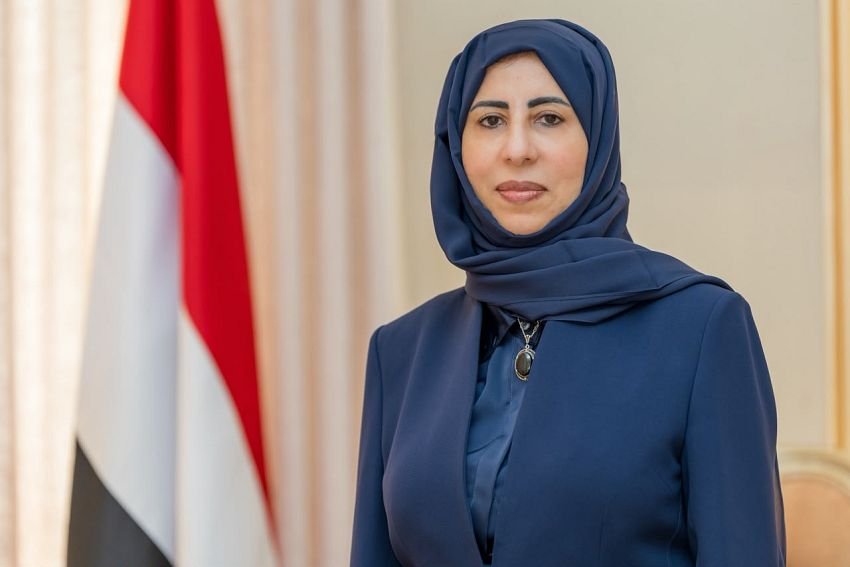
ADEN, Yemen — Yemen’s foreign minister has asked the UN human rights chief to expand monitoring of alleged Houthi violations along the western coast, the state news agency said.
Foreign Minister Afrah al-Zouba sent the message to High Commissioner for Human Rights Volker Türk, according to Saba, which reported it on Saturday.
She addressed the Human Rights Council in the same appeal.
Al-Zouba asked both to act urgently on what she described as the humanitarian consequences of Houthi military escalation around the western coast and the Bab al-Mandab area.
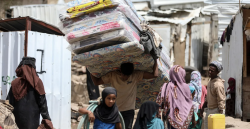
The minister said attacks on residential areas, displacement camps and civilian facilities had worsened conditions and driven waves of displacement, Saba reported.
She asked the High Commissioner to work through the UN human rights office in Yemen to step up monitoring and documentation.
The categories she listed were the targeting of civilians, the planting of landmines, and the recruitment of children and irregular migrants.
Documentation would preserve victims’ rights and open a path to accountability, she said.
Al-Zouba repeated a call for the Human Rights Council and the High Commissioner to condemn the conduct she described and to hold those responsible to account.
The ministry made a separate appeal to the UN Security Council on Thursday, asking it to take a firm position on the escalation and warning of risks to shipping, Saba reported.
The account of the message rests on the foreign ministry’s own statement carried by Saba. No independent confirmation of it has been published, and Yemen Herald could not verify the text of the message or its receipt.
The Houthi authorities in Sanaa reject the government’s characterisation of their conduct and have made counter-allegations against government forces.
Al-Zouba became Yemen’s first female foreign minister in July, Al Jazeera reported at the time. Türk has held the human rights post since 2022.
Her appeal follows a week of rapid territorial change on Yemen’s Red Sea coast.
Houthi forces took the port of Mokha on 10 September, and the rest of the western coast fell the following day, The National reported.
The National reported that strategic islands in the Red Sea were taken in the same advance.
Mokha is a coffee port on the Red Sea, close to the Bab al-Mandab strait, the chokepoint linking the Red Sea to the Gulf of Aden.
UN figures cited by the paper on Saturday recorded more than 11,442 households, or about 80,000 people, displaced between 3 and 9 September.
The UN said the real figure was probably higher because aid workers could not reach everyone who had fled.
Families fled the coastal towns of al-Khokha and Mokha as the front moved south, according to UN and news agency accounts.
The International Organization for Migration has put the number displaced since July at more than 76,000, about a quarter of them in the past week.
Médecins Sans Frontières said its hospital in Aden was preparing for mass casualties arriving from the front lines.
The group had already received between 30 and 40 wounded people from the Bab al-Mandab area, said Marc Schakal, its programme manager for Yemen.
He said the injuries included burns, orthopaedic cases and soft-tissue wounds, and that civilians and soldiers were among those treated.
About 30 health workers are still at Mokha General Hospital, keeping essential services running, the charity said.
It said referral pathways for patients leaving that hospital had become difficult, and that reinforcing the team there was complicated by the security situation.
Médecins Sans Frontières teams are also working at Al Jumhuriyah Educational Hospital in Aden, where they provide maternity and paediatric care and treat cholera.
In Aden, the health minister has instructed hospitals to keep emergency readiness high and to build up medical stocks and blood bank supplies, Saba reported.
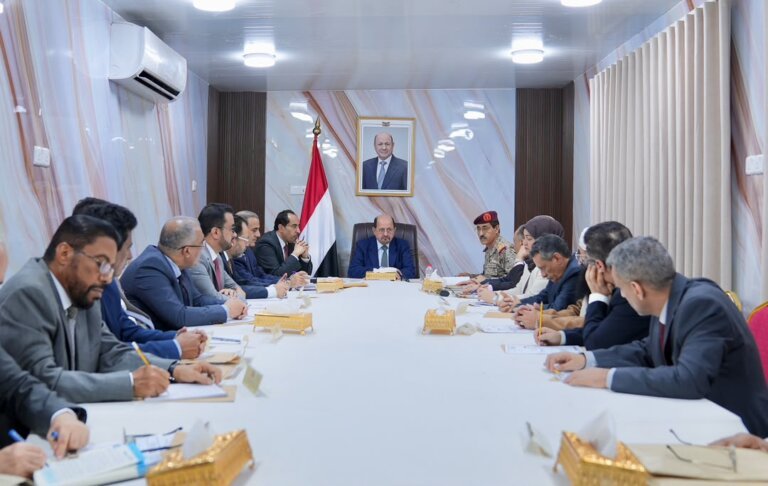
The Council of Ministers met this week to review the escalation and agreed measures intended to strengthen the government response, according to the agency.
The Yemeni Network for Rights and Freedoms said it had documented 958 crimes and violations in western coast districts over nine days. Yemen Herald found no independent confirmation of that tally.
The minister’s request that the UN work through its office inside Yemen carries its own history.
Houthi authorities seized the premises of the UN human rights office in Sanaa in August 2024, a move the United Nations condemned at the time.
Human Rights Watch reported last month that Houthi authorities were prosecuting detained UN and civil society staff.
The truce that had held since 2022 broke down last month, The National reported. Yemen’s war began in 2014, when Houthi forces took Sanaa.
A source close to peace negotiations told The National that neither the government nor the Houthis wanted to hear calls to stop fighting.
Yemeni government and Iranian sources quoted by The National said the coastal advance had come with guidance from Iran’s Islamic Revolutionary Guards Corps. Tehran has not confirmed that account.
Humanitarian conditions were already severe before the current fighting.
More than 22 million people needed assistance and 18.3 million were acutely food insecure, according to UN humanitarian planning figures published in March.
Those figures counted 5.2 million people already displaced inside the country.
More than 2.2 million children under five were acutely malnourished, 516,157 of them severely.
The March plan sought $2.16 billion to reach 12 million people.
About the Author