Japan Reaffirms Support for Yemen’s Government and Condemns Houthi Attack on Saudi Arabia
 Yemen Herald News
Japan’s embassy to Yemen has reaffirmed its support for the country’s internationally recognised government, stressing the importance of preserving Yemen’s sovereignty, unity and territorial integrity. The message arrived at a fraught moment, with Yemen still gripped by a war that has raged for more than a decade, setting the recognised government and its Saudi-led coalition backers against the Iran-aligned Houthi movement in a conflict that has produced one of the world’s gravest humanitarian emergencies.
In its statement, the embassy condemned a recent Houthi attack on Saudi Arabia, describing it as a dangerous escalation that threatens regional security and stability. Tokyo framed the assault as a further destabilising step in a region already strained by conflict and fragile diplomacy, and said such actions complicate the search for a negotiated end to the war. It called on those responsible to bear the consequences of what it termed their aggression, while urging restraint and a return to political negotiations.
The Japanese position tracks a wider international effort to shore up Yemen’s recognised government and to keep pressure on the Houthis. By denouncing the attack on Saudi Arabia, Tokyo aligned itself with Gulf partners and with the broader coalition that backs the government based in Aden, while continuing to call for a de-escalation of hostilities.
Japan has long positioned itself as a supporter of Yemen’s recognised government and as a substantial contributor to humanitarian relief. It has channelled funding through United Nations agencies including the World Food Programme, to which Tokyo says it has given roughly 160 million dollars since 2016, as well as the refugee agency UNHCR, the children’s fund UNICEF, the UN Population Fund and the International Organization for Migration. That record lends its diplomatic statements added weight, tying Japan’s political stance to tangible aid on the ground.
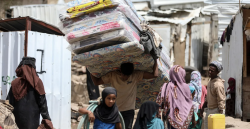
The humanitarian backdrop remains stark. The United Nations estimated that around 19.5 million Yemenis, more than half the population, needed assistance in 2025, while some 4.8 million people remain internally displaced and struggling to survive in difficult conditions. Recent outbreaks of cholera and measles have deepened the crisis and drawn renewed attention from aid agencies, whose operations are frequently disrupted by fighting and by chronic funding shortfalls. For 2026, UN agencies say needs have climbed to more than 22 million people and have appealed for 2.16 billion US dollars to fund the response.
For Japan, the stakes in Gulf stability are also economic. The country depends on the Middle East for the overwhelming majority of its crude oil, close to 96 percent in the last fiscal year and near a record high, with the United Arab Emirates and Saudi Arabia its largest suppliers. Much of that oil travels through the same waters that Houthi attacks have made perilous, giving Tokyo a direct interest in the security of the Red Sea and the Bab al-Mandab Strait.
Cross-border strikes on Saudi Arabia are a recurring feature of the conflict. During the height of the war, the Houthis launched hundreds of missiles and drones at Saudi cities, airports and oil facilities, before a UN-brokered truce in April 2022 brought a marked reduction in such attacks. A renewed assault of the kind Japan condemned would therefore be read by many governments as a significant step backwards from that fragile calm.
The war’s consequences reach well beyond Yemen’s frontiers, in large part because outside powers pursue competing interests through local actors. Those overlapping rivalries tend to prolong the fighting and worsen conditions for civilians, eroding security and deepening economic hardship. Japan’s condemnation of the Houthi attack, in that light, reflects a broader international unease about the war’s capacity to widen.
Diplomatic efforts to end the war have for years centred on the office of the United Nations special envoy, who has sought to convert the 2022 truce into a broader political settlement covering a permanent ceasefire, the payment of salaries, the reopening of roads and airports and an inclusive negotiation over Yemen’s future. Progress has been halting, and each escalation on the battlefield tends to set those talks back further.
For all the diplomatic activity, the near-term outlook remains difficult. Repeated calls for peace have yet to produce a durable settlement, and the divergent aims of local and regional players continue to complicate mediation. Each party, observers note, has incentives to press its advantage rather than concede, leaving negotiations stalled even as the humanitarian toll mounts.
Supporters of the recognised government argue that consistent backing from states such as Japan can help tilt the diplomatic balance. Sustained international pressure and a more unified stance among major powers, they contend, could open space for dialogue and make aggression more costly for its perpetrators.
Whether that translates into progress on the ground is far from certain. A credible political process would need to reconcile the positions of the government, the Houthis and neighbouring states, all while addressing the urgent needs of a population worn down by years of war. Statements of support, however welcome to the government, are only one element of a far larger and more complicated equation.
Even so, Japan’s reaffirmation carries symbolic weight. By publicly restating its support for Yemen’s sovereignty and condemning the latest escalation, Tokyo has added its voice to those urging de-escalation and a return to diplomacy, and signalled that events in Yemen remain firmly on the radar of powers far beyond the immediate region.
About the Author