Yemen Declares Solidarity With Bahrain, Kuwait and Jordan After Iranian Missile Attacks
 Yemen Herald News
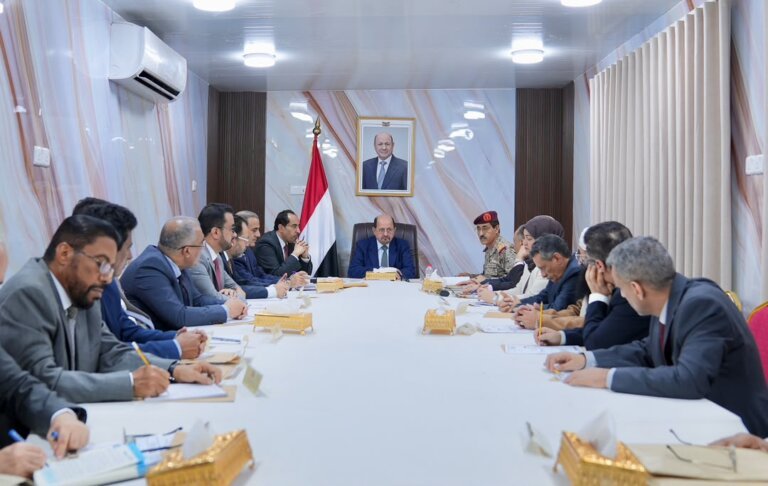
Yemen’s internationally recognized government has condemned the latest wave of Iranian missile and drone attacks on Bahrain, Kuwait and Jordan, describing the strikes as serious violations of the three countries’ national sovereignty and a direct threat to the security and stability of the wider region. In a statement issued on Thursday, the Ministry of Foreign Affairs and Expatriates said Yemen stood in full solidarity with the governments and peoples of the targeted states.
The ministry went beyond a routine expression of sympathy, explicitly endorsing any defensive measures that Bahrain, Kuwait and Jordan may take to protect their territorial integrity and the safety of their citizens. That language aligns Aden with a growing bloc of Arab governments that have framed the Iranian strikes not as isolated incidents but as a challenge to the collective security of the Arab world.
Officials in the affected countries said the attacks were intercepted largely without casualties. Kuwait and Bahrain reported that their air defense systems shot down multiple missiles and drones in the early hours of Thursday, while Jordan’s military said it intercepted eight missiles fired from Iranian territory. Earlier rounds of Iranian strikes in recent weeks have also targeted Qatar, widening the circle of Arab states drawn into the confrontation.
Regional condemnation was swift and broad. The Arab League denounced the strikes as violations of the sovereignty of Arab states and of international law, and reiterated its solidarity with Bahrain, Kuwait and Jordan. Saudi Arabia, the United Arab Emirates, Egypt and other Arab governments issued similar statements, calling for restraint and a return to diplomacy while affirming the right of the targeted countries to defend themselves.
The strikes come against the backdrop of a broader confrontation between Iran and the United States that has repeatedly spilled across the Gulf in recent weeks. A ceasefire around the Strait of Hormuz has faltered, with Washington and Tehran trading strikes and Iranian forces launching missiles at Arab states that host American forces or that Tehran accuses of supporting its adversaries. Gulf governments now find themselves on the front line of an escalation few of them sought.
For Yemen, the confrontation is anything but abstract. The government of the Presidential Leadership Council has fought the Iranian-aligned Houthi movement since the group seized the capital Sana’a in 2014, and it accuses Tehran of sustaining the war by arming and training the Houthis. Successive United Nations expert reports have documented Iranian-origin weapons and components in Houthi hands, although Iran denies providing direct military support.
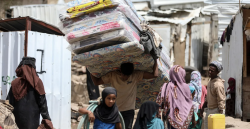
The war’s cost is reflected in figures compiled by the United Nations. According to the UN humanitarian coordination office OCHA, more than 22 million people in Yemen require humanitarian assistance and protection in 2026, including 5.2 million internally displaced people. Some 18.3 million Yemenis are acutely food insecure, and aid agencies have appealed for 2.16 billion US dollars this year to reach 12 million of the most vulnerable.
The same UN planning documents warn that more than 2.2 million Yemeni children under five are acutely malnourished, including over half a million suffering from severe acute malnutrition, alongside an estimated 1.3 million malnourished pregnant and breastfeeding women, figures that underline how little room the country has to absorb further shocks.
That fragility shapes how Aden reads events across the Gulf. Yemeni officials argue that instability anywhere in the region ultimately deepens their own crisis, whether through disrupted trade, diverted donor attention or emboldened armed movements at home. The government has also repeatedly complained of what it calls direct Iranian interference in Yemen’s own affairs, including unauthorized Iranian flights into Houthi-held Sana’a that it says could be used to resupply the group.
Geography adds a further dimension. Yemen sits astride the Bab al-Mandab Strait, the chokepoint connecting the Red Sea to the Gulf of Aden through which a significant share of global trade and energy shipments passes. Any widening of the confrontation between Iran and the Gulf states risks drawing in the Red Sea corridor as well, where Houthi attacks on commercial shipping in recent years have already shown how quickly maritime traffic can be disrupted.
Yemen’s declaration of solidarity therefore serves several purposes at once. It reinforces relations with Gulf neighbours, above all Saudi Arabia, which leads the coalition supporting the government. It signals to international partners that Aden stands with the broader Arab consensus. And it underlines the government’s long-standing argument that the Houthi conflict cannot be separated from Iran’s wider regional behaviour.
How the confrontation develops from here remains uncertain. Continued Iranian strikes on Arab capitals could accelerate discussion of joint air-defense arrangements and closer military coordination among Gulf Cooperation Council members and their partners, a debate that has gathered pace with each new salvo. For the moment, most Arab governments have coupled their condemnations with appeals for de-escalation, wary of hosting a wider war on their own territory.
For Yemen’s leadership, the immediate task is to keep the country’s needs visible amid a crowded regional agenda. The government is expected to press its case in Arab and international forums in the coming weeks, arguing that support for Yemen’s stability, in economic, military and humanitarian terms alike, is part of any serious effort to contain the fallout from the current confrontation. Whether that argument gains traction may depend on how long the missiles keep flying.
About the Author