Al-Subaihi Says Lasting Peace in Yemen Begins With National Unity Under the Republican Flag
 Yemen Herald News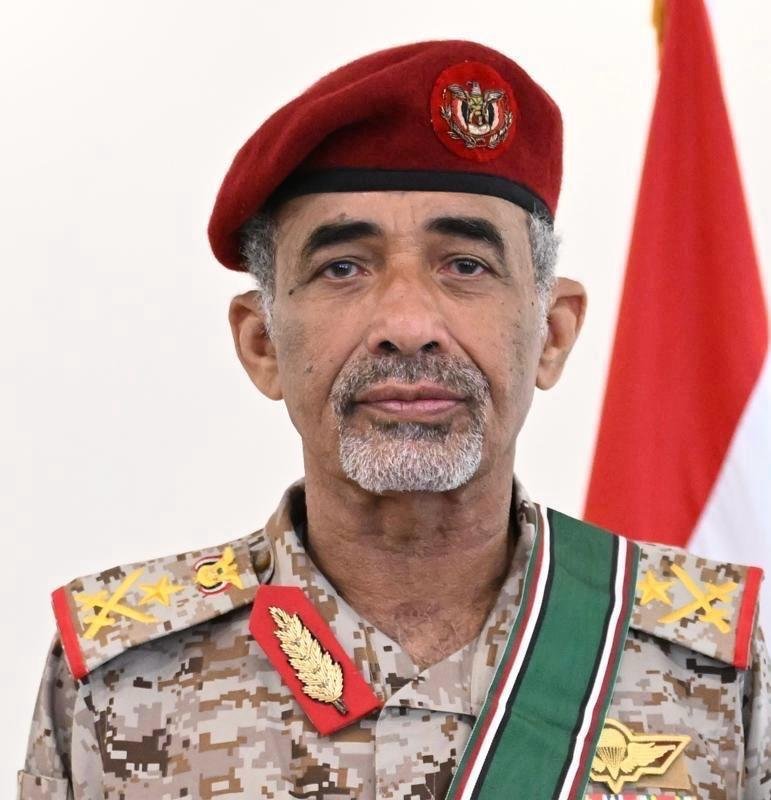
Lieutenant General Mahmoud al-Subaihi, a member of Yemen’s Presidential Leadership Council, has argued that any durable peace must begin with placing the country’s supreme national interest above all other considerations. In a recent statement he called on Yemenis to reject sectarian and divisive rhetoric, to rally behind the flag of the Republic of Yemen, and to build the future for the country’s young people on foundations of freedom, justice and equality.
Al-Subaihi framed his appeal around what he called an exceptionally critical moment in Yemen’s history, one that weighs most heavily on citizens living in areas controlled by the Houthi movement. Those communities, he said, have borne the brunt of a conflict that has hollowed out public services and deepened the hardship of millions of families. He offered a bleak account of daily life under Houthi authority and urged citizens to unite around a cause that places national sovereignty ahead of external influence.
The general brings a particular history to that message. A former defence minister in the government of President Abdrabbuh Mansur Hadi, al-Subaihi was seized by the Houthis in 2015 and held for more than eight years before walking free in the April 2023 prisoner exchange, an ordeal that has shaped his uncompromising view of the movement. He was appointed to the Presidential Leadership Council in January 2026, part of a reshuffle in which the council’s chairman, Rashad al-Alimi, replaced two members and restructured the body’s leadership.
That reshuffle underscored the strains within the anti-Houthi camp. The two members al-Subaihi and Salem al-Khanbashi replaced were associated with southern separatist and Emirati-aligned currents, and their removal was widely read as a consolidation of authority around figures close to Saudi Arabia. The Presidential Leadership Council was itself created in April 2022, when former president Hadi transferred his powers to an eight-member body intended to unite the government’s fractious factions under a single umbrella.
His remarks reflect the broader posture of the internationally recognised government, which has sought to present itself as the guardian of a unified, republican Yemen against fragmentation. By emphasising shared civic ideals rather than regional or factional loyalties, officials appear intent on countering the sectarian narrative they accuse their opponents of promoting. The republican flag to which he appealed carries particular resonance, invoking the 1962 revolution that ended rule by the Zaydi imamate, the same religious tradition from which the Houthi movement draws.
The statement comes as Yemen continues to absorb the consequences of nearly a decade of civil war. United Nations agencies estimate that more than 22 million people, well over half the population, need some form of humanitarian assistance in 2026, while some 5.2 million remain displaced from their homes. Recurring health emergencies, including outbreaks of cholera and measles, add to the strain on a population already stretched by shortages and damaged infrastructure.
The conflict’s significance reaches well beyond Yemen’s borders. The Houthis’ capacity to threaten shipping in the Red Sea and the Bab al-Mandab Strait has drawn in outside powers and turned a domestic war into a matter of international concern. Al-Subaihi’s focus on that dimension fits squarely within the government’s agenda, echoing its stated aim of building the conditions for peace and long-term recovery.
He has been among the council members most focused on the security side of the crisis. In recent weeks he discussed Houthi threats to international navigation with a visiting United Nations military delegation and has backed efforts to merge Yemen’s disparate armed formations into a more unified national structure. The council has described that military integration as a priority, arguing that a coherent army is essential both to deterring the Houthis and to underpinning any future settlement.
That emphasis on both institutional cohesion and civic unity underlines the government’s argument that political and military consolidation must advance together if the country is to emerge from the war intact. Without a unified command, officials warn, the array of factions nominally aligned against the Houthis risks fracturing along regional and ideological lines.
For ordinary Yemenis, the appeal speaks to a widely shared desire for stability after years of upheaval. Many have voiced hopes for a secure future capable of sustaining development and safeguarding coming generations, even as the immediate prospects for reconciliation remain uncertain. Al-Subaihi’s call for the release of political prisoners echoes those wider appeals and links the human cost of the conflict to his argument for reconciliation. Thousands of people, among them activists, journalists and former officials, have been detained over the course of the war, and their fate has become a recurring theme in successive rounds of negotiation.
Whether that message resonates in areas beyond the government’s control remains uncertain. The Houthis maintain tight authority over Sana’a and much of the north, where independent voices operate under heavy constraints and where the government’s republican appeal competes with a well-entrenched rival narrative.
The path to lasting peace, al-Subaihi acknowledged, remains obstructed by entrenched interests and outside interference that continue to frustrate genuine efforts at reconciliation. Yet he presented the call for unity under the banners of justice and equality as a source of hope, suggesting that the defence of free expression and the release of detainees could form early steps toward rebuilding a nation worn down by years of war.
About the Author