Marib Deputy Governor and Turkish Aid Agency TIKA Discuss Expanding Humanitarian Assistance
 Yemen Herald News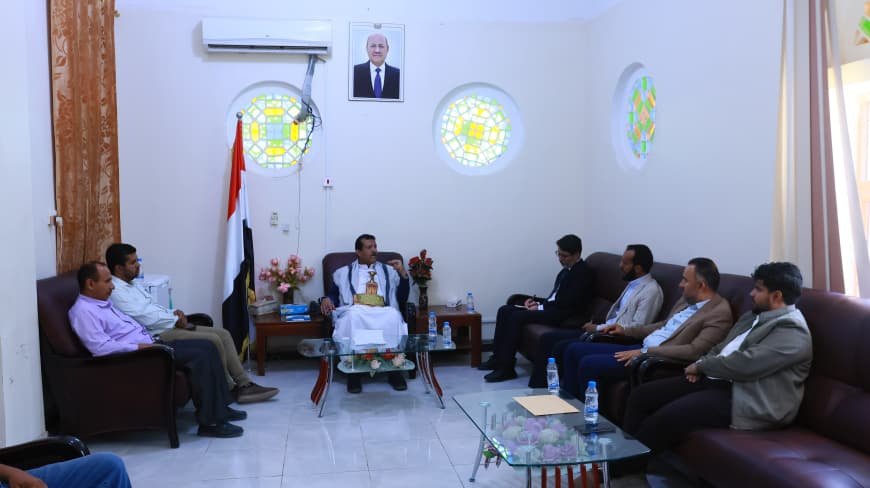
Dr. Abdrabuh Miftah, the deputy governor of Yemen’s Marib governorate, has held talks with the Turkish Cooperation and Coordination Agency, the Turkish state aid body known as TIKA, on expanding humanitarian, relief and development assistance in a province that shelters more displaced Yemenis than any other part of the country. The discussions, reported by the state news agency Saba on Sunday, come as local officials warn that collapsing international funding has left authorities struggling to meet the most basic needs of displaced families and the communities hosting them.
The meeting brought Miftah together with Zubair Yakar Yılmaz, TIKA’s Yemen program coordinator, who is currently visiting Marib. Dr. Kamal Al-Qadami, chairman of the Relief and Construction Forum, the Yemeni organization that acts as TIKA’s national implementing partner, also attended. The participants reviewed the humanitarian situation across the governorate and examined how the Turkish agency’s programs might be broadened to support displaced households and hard-pressed host communities alike.
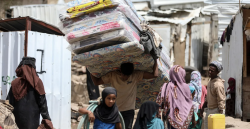
The scale of the challenge is difficult to overstate. According to the local authorities, Marib hosts more than 62 percent of Yemen’s internally displaced people, the legacy of successive waves of flight from front-line areas since the war began. The governorate also continues to receive newly displaced families as well as migrants arriving from the Horn of Africa, many hoping to reach the Gulf states. Each new arrival adds to the strain on services never designed for a population of this size.
Miftah told the visiting delegation that local authorities are under mounting pressure to provide essential humanitarian, relief and development services at a time when international humanitarian funding is in sharp decline. He also pointed to the economic fallout of the war, which the government blames on the Houthi movement’s seizure of the capital Sanaa in late 2014, and to the growing impact of climate change and natural disasters, including the floods and extreme heat that have repeatedly damaged camps and farmland in and around Marib.
Official figures underline how quickly conditions are deteriorating. A report issued in June by the planning office in Marib found that roughly 296,835 families in the governorate need life-saving humanitarian assistance, and that hunger indicators have climbed 13 percent compared with 2024, driven by the collapse of the local currency, rising commodity prices and the suspension of relief programs that depended on foreign aid.
The same report painted a bleak picture of basic services. About 63 percent of health facilities in the governorate are partially out of service for lack of equipment and maintenance, while nearly 100,000 pregnant and breastfeeding women lack access to basic healthcare and nutrition services. A similar share of the population, 63 percent, has no safe and sustainable source of drinking water, leaving camps and crowded settlements dependent on expensive and often unsafe water trucking.
Children are among the hardest hit. At least 6,229 children in Marib have dropped out of school as economic hardship pushes families to send them to work, and 47 percent of displaced children lack official birth certificates, an obstacle that can follow them for life by restricting access to education and services. Meanwhile, 71 percent of displaced families still live in dilapidated emergency shelters, and 69 percent of those renting homes face the threat of eviction.
TIKA brings to the table a track record of development and relief work in dozens of countries, carried out on behalf of the Turkish government. In Yemen, the agency has previously distributed food aid to orphans, displaced families and vulnerable women, and Turkish organizations have supported families uprooted by fighting around Marib in earlier phases of the war. For the local administration, the appeal of the partnership lies partly in TIKA’s practice of working through national partners such as the Relief and Construction Forum, which channels projects through Yemeni staff with knowledge of local conditions.
The talks also fit a deliberate shift in the governorate’s strategy. Marib’s planning office has said its vision for 2026 aims to move beyond emergency relief toward sustainable development, digital empowerment and expanded partnerships with the private sector and international organizations. Agreements with bilateral agencies such as TIKA could help fund the kind of longer-term projects, in water, health, education and livelihoods, that traditional emergency appeals rarely cover.
Marib’s crisis unfolds within a national emergency that remains among the most severe in the world. According to United Nations estimates, more than 18 million people across Yemen need humanitarian assistance and some 4.5 million remain internally displaced after more than a decade of conflict between the Houthi movement and the internationally recognized government, which has been backed since 2015 by a Saudi-led coalition. Deep cuts to humanitarian budgets forced United Nations agencies to scale back life-saving programs in late 2025, and aid officials have warned that the gap between needs and resources is still widening.
No specific agreements were announced after the meeting, and neither side has said which sectors an expanded TIKA program would prioritize. Even so, the visit signals that Marib’s authorities are actively courting new donors as established funding channels shrink, and that Turkey’s aid agency sees room to grow its footprint in government-held Yemen. For the displaced families crowded into the governorate’s camps and settlements, the practical test will be whether such diplomacy translates into water points, clinics, classrooms and jobs.
About the Author