President al-Alimi Tells European Parliament Delegation Yemen Pairs Firm Deterrence with Openness to Fair Peace
 Yemen Herald News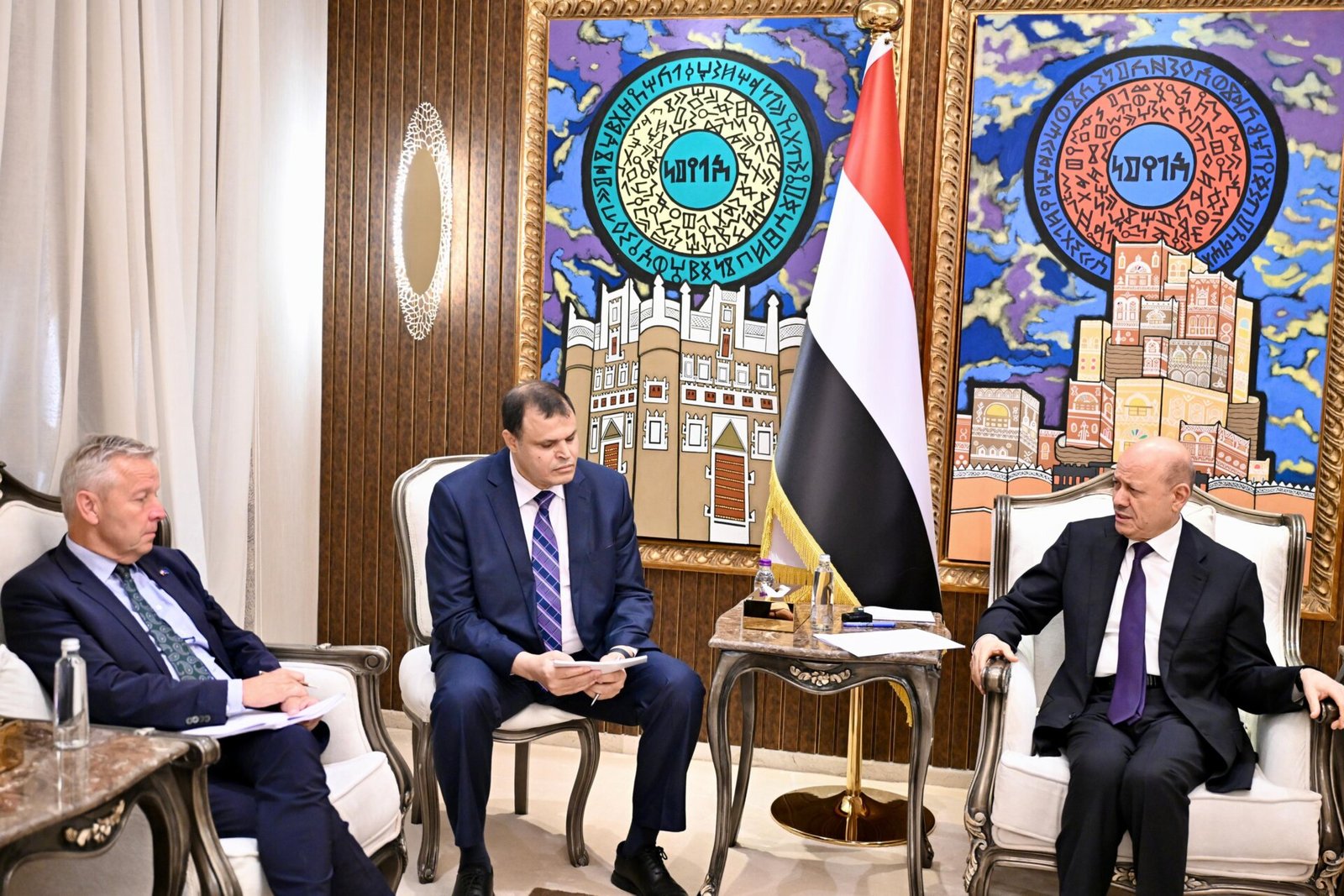
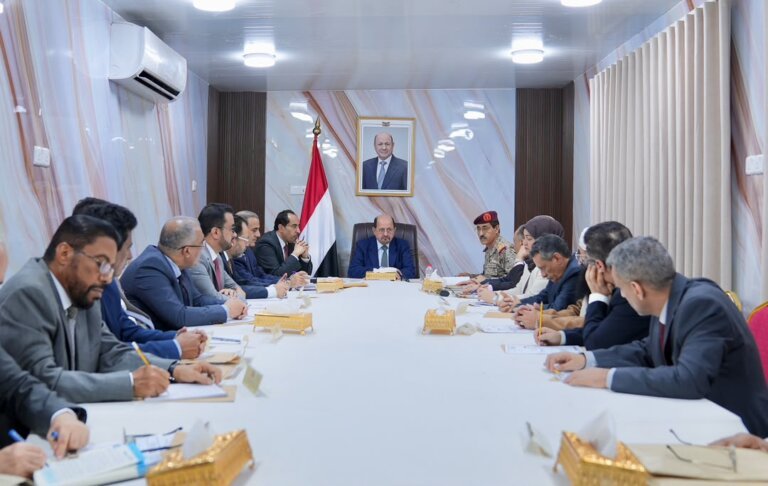
President Dr. Rashad al-Alimi, chairman of Yemen’s Presidential Leadership Council, received a delegation from the European Parliament on Sunday and told the visiting lawmakers that the state has imposed a firm deterrence equation against violations of its sovereignty while keeping the door open to a just and comprehensive peace. Austrian MEP Reinhold Lopatka led the delegation, which included parliamentarians from Sweden, Germany and Spain along with officials from the European Parliament body responsible for relations with the Arabian Peninsula and the Gulf, the state news agency Saba reported.
The meeting, held in Riyadh, came at one of the most delicate moments Yemen’s political scene has faced in years. Earlier this month, the armed forces of the internationally recognized government said they struck the runway of Sanaa International Airport to prevent an Iranian aircraft carrying a senior Houthi delegation from landing in the Houthi-held capital without state authorization, and the civil aviation authority has since insisted that every operator obtain prior permission before entering Yemeni airspace.
Al-Alimi briefed the European lawmakers on those developments, focusing on what he described as repeated Iranian infringements of Yemeni sovereignty and recent attempts by Iranian-backed militias to impose air routes outside the mandates of the state and its approved legal frameworks.
The president thanked the European Union for its consistent support of the Yemeni people and government, singling out its backing for development programs, humanitarian response plans and economic reforms. He also praised the bloc’s positions in support of Yemen’s unity, sovereignty and territorial integrity.
He urged the EU to help tilt the balance of power in favor of peace proposals, stability and development, and to defend an international order grounded in respect for national sovereignty. Deterring violent groups, he argued, requires a range of tools, including placing them on terrorism lists.
Turning to his government’s handling of the crisis, al-Alimi pointed to what he called firm responses to the Houthi militias’ violations of the truce across the front lines, alongside initiatives to operate Sanaa International Airport officially, legally and safely. The government, he said, has acted responsibly and wisely: while it deterred the escalation firmly, it immediately welcomed a Jordanian initiative that offered a humanitarian and legal solution for civilian travel.
That initiative, announced by Jordan’s Ministry of Foreign Affairs and Expatriates on July 17, would see Royal Jordanian Airlines operate regular commercial flights between Amman and Sanaa under arrangements that respect Yemeni sovereignty. The United Nations Special Envoy for Yemen, Hans Grundberg, welcomed the plan, as did Saudi Arabia and the Yemeni government, which said it stands ready to facilitate the flights’ success.
On the humanitarian file, the president rejected any suggestion that his government bears responsibility for the country’s suffering. “This humanitarian calamity was a result of the Houthi militias’ coup against the national consensus,” he said, according to Saba. He accused the militias of rejecting every proposal aimed at easing hardship, including operating flights through Sanaa airport and paying public-sector salaries, and of targeting oil facilities, destroying the assets of Yemenia Airways and confiscating the carrier’s funds.
Al-Alimi told the delegation his government remains committed to a peace that removes the causes of the war rather than one that gives the coup a fresh chance to reproduce itself. Any future understandings, he said, must move toward ending the country’s ordeal and restoring state institutions, and must rest on respect for the sovereignty of the Republic of Yemen, the security of neighboring countries and international waterways, and the state’s exclusive right to bear arms under the constitution and the law.
The peace Yemen seeks, he added, must criminalize racism, sectarianism and violence while protecting human rights and freedoms, equal citizenship and the peaceful transfer of power.
The president also linked Yemen’s security directly to global commerce. A secure Yemen, he argued, means safe maritime routes for world trade and supply chains, and less space for terrorism, organized crime and irregular migration. The argument carries weight in European capitals, where the disruption of Red Sea shipping through the Bab al-Mandab strait in recent years has underscored the cost of instability on Yemen’s coasts.
Looking ahead, al-Alimi expressed hope for continued European political support for the government and its national institutions, as well as for economic and structural reforms. The cost of supporting the Yemeni state today, he warned, is less than the cost of containing the damage that would follow if the militias kept control of the southern bank of the Red Sea.
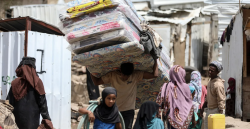
The meeting unfolded against a humanitarian emergency that remains among the most severe in the world. According to United Nations estimates, more than 18 million people in Yemen need humanitarian assistance and some 4.5 million remain internally displaced after more than a decade of conflict between the Houthi movement, which seized the capital in late 2014, and the internationally recognized government, backed since 2015 by a Saudi-led coalition.
Diplomatic traffic around the Yemeni file has quickened in recent days. Al-Alimi received Grundberg for talks on reviving the stalled peace process, and the European Parliament delegation’s visit adds a further channel of engagement. Whether that momentum can be converted into durable de-escalation on the ground remains the test by which Yemenis, after more than a decade of war, will judge it.
About the Author