President al-Alimi Calls for National Alignment to Restore Yemen’s State Institutions
 Yemen Herald News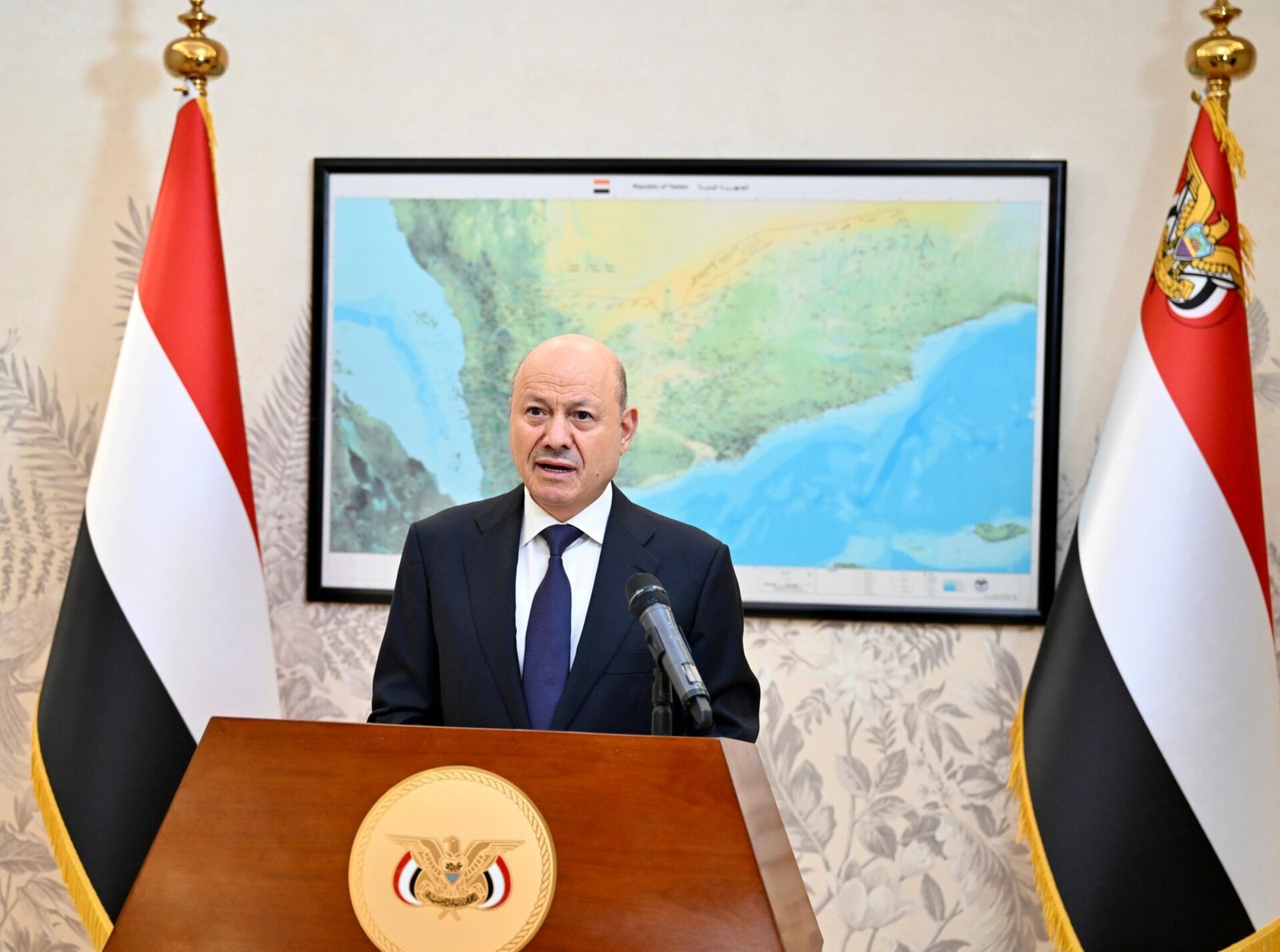
President Rashad al-Alimi, chairman of Yemen’s Presidential Leadership Council and commander-in-chief of the armed forces, has appealed to Yemenis across the country to line up behind the government’s drive to restore state institutions and end more than a decade of Houthi control over the capital. In a televised address, he described the recovery of the state as the cause that takes precedence over every other issue, and urged citizens living in areas under Houthi rule to place their trust in the republic rather than in what he called a project imposed by force of arms.
The most concrete announcement in the speech concerned the economy. Al-Alimi said Yemen would move immediately to resume oil exports, suspended for nearly four years, and committed the government to directing the proceeds toward its basic obligations: paying public sector salaries, improving services and shoring up a currency battered by years of war. The pledge is intended to signal that the state can still deliver for its people, and that the country’s natural wealth will serve citizens rather than armed factions.
Oil once provided roughly seventy percent of the state’s general budget. Exports collapsed in October 2022 after Houthi drone attacks on the al-Dabba and al-Nashima terminals turned tankers away, and the loss of that income has been felt ever since in delayed salaries, deteriorating services and a spiraling cost of living in government-held areas. Restarting shipments is therefore not a technical adjustment but the foundation of the government’s entire program of economic stabilization.
In his address, al-Alimi accused the Houthi movement of consistently escalating hostilities and of rejecting proposals designed to ease the suffering of ordinary Yemenis. He described the group as a terrorist organization serving an Iranian regional agenda, an accusation the Houthis and Tehran both reject, and argued that the movement has used the population’s hardship as leverage for its own political ends. The government maintains that no lasting settlement is possible while the group keeps its weapons outside the authority of the state.
The roots of the confrontation reach back to September 2014, when Houthi forces seized the capital Sana’a and later drove the internationally recognized government south, triggering the intervention of a Saudi-led coalition in March 2015. The war that followed has fragmented the country, hollowed out its institutions and produced one of the world’s most severe humanitarian crises. Al-Alimi drew a direct line from that takeover to the present suffering, telling Yemenis that the choice before them is between a functioning republic and permanent rule by an armed movement.
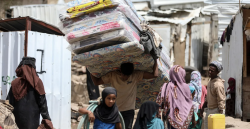
The human cost frames every part of that argument. United Nations agencies estimate that more than eighteen million people in Yemen require humanitarian assistance and that some four and a half million remain displaced from their homes. Repeated cholera outbreaks, widespread malnutrition and the collapse of much of the health system have compounded the emergency, and aid organizations have warned that funding shortfalls are forcing cuts to food assistance even as needs continue to grow.
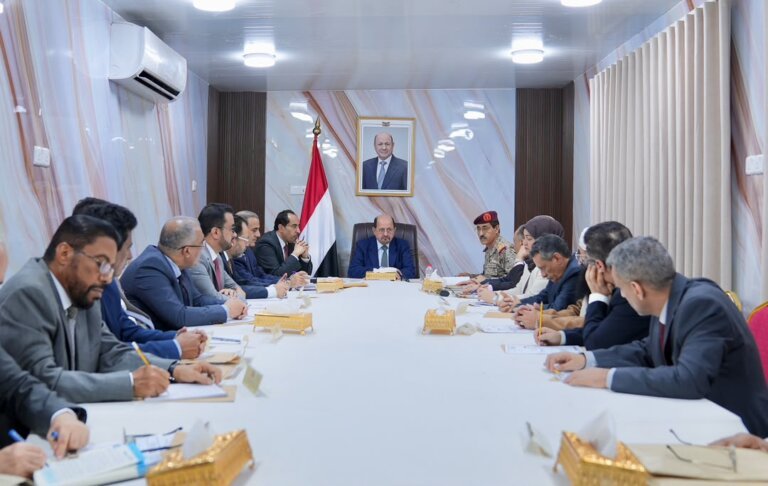
The call for alignment is also directed inward, at the coalition of parties, regional blocs and military formations that make up the anti-Houthi camp. The Presidential Leadership Council, formed in Riyadh in April 2022, was designed to unify those forces under a single executive, and al-Alimi has repeatedly pressed its components to set aside their rivalries in favor of the common battle. Yemeni political groupings have recently declared their backing for the council and its defense of national sovereignty, a show of cohesion the government hopes to sustain through the difficult months ahead.
The speech also lands at a moment of sharp regional escalation. The Houthis have declared a maritime blockade of Saudi Arabia and threatened shipping through the Bab al-Mandab strait, while the confrontation between Iran and Western powers has widened across the region. Yemen’s government has condemned Iranian flights into Sana’a as violations of its sovereignty and has instructed that all aircraft entering national airspace obtain prior authorization from the civil aviation authority.
Saudi Arabia and the United Arab Emirates, the leading members of the coalition supporting the government, view the outcome in Yemen as inseparable from the security of the Red Sea corridor, through which a substantial share of global trade passes. Western governments have likewise tied their support for Aden to the protection of international shipping, giving the government’s sovereignty agenda an audience well beyond Yemen’s borders.
Alongside the military and economic tracks, the United Nations continues to press for a negotiated settlement through its special envoy, and al-Alimi has said the government remains open to a fair peace that ends the coup and restores the state. He expressed confidence that the resilience of ordinary Yemenis would prevail, likening the current struggle to earlier defenses of the republic in the country’s modern history.
Whether the address marks a turning point will depend on delivery. If oil revenue begins to flow and salaries are paid on time, the call for national alignment may gain real traction; if exports are blocked or the economic promises go unmet, public skepticism will deepen. For now, the president has set out the government’s course plainly: restore the institutions of the state, fund them from the country’s own resources and rally citizens, wherever in Yemen they live, behind the flag of the republic.
About the Author