Yemen’s National Defense Council Approves Measures to Resume Oil Exports and Support Liberation Efforts
 Yemen Herald News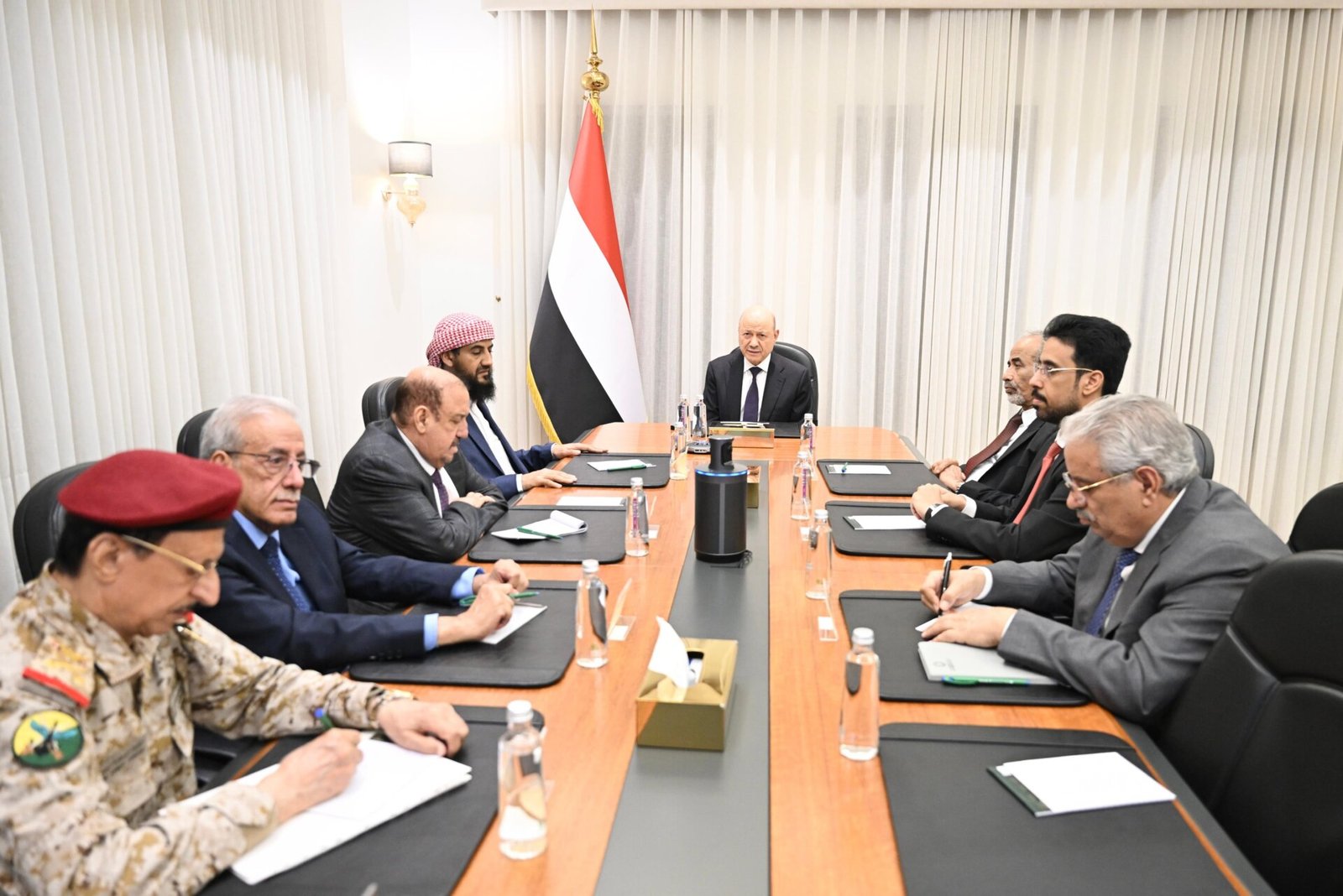
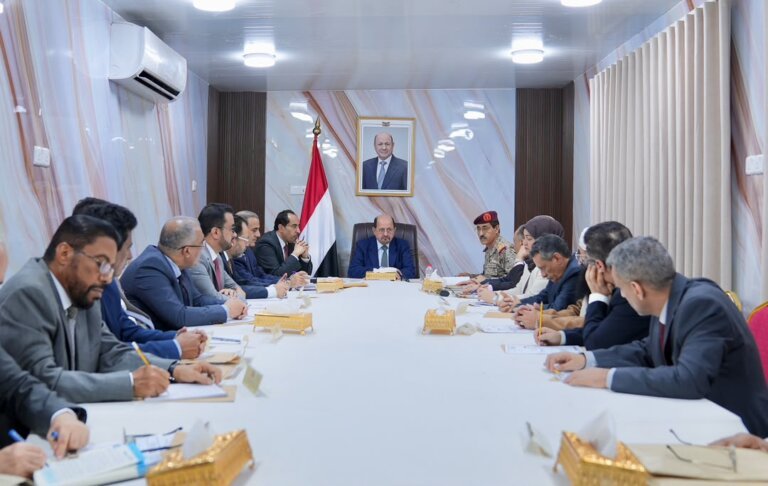
President Rashad al-Alimi convened an urgent session of Yemen’s National Defense Council in Riyadh on Monday, gathering the senior leadership of the internationally recognized government to approve a package of military, economic and administrative measures. Chief among them was a decision to press ahead with resuming the country’s long-suspended oil exports, alongside steps officials say are intended to support the campaign to restore state institutions and roll back the control the Houthi movement exerts over much of northern Yemen.
Members of the Presidential Leadership Council, including Sultan al-Aradah and Tariq Saleh, attended the session together with the Speaker of Parliament, the Prime Minister and senior military and security commanders. The council received detailed briefings on the state of military readiness across the country’s fronts and reviewed security plans that the government says are designed to counter escalating Houthi threats against state authority and against the infrastructure that generates its remaining revenue.
The decision on oil is the most consequential item to emerge from the meeting. Yemen’s crude exports have been almost completely halted since October 2022, when Houthi drone attacks on the al-Dabba terminal in Hadramout and the al-Nashima port in Shabwa forced tankers to leave without loading. Before that suspension, oil sales accounted for roughly seventy percent of the state’s general budget, and their loss stripped the government of its main source of foreign currency, feeding a prolonged economic crisis and repeated delays in the payment of public sector salaries.
In a televised address carried by state media, al-Alimi said the government would work to resume exports by all available means, with shipments planned from July 20. He pledged that revenues would be channeled into the state budget to pay salaries, improve essential services and support broader economic stability. Officials at the council meeting echoed that message, insisting that Yemen’s natural resources must benefit its citizens rather than remain, in their words, hostage to the threats of an armed group.
The timing underscores how quickly the confrontation is escalating. On the same day, Houthi military spokesman Yahya Saree announced a maritime embargo against Saudi Arabia, saying the ban would take effect immediately and framing it as a like-for-like response to what the group calls a decade of blockade against areas under its control. A senior Houthi media official added that the Bab al-Mandab strait, the southern gateway to the Red Sea and one of the world’s busiest shipping corridors, would be closed to Saudi vessels.
The latest escalation follows weeks of rising tension over flights between Tehran and Sana’a. The Houthis say a Saudi strike targeted Sana’a International Airport as an aircraft was returning the group’s officials from Iran, where they had attended the funeral of Supreme Leader Ali Khamenei, and that the plane landed safely at another airfield. The group subsequently fired missiles and drones toward Abha International Airport in southern Saudi Arabia, in the most serious direct confrontation between the two sides since the truce of 2022.
All of this is unfolding against a far wider regional crisis, with the United States and Iran trading strikes and tensions around the Strait of Hormuz at their highest point in years. The government in Aden and its allies accuse Tehran of arming, financing and directing the Houthis, a charge Iran denies. During Monday’s session, the council thanked Saudi Arabia for its continued political and military support and welcomed what it described as a growing international consensus against Iranian interference in Yemeni affairs.
The council also endorsed a series of institutional measures intended to reinforce the readiness of state bodies, protect vital infrastructure and safeguard civilians. Officials stressed that the government intends to act within international norms even as it prepares for a possible widening of the conflict, and they urged citizens to rally behind the armed forces and security services in what they framed as a decisive phase of the struggle over the future of the state.
Significant obstacles stand between Monday’s decisions and crude actually leaving Yemen’s ports. The 2022 attacks on al-Dabba and al-Nashima demonstrated the Houthis’ ability to shut down loading operations with relatively cheap drones, and the group has repeatedly warned oil companies against operating in government-held areas without its consent. Any resumption will therefore depend on hardened defenses around the export terminals, on the willingness of shippers and insurers to accept the risk, and on the readiness of international partners to deter renewed strikes.
The stakes extend well beyond the budget. The United Nations estimates that more than eighteen million Yemenis need humanitarian assistance and that around four and a half million people remain displaced after more than a decade of war. Restored oil revenue is one of the few realistic paths toward paying salaries, stabilizing the currency and funding the services on which much of the population depends, which is why the government has made exports the centerpiece of its recovery agenda.
The Presidential Leadership Council, an eight-member body formed in Riyadh in April 2022 to unify the anti-Houthi camp, has staked considerable credibility on this course. Whether the National Defense Council’s measures mark the beginning of a genuine economic recovery or another cycle of escalation will become clearer in the coming weeks, as the first shipments are prepared and the Houthis decide how far they are willing to go to stop them.
About the Author