US Strikes on Iran Enter a Twelfth Night as Houthis Attack Two Saudi Tankers in the Red Sea
 Yemen Herald News
Iranian state media reported that a United States missile strike killed two people near the passenger terminal of the Shalamcheh border crossing, a strategic transit point between southwestern Iran and Iraq, as American forces carried out a twelfth consecutive night of attacks on Iranian territory. Earlier Iranian accounts had suggested the strike caused no casualties, conflicting reports that underline how scarce reliable information has become as the confrontation deepens.
US Central Command says the air campaign is designed to degrade Iran’s military capabilities and to prevent Tehran from threatening commercial shipping in the region’s vital waterways. The strikes have hit military installations across southern Iran, the most sustained American military pressure on the country in years. They follow months of escalation that began in the spring, and diplomatic efforts to halt the fighting have so far faltered.
Washington has sharpened its rhetoric alongside its firepower. President Donald Trump warned that the United States would destroy a bridge or a power plant inside Iran every time a ship comes under fire in the Strait of Hormuz, tying future strikes directly to the safety of one of the world’s most important oil chokepoints.
Tehran has answered with threats of its own. Foreign Minister Abbas Araghchi declared on X that Iran’s defence doctrine is an “eye for an eye,” warning that any aggression against Iranian territory or infrastructure would draw a powerful and decisive response, and that those who assist such aggression would be treated as legitimate targets. He has also signalled that Iran will not enter final peace negotiations while American military threats and strikes on its infrastructure continue.
The war’s ripples are spreading most visibly into the Red Sea. On 20 July, Yemen’s Houthi movement declared a full maritime embargo on Saudi Arabia, with military spokesman Yahya Sarea announcing that vessels serving Saudi ports would no longer be allowed safe passage through the Bab al-Mandab Strait. The group cast the blockade as retaliation for what it described as Saudi restrictions on Yemeni ports and for airstrikes it attributed to the kingdom, including one on Sanaa International Airport. Saudi Arabia has condemned the blockade.
Two days later, the Houthis claimed attacks on two Saudi oil tankers, identified as the Encelia and the Layla, saying the vessels had violated the blockade. The group said it used ballistic and cruise missiles as well as drones, that fires broke out on board, and that nearly ten other vessels turned back. Independent confirmation of the extent of the damage remains limited, though the United Kingdom Maritime Trade Operations agency reported that a tanker was struck by a projectile about 70 nautical miles southwest of the Saudi coastal city of Al Shuqaiq.
The economic effects were immediate. Maritime intelligence reports showed traffic through the region’s two key chokepoints falling sharply in mid-July, with Strait of Hormuz transits down by roughly half week on week and a growing share of tankers sailing with their tracking transponders switched off. Analysts said the market had begun to treat the Bab al-Mandab as effectively closed to Saudi-linked traffic. Shipping companies are again weighing the long detour around the Cape of Good Hope, which adds weeks and significant cost to voyages between Asia and Europe, and oil prices have climbed as traders price in the risk of further supply disruption.
Against this backdrop, the United States and Saudi Arabia signed a landmark civil nuclear cooperation agreement on 22 July. US Energy Secretary Chris Wright and Saudi Energy Minister Prince Abdulaziz bin Salman concluded the pact, known as a 123 agreement, together with an accompanying bilateral safeguards arrangement. The deal lays the legal foundation for a decades-long, multibillion-dollar partnership and gives American companies, among them reactor builder Westinghouse, priority access to the kingdom’s planned nuclear energy programme.
The agreement could eventually allow Saudi Arabia to pursue domestic uranium enrichment, a prospect drawing scrutiny given Washington’s simultaneous campaign against Iran’s nuclear and regional ambitions. Critics see a double standard in American policy; supporters counter that the attached safeguards are designed to block any path to nuclear weapons. Congress now has 90 days of continuous session to review the agreement, and lawmakers are expected to examine its nonproliferation provisions closely.
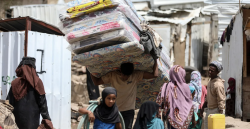
For Yemen, the escalation carries especially heavy risks. The United Nations estimates that 22.3 million people in the country require humanitarian assistance and protection in 2026, including 5.2 million internally displaced people. Some 18.3 million Yemenis face acute food insecurity, and more than 2.2 million children under five are acutely malnourished. Aid agencies have appealed for 2.16 billion dollars to fund this year’s response, but aid officials said that as of May only about 13 percent of that sum had been secured, leaving programmes stretched thin even before the latest fighting.
A prolonged blockade and continued attacks on shipping would endanger seafarers, complicate the commercial deliveries of food and fuel on which Yemen depends, and further strain aid operations. Regional governments are assessing their options amid growing concern that the confrontation could widen, deepening instability across the Arabian Peninsula and the Gulf.
The past week has shown how tightly the region’s crises are interwoven: an American air campaign against Iran, a Houthi blockade squeezing Saudi exports, a nuclear agreement redrawing energy diplomacy, and a humanitarian emergency that deepens with every new shock. With Washington and Tehran both signalling further escalation, the space for diplomacy is narrowing just when it is needed most.
About the Author