Yemen’s ambassador in Washington says Houthi attacks advance Iran’s regional aims
 Yemen Herald News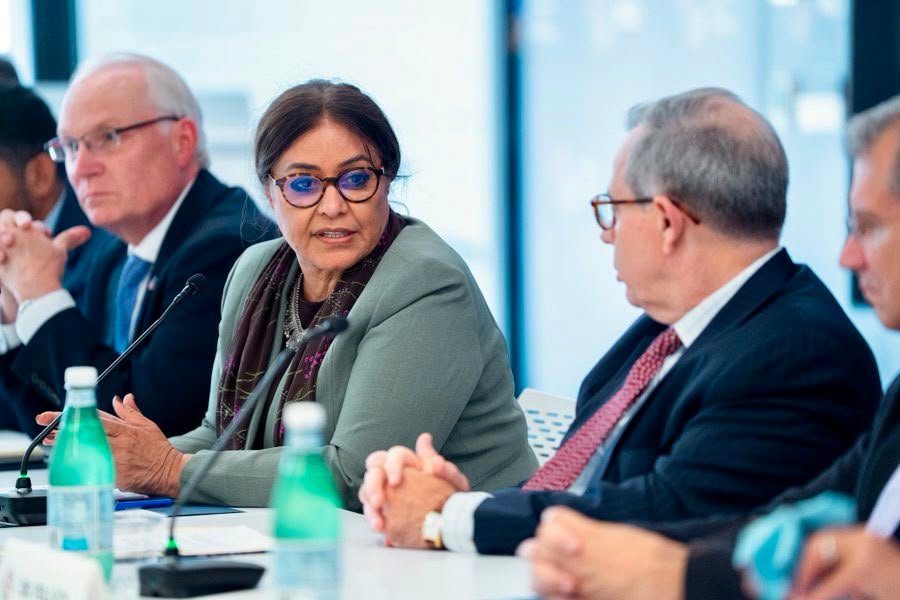
Yemen’s ambassador to the United States, Jamila Ali Raja, has argued that the Houthi movement’s attacks on shipping and on Yemeni infrastructure should be read as an extension of Iranian strategy rather than as isolated acts of piracy. Speaking in Washington, she said the group functions as a vehicle for Tehran’s regional ambitions, and that the cost of that arrangement is borne by ordinary Yemenis rather than by the movement’s external backers.
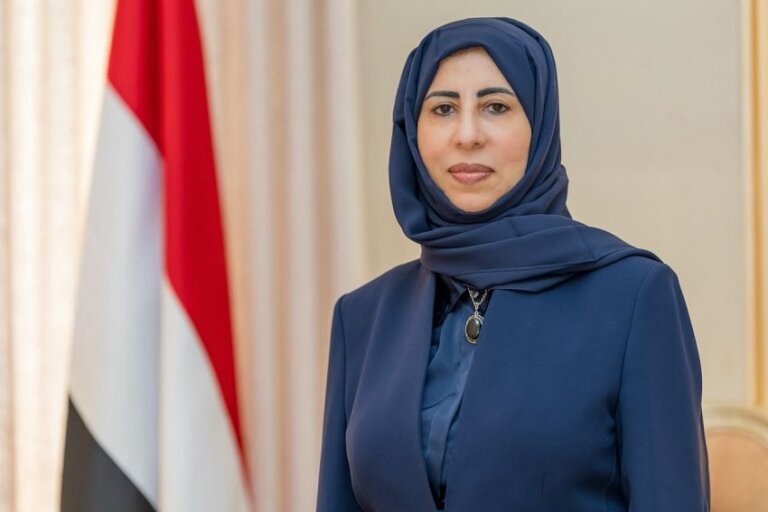
Raja took up her post earlier this year, becoming the first woman to represent Yemen in Washington, and presented her credentials to the US president in May. Her appointment placed a diplomat with a long record in mediation and peacebuilding at the centre of Yemen’s most important bilateral relationship, at a moment when the Red Sea has become a recurring item on the American security agenda.
Her core argument is economic as much as military. The Houthis halted Yemen’s crude exports in late 2022 with drone strikes on the Dhabba oil terminal in Hadramawt and the Nashima facility in Shabwa, cutting off what had been the government’s single largest source of hard currency. The internationally recognised government has put the cumulative loss at roughly 7.5 billion dollars. Without that income, Aden struggled to pay public salaries, sustain fuel imports for power generation or defend the riyal, which lost much of its value in the areas it controls.
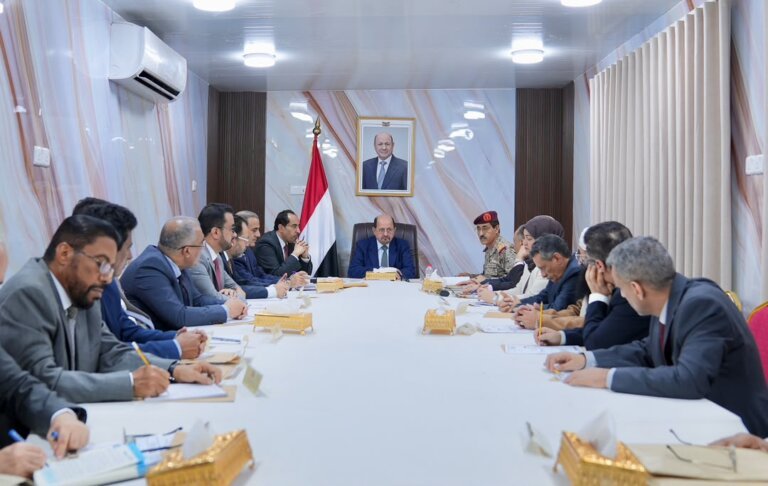
That picture changed, at least on paper, in July. Presidential Leadership Council chairman Rashad al-Alimi announced on 20 July that Yemen was resuming oil exports after a suspension of nearly four years, and said the proceeds would be directed towards public sector salaries, services and currency stabilisation. Whether shipments continue without interruption is the open question, since the terminals that were struck in 2022 remain within reach of the same weapons that closed them.
The maritime dimension has drawn far more international attention. Attacks launched from Houthi-held territory against vessels in the Red Sea and the Bab al-Mandab strait have pushed a large share of container traffic away from the Suez route and towards the longer passage around southern Africa, raising freight costs and insurance premiums well beyond the region. The Houthis have said their campaign is a response to the war in Gaza and have rejected the description of themselves as an Iranian proxy, maintaining that their decisions are their own. Western governments, the Yemeni government and United Nations panels have pointed to the supply of components and technical assistance from Iran as evidence of a closer relationship.
Raja also pressed the case of aid workers held in Houthi-controlled areas. Human Rights Watch reported early this year that more than seventy United Nations employees remained in detention, alongside dozens of staff from Yemeni and international organisations, most of them seized in raids that began in mid-2024. The UN secretary-general has repeatedly demanded their release. One World Food Programme employee died in custody in February 2025. Agencies say the detentions have forced them to suspend or scale back operations in some of the areas where needs are highest.
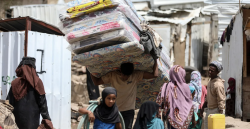
The scale of those needs is difficult to overstate. The UN humanitarian office estimates that 22.3 million people in Yemen, more than two thirds of the population, require assistance this year, including 5.2 million people displaced inside the country. Acute food insecurity affects 18.3 million. Cholera, measles and diphtheria continue to circulate in districts where water systems and clinics have degraded, and aid agencies have appealed for 2.16 billion dollars to fund the response, a target that recent appeals have not come close to meeting.
Against that background, Raja said the government remains committed to institutional reform, to restoring the machinery of the state and to a negotiated settlement, and she urged international partners to keep the welfare of Yemenis at the centre of their calculations rather than treating the country as an arena for other powers to contest. That framing serves an obvious diplomatic purpose, but it also reflects a genuine constraint. The government in Aden has limited leverage of its own and depends heavily on Saudi and Emirati support, which has narrowed as regional priorities have shifted.
The peace track has been stalled for some time. A roadmap brokered with Saudi and Omani involvement, which envisaged salary payments, the reopening of roads and airports and a phased political process, was close to agreement before the Red Sea escalation derailed it. Neither side has formally abandoned the framework, and neither has shown much appetite for reviving it. UN envoy efforts have concentrated on preventing a return to full scale ground fighting rather than on a comprehensive deal.
For Washington, the calculation has been dominated by freedom of navigation and by the wider contest with Iran. For the Yemeni government, the priority is money, legitimacy and the survival of state institutions. Those interests overlap but are not identical, and Raja’s task is to keep Yemen’s domestic crisis visible to an audience that tends to view the country through the narrower lens of shipping lanes and missile launches. Whether the resumption of oil exports holds, and whether the detained aid workers are freed, will do more to shape the coming months than any statement delivered in a Washington conference room.
About the Author