Yemen asks UN Security Council to condemn Houthi missile attacks on Aden displacement camp
 Yemen Herald News
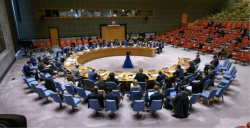
NEW YORK, United States — Yemen asked the UN Security Council to condemn Houthi missile attacks on a displacement camp and coast guard facilities in Aden, its UN mission said.
Abdullah Ali Fadhel al-Saadi, permanent representative of the Republic of Yemen to the United Nations, set out the request in a letter to the president of the Security Council. A copy went to the UN secretary-general.
The letter asked the Council to condemn attacks on civilians, displacement camps and civilian facilities.
It asked the Council to press for a halt to strikes on civilians and on camps for the displaced, and to ensure accountability for those responsible.
The letter called for full implementation of Security Council resolutions 2140 and 2216, including enforcement of the arms embargo on the Houthis.
Resolution 2140 was adopted in 2014 and created the Yemen sanctions regime. Resolution 2216 followed in 2015 and imposed an arms embargo targeting Houthi leaders.
The letter named two attacks.
Yemen’s interior ministry said three ballistic missiles were fired at two coast guard facilities in Aden on Saturday, 24 October.
Two of them struck the coast guard headquarters inside the interior ministry building, according to the government’s account. The third hit a coast guard facility in the Al-Tawahi district.
Yemen’s information ministry said three ballistic missiles were fired at a displacement camp at Ras Imran, west of Aden, on Sunday.
The ministry gave no information on casualties or damage at the camp.
Vatican News and the Philippine outlet The Chronicle each carried the accusation, citing the information ministry.
The government said the camp attack violated international humanitarian law and raised concerns about the right to life.
No deaths or injuries were reported in either attack.
The Houthis acknowledged attacking two military sites in Aden in connection with the Saturday strikes, according to those reports. They did not comment on the camp.
The group’s account describes military targets. The government’s describes civilian ones.
Turkish media reported that a ballistic missile attributed to the Houthis exploded near a government military camp in western Aden earlier on Sunday.
Yemen’s information ministry also accused the Houthis of targeting Aden International Airport and the port at Al-Tawahi over the weekend.
Mohsen Ali Haidara, the transport minister, said the airport had been targeted for a fourth consecutive time.
Two ballistic missiles hit Aden International Airport on Wednesday, damaging the runway and halting civilian flights, the transport ministry said.
An Aden police official told Agence France-Presse that a missile had targeted the area under Saudi forces’ control inside the airport perimeter.
The Houthis called for the airport to be evacuated.
Aden is a gateway for southern Yemen and an entry point for aid workers and medical supplies.
An earlier attack on 7 October involved at least two ballistic missiles and several drones, according to that account. One missile landed near the runway shortly before a flight from Cairo was due, and the flight was diverted to Jeddah.
Aden is the seat of Yemen’s internationally recognised government.
The letter follows a Security Council session on Yemen earlier in the month.
Hans Grundberg, the UN special envoy for Yemen, told the Council on 9 October that the country had slid back into full-scale war.
He said civilians, including women and children, were bearing the brunt of the violence.
He said gains on the battlefield could not replace the negotiations needed to end the conflict, and asked Council members to support mediation.
Grundberg also said regional instability affects Yemen, and that developments inside Yemen affect the region.
The UN said at least 46 civilians had been killed and more than 130 injured since August.
Al-Saadi told the same session that the Houthi threat was no longer an internal Yemeni matter.
He urged the Council to cut the group’s funding, weapons and technology, and to strengthen cooperation with the Yemeni government.
Abdulaziz al-Wasil, Saudi Arabia’s permanent representative, called the situation a dangerous escalation at that meeting.
He said Riyadh would not let Yemen become a base for threats to its security or to freedom of navigation.
Houthi attacks have reached Saudi territory. Two attacks on King Khalid International Airport north of Riyadh on 8 October killed three Saudi citizens, according to the Saudi Civil Aviation Authority.
Saudi Arabia reopened the airport after the attack. Gulf states and European governments condemned it, and Switzerland called it unacceptable.
Attacks on the Riyadh airport have affected nearly half of Saudi Arabia’s scheduled departures since 8 October.
A pro-Houthi protest was held in Sanaa against the Saudi intervention.
Al-Saadi discussed the escalation and threats to Red Sea shipping with his French counterpart in New York. The Yemeni mission reported those talks on 25 October.
The account of the letter rests on reports by Yemen Monitor, Yemen TV and Yemen Online of the mission’s own announcement. No independent confirmation of its text has been published, and the Security Council had issued no response.
The Houthis seized Sanaa and other provinces in 2014. A Saudi-led coalition intervened on behalf of the internationally recognised government the following year.
The group controls much of the north and west. The government and its allies hold Aden and much of the south and east.
Taiz remains encircled. Yemen’s government said this week that lifting the siege of the city was a national priority.
Resolution 2216 also demanded that the Houthis withdraw from areas they seized and hand over heavy weapons.
About the Author