Lahj Governor Presses Danish Refugee Council for Broader Development Partnership
 Yemen Herald News
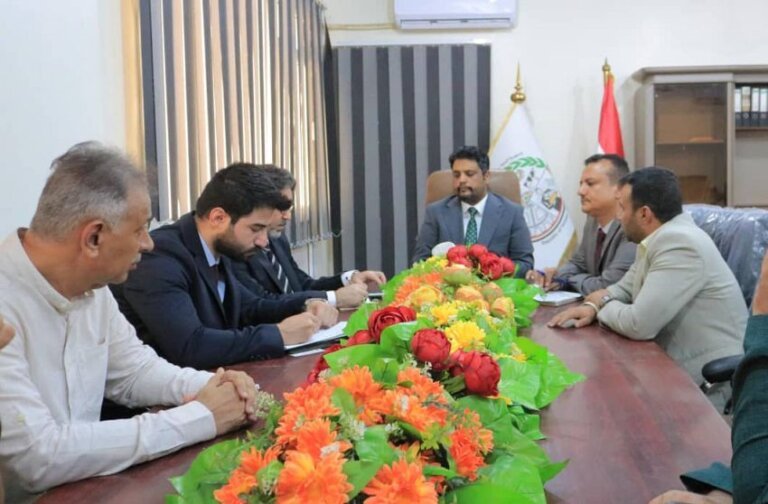
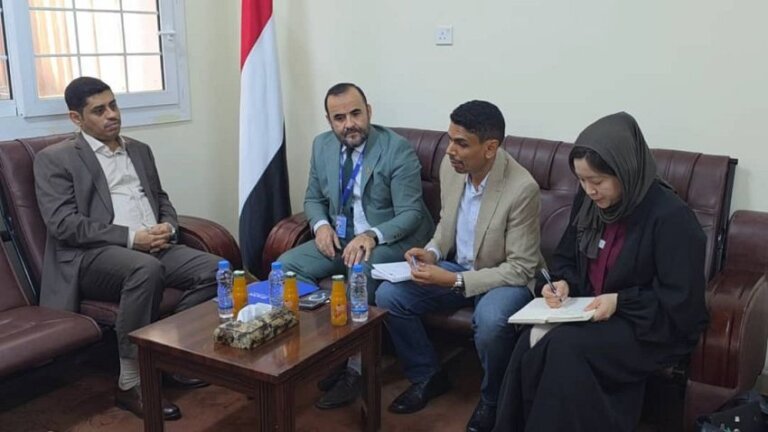
Lahj Governor Murad al-Halmi met representatives of the Danish Refugee Council on Tuesday to discuss scaling up humanitarian and development work in the southern Yemeni governorate through closer cooperation with the local authority. The state news agency Saba, which reported the meeting, said the governor pressed the organisation to move beyond limited, short-term interventions and to prioritise integrated projects capable of delivering lasting economic and social benefits, particularly in the districts facing the greatest development challenges.
Al-Halmi set out what he described as a partnership model, in which the local authority and international organisations both contribute to strategic projects rather than working in parallel. Coordinated investment of that kind, he argued, would widen the impact of development spending, improve public services and make more efficient use of resources that are already stretched thin. He also asked that assistance be channelled towards productive sectors that create jobs, strengthen household livelihoods and stimulate local economic activity, noting that Lahj’s agricultural resources offer strong opportunities for longer-term growth.
The governor praised the Danish Refugee Council for its part in easing humanitarian needs across Lahj and said the local authority stood ready to facilitate the organisation’s work. Saba’s account mentioned no new agreement, funding commitment or timetable, which suggests the meeting was an exchange of priorities rather than the launch of a programme.
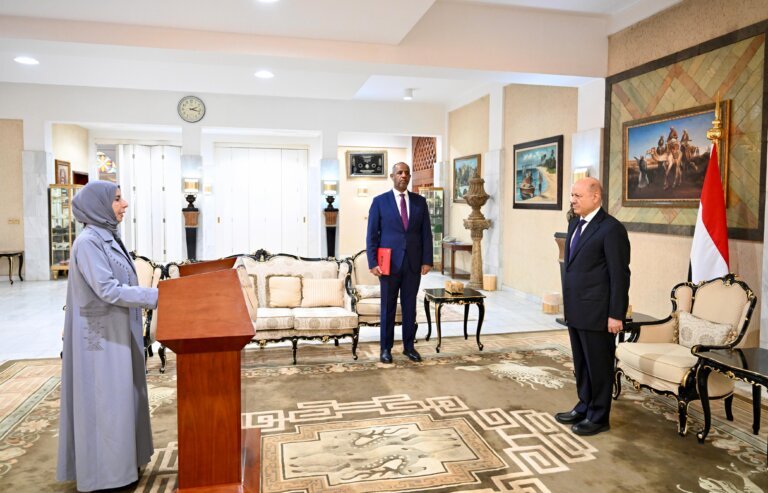
Al-Halmi is comparatively new to the post. A republican decree named him governor of Lahj in March 2026 as part of a wider reshuffle of provincial leadership ordered by Rashad al-Alimi, chairman of the internationally recognised Presidential Leadership Council, and he took the constitutional oath before al-Alimi later that month. He previously held the transport and communications portfolio in government and sits on the presidium of the Southern Transitional Council, the Aden-based movement that advocates self-rule for southern Yemen.
The Danish Refugee Council ranks among the larger international aid organisations working in Yemen. The Copenhagen-based group says it runs its Yemeni programme from nine field offices with a staff of more than 440, combining emergency relief with protection services, camp coordination and camp management, water and sanitation projects, shelter and household supplies, economic recovery work and humanitarian mine action. In Lahj it manages Al Rabat camp, which shelters more than 3,000 displaced people.
The organisation has also handed out money rather than goods in the governorate. Working through the Cash Consortium of Yemen and with British government funding, it delivered multi-purpose cash assistance to 4,157 households across Lahj, Hajjah and Hudaydah, an approach that lets families set their own spending priorities and pushes support through local markets instead of parallel distribution systems.
The backdrop to Tuesday’s talks is an emergency that has not eased. In its 2026 humanitarian needs and response plan, the United Nations Office for the Coordination of Humanitarian Affairs estimated that 22.3 million people in Yemen require humanitarian assistance and protection, among them 5.2 million internally displaced people alongside migrants and refugees. Roughly 18.3 million face acute food insecurity, and more than 2.2 million children under five are expected to suffer malnutrition this year.
Money is the binding constraint. Aid agencies appealed for 2.16 billion dollars for Yemen in 2026 and set out plans to reach 12 million people, prioritising the 9.4 million living in areas of greatest severity because resources fall well short of needs. Repeated shortfalls in recent years have forced organisations to trim or suspend programmes, which helps explain why arguments like al-Halmi’s, favouring livelihoods and local production over open-ended relief, have gained traction among Yemeni officials and donors alike.
Economic collapse compounds the problem. Yemen’s banking system is split between rival central banks in Aden and Sanaa, the rial has lost much of its value in government-held areas, and many public employees are paid irregularly or not at all, which erodes purchasing power even where markets are stocked and assistance arrives on time.
Lahj shows how hard that shift is to execute. The governorate lies immediately north and west of Aden, is divided into 15 districts and hosts substantial displaced populations, with Tuban district among those where the displaced make up a significant share of residents. Farming remains a principal source of income for rural families, and the governorate’s position on the land approaches to Aden, the seat of the internationally recognised government, has kept it strategically sensitive throughout the war.
The conflict itself has proved intractable. Houthi forces seized the capital, Sanaa, in late 2014, and a Saudi-led coalition intervened in March 2015 on the government’s side. Front lines have largely frozen since a United Nations-brokered truce lapsed in 2022, yet no comprehensive settlement has followed, and Yemeni officials continue to warn about the risk of renewed escalation. That stalemate leaves governorates such as Lahj in an awkward middle position, relatively removed from active fighting but still dependent on aid budgets written for emergencies elsewhere.
Whether this week’s discussion produces the integrated projects the governor described will hinge on factors largely outside his control, above all donor appetite for multi-year development spending in a country still formally at war. Local authorities across southern Yemen have made similar appeals to international organisations before, with mixed results, and aid groups tend to cite insecurity, bureaucratic obstacles and short funding cycles as limits on what they can plan. Both sides have signalled intent; the practical test is whether it turns into projects on the ground.
About the Author