Yemen’s Technical Education Minister Seeks Turkish Support to Rebuild Vocational Institutes
 Yemen Herald News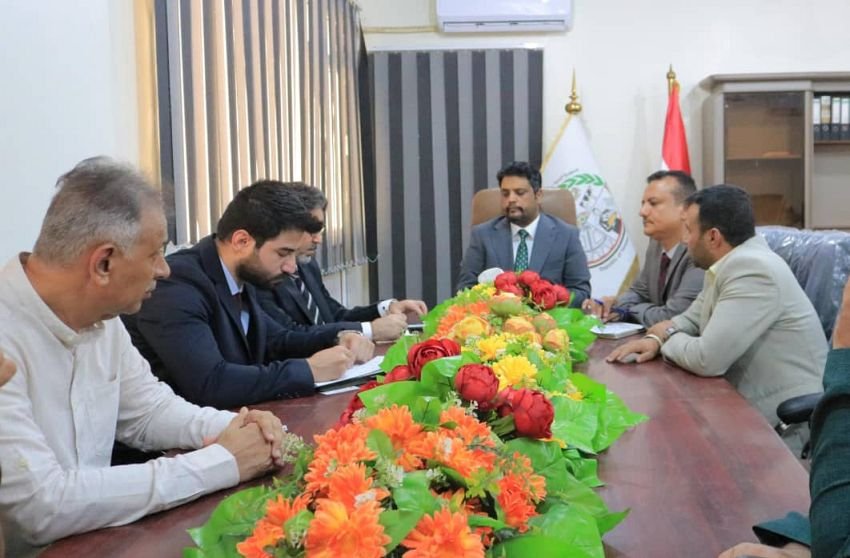
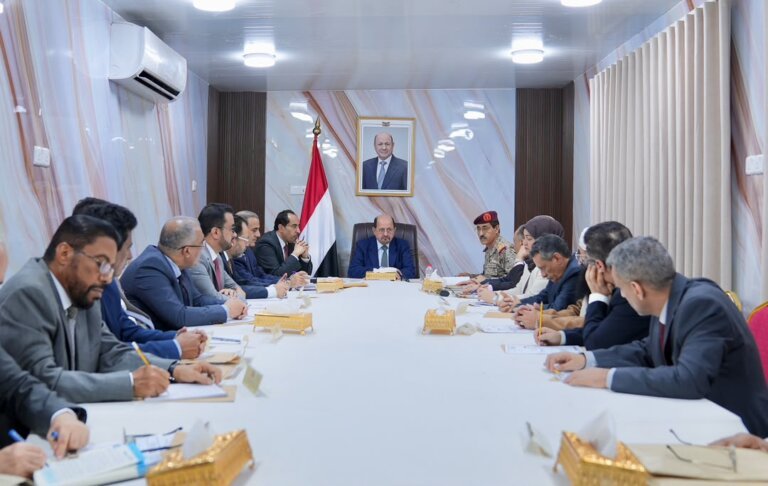
Yemen’s Minister of Technical Education and Vocational Training, Dr. Anwar al-Mahri, met a Turkish delegation in Aden this week to press for expanded support for the country’s battered vocational training system. He held talks with Zubeyir Yaka Yılmaz, coordinator of the Turkish Cooperation and Coordination Agency, known by its Turkish acronym TIKA, and with Ahmed Korkmaz, head of the Turkish Red Crescent mission in Yemen. The discussion centred on how the ministry and the two Turkish institutions might deepen an existing working relationship.
The meeting concentrated on the practical gaps that keep Yemen’s technical institutes from functioning: deteriorating buildings, missing equipment, thin teaching capacity and training programmes that have not been revised in years. Al-Mahri reviewed the current state of the sector for his guests and argued that any serious rebuilding effort must align what institutes teach with what employers in Yemen and the wider region actually need. He framed technical education as one of the few levers available for moving young Yemenis into paid work.
Aden serves as the temporary capital of Yemen’s internationally recognised government, and the ministry based there oversees a network of technical institutes, vocational training centres and community colleges. Al-Mahri asked the delegation for help modernising curricula and training methods, raising the qualifications of teachers and instructors, and re-equipping workshops and laboratories. Those facilities matter disproportionately in vocational education, because they are where students get the hands-on practice that separates a trained welder, electrician or nurse from a certificate holder.
The government attributes much of the damage to the war that followed the Houthi movement’s seizure of Sana’a in 2014 and its subsequent advance southward. Ministry officials say the conflict wrecked infrastructure and equipment at several institutions and interrupted training programmes, and that the sector has not recovered. Broader assessments of Yemen’s education system describe a similar picture across general and technical education alike: damaged facilities, staff working without reliable salaries, and enrolment well below pre-war levels.
The economic argument for the sector is not complicated. World Bank figures drawn from modelled International Labour Organization estimates put youth unemployment in Yemen at roughly 33 percent in 2025, with overall unemployment near 17.5 percent. In a country whose population skews heavily young, the mismatch between the skills school-leavers hold and the work available to them is among the more tractable problems facing Yemeni planners, and one that training programmes can chip away at locally without waiting for a national political settlement.
TIKA, Turkey’s state development agency, has maintained a programme coordination office in Yemen and counts education among its larger global portfolios. The agency says it has carried out roughly 4,850 education projects worldwide, a substantial share of them involving vocational training or direct support to training centres. Its work in Yemen has historically leaned toward humanitarian relief, so a move into institution-building within technical education would mark a broadening of the agency’s role in the country rather than a continuation of it.
The Turkish Red Crescent, known in Turkey as Kızılay, runs its international operations through 13 delegations spanning territory from Afghanistan to Yemen and from Bosnia-Herzegovina to Somalia. In Yemen its activity has centred on food assistance rather than education: during its 2026 Ramadan programme the organisation distributed 500 food packages and about 1,000 iftar meals across Aden and Lahj governorates, reaching an estimated 5,000 people. Its participation in the Aden talks suggests an interest in longer-term work alongside that relief.
The backdrop to the meeting is a humanitarian emergency that has deepened rather than eased. The United Nations Office for the Coordination of Humanitarian Affairs estimates that 22.3 million people in Yemen will need humanitarian assistance and protection during 2026, a figure that includes 5.2 million internally displaced people. Some 18.3 million face acute food insecurity, more than 2.2 million children under five are acutely malnourished, and 14.4 million require water, sanitation and hygiene support. Aid agencies have appealed for 2.16 billion dollars to reach 12 million people this year.
That shortfall is part of why vocational training attracts donor interest. It is comparatively inexpensive, produces outcomes that can be measured, and over time reduces the number of households dependent on emergency distributions. It is also slow. Equipping a workshop or retraining a cohort of instructors yields results across years rather than months, and such projects compete for limited attention and money with food, water and medical needs that cannot be deferred.
The Turkish representatives said they were willing to support the sector and identified possible areas of intervention in Yemen’s technical education institutions, including strengthening institutional capacity and improving training outcomes at institutes and community colleges. No specific projects, budgets or timelines were announced at the meeting, and neither side characterised the discussion as producing a formal agreement. What was described was a shared assessment of where the needs are most acute.
Whether the talks translate into activity on the ground will depend on funding decisions in Ankara and on Yemen’s security and political situation, which continues to constrain both aid access and construction work. For now the meeting registers as an expression of intent, one of several the ministry has pursued with international partners as it tries to rebuild a sector serving young Yemenis who have few other routes into employment.
About the Author