Al-Khanbashi Praises Hadhramaut Reconciliation Committee and Urges Stronger Technical Education
 Yemen Herald News
Salem al-Khanbashi, a member of Yemen’s Presidential Leadership Council and governor of Hadhramaut, has praised the Hadhramaut Reconciliation Committee for its work settling disputes between residents of the governorate, and has called for closer cooperation between technical education institutes and private employers. He set out both positions during separate meetings in Hadhramaut on Tuesday, according to the state news agency SABA.
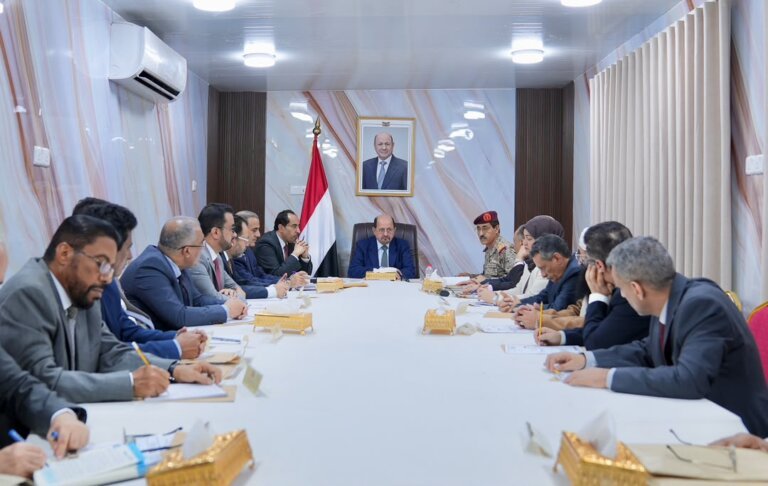
The first meeting brought al-Khanbashi together with Sheikh Saleh Bawazir, who heads the reconciliation committee and also serves as general manager of the Hadhramaut Coast branch of the Tribal Affairs Authority, along with other members of the committee. “You’re doing a great job, it is very important to reconcile disputes,” the governor told them, in remarks reported by SABA.
Committees of this kind occupy an unusual place in Yemeni public life. Formal courts across much of the country work slowly, are unevenly resourced and in some districts barely function at all, which leaves tribal mediation to handle a large share of quarrels over land, water, inheritance, blood money and commercial debt. In Hadhramaut, where tribal structures remain strong and where the state’s reach has fluctuated with the wider conflict, the reconciliation committee sits between customary practice and official authority. It operates with the local government’s blessing while drawing its legitimacy from the standing of the sheikhs who staff it. Keeping local disputes from hardening into armed feuds is a modest goal, but in a governorate that has avoided the worst of the front-line fighting it is a meaningful one.
Separately, al-Khanbashi met the officials responsible for technical education and vocational training in the governorate. Their discussions covered the difficulties facing the sector and the scope for partnership with private companies to develop it, SABA reported. The governor has previously described education as a priority for the local authority in Hadhramaut and has argued that technical and vocational institutes should equip young people with practical skills that translate into employment.
The reasoning is straightforward. More than a decade of war has interrupted schooling, drained public salaries and pushed many households into informal work. Vocational institutes are comparatively cheap to run and produce graduates in trades such as electrical work, plumbing, welding, refrigeration and machinery maintenance, for which demand exists wherever reconstruction is under way. Employers, however, complain that curricula have not kept pace, while the institutes themselves lack equipment and workshop supplies. Formal partnerships in which companies help shape training and take on trainees are the mechanism the governor is proposing to close that gap.
Hadhramaut carries particular weight in these calculations. It is Yemen’s largest governorate by area, reaching from a long southern coastline through interior valleys to the Saudi border. Its main city, Mukalla, hosts the al-Dhabba oil terminal and al-Rayyan International Airport, and the governorate contains much of the country’s producing oil infrastructure. That combination of hydrocarbons, ports and territory places it at the centre of any argument about how Yemen’s resources should be governed and shared.
Al-Khanbashi brings a long official record to the post. He held senior positions in the Yemeni Socialist Party and later the General People’s Congress, governed Hadhramaut in an earlier period and served as deputy prime minister before being appointed governor again in late 2025 and sworn in by Rashad al-Alimi, chairman of the Presidential Leadership Council. He holds the governorship while sitting on the council itself, an unusual concentration of national and provincial authority in one figure.
His return coincided with a contest over control of the governorate’s interior. In early January 2026 the internationally recognised government announced that its forces had retaken Hadhramaut’s desert and valley districts from separatist units, after which al-Khanbashi said he was resuming his duties from Seiyun. He has since spoken about integrating the Hadhramaut Protection Forces, an armed wing formed in October 2025 by the Hadhramaut Tribal Alliance under Amr bin Habrish al-Alawi, into the regular army and security services, and about guaranteeing a safe working environment for United Nations and international aid staff in the governorate.
The national backdrop remains unresolved. The Houthis seized Sana’a in late 2014 and a Saudi-led coalition intervened in March 2015. The Presidential Leadership Council was created in April 2022 to unify the anti-Houthi camp, and front lines have shifted little since the truce agreed that year. No political settlement has materialised, and the past month has brought escalation at sea rather than progress on land.
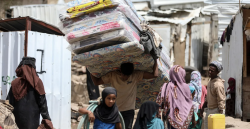
The humanitarian picture behind these meetings is bleak. The United Nations humanitarian needs and response plan for 2026 estimates that more than 22 million people in Yemen require assistance or protection, including 5.2 million who are internally displaced. Some 18.3 million are acutely food insecure, and more than 2.2 million children under five are acutely malnourished, about 516,000 of them severely. Aid agencies have asked for 2.16 billion dollars to reach 12 million people this year.
Measured against those numbers, a mediation committee and a review of vocational training are small instruments. They are, however, among the few levers a governor actually controls. Neither reconciliation nor training will resolve the questions of revenue sharing, federal structure and armed-group integration that will decide Hadhramaut’s future. What they can do is keep disputes out of the hands of gunmen and give young people a reason to stay, which is the kind of groundwork any eventual settlement would need.
About the Author