Yemen Welcomes Dutch, Belgian and Irish Bans on Israeli Settlement Products
 Yemen Herald News
Yemen’s Ministry of Foreign Affairs and Expatriates has welcomed decisions by the Netherlands, Belgium and Ireland to prohibit the import, purchase and sale of goods produced in Israeli settlements, describing the measures as a responsible position that helps confront illegal settlement activity. The statement, carried by the state news agency SABA on 27 July, called the three bans a practical commitment to implementing international law.
The ministry singled out United Nations Security Council Resolution 2334, adopted in December 2016, which states that Israeli settlement building in occupied Palestinian territory has no legal validity and amounts to a flagrant violation of international law. Yemen’s statement argued that the European decisions demonstrated a willingness to act on that resolution and its legal consequences rather than simply restate it.
The ministry also reiterated support for Palestinian rights, foremost the establishment of an independent Palestinian state on the 1967 borders with East Jerusalem as its capital. It framed that position within the Arab Peace Initiative, the framework adopted at the Arab League summit in Beirut in 2002, which offered Israel normalisation in exchange for withdrawal from territory occupied in 1967 and a just settlement of the refugee question.
The three measures were taken within roughly two weeks of one another and differ in form. Ireland moved first. The Israeli Settlements in the Occupied Palestinian Territory (Prohibition of Importation of Goods) Bill cleared the Dáil in early July and passed the Seanad on 15 July, completing its passage through the Oireachtas, and was signed into law by President Catherine Connolly on 23 July. It makes importing settlement goods an offence under Irish customs law, with the settlements identified by postal code. Ireland is the first European Union member state to enact such a prohibition, although the legislation has been criticised at home for covering goods while leaving services untouched.
Belgium’s federal government approved an import ban on products originating in Israeli settlements in the occupied West Bank in the middle of July. The Dutch cabinet followed on 21 July, agreeing to prohibit the import, purchase and sale of settlement goods, with the measure due to take effect on 22 September. Because the Netherlands is a major point of entry for goods reaching the European market, the Dutch step is the commercially weightiest of the three.
Spain has taken unilateral action along similar lines, but the European Union as a bloc has not. Member states remain divided over whether to adopt a common regime on settlement trade, and the recent national bans reflect the absence of one. Israel has rejected measures of this kind as discriminatory and has criticised the Irish legislation in particular.
Yemen was one of several governments to welcome the decisions. Jordan, Qatar and Kuwait issued statements along similar lines, as did the Organisation of Islamic Cooperation. For Yemen the intervention is consistent with a position it has held for decades: successive governments have treated the Palestinian question as a fixed point of national policy, and public sympathy for it crosses the country’s own political divides, including the line between the internationally recognised government and the Houthi authorities in Sana’a.
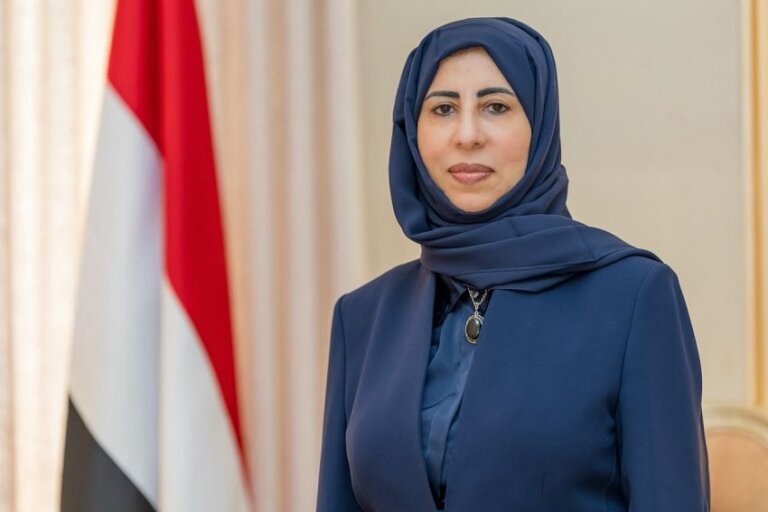
The statement also arrived during a change at the top of the ministry. Afrah al-Zouba was named foreign minister by presidential decree from Rashad al-Alimi, chairman of the Presidential Leadership Council, and sworn in on 23 July, becoming the first woman to hold the portfolio. She had previously served as minister of planning and international cooperation, joining the cabinet in February, and brings experience of working with the World Bank, the International Monetary Fund and the Saudi Development and Reconstruction Programme for Yemen.
Her immediate agenda is dominated by matters closer to home. On 27 July, the same day the settlement statement was issued, al-Zouba told reporters in Riyadh that the government was prepared for any escalation with the Houthis, after the group declared a maritime embargo on Saudi Arabia and said it had attacked tankers in the southern Red Sea. Yemeni diplomacy is running on two tracks at once: solidarity abroad, and a deteriorating security position at home.
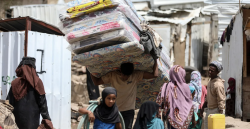
That domestic context is severe. The United Nations humanitarian needs and response plan for 2026 estimates that more than 22 million people in Yemen require assistance or protection, including 5.2 million who are internally displaced. Some 18.3 million are acutely food insecure, and more than 2.2 million children under five are acutely malnourished, about 516,000 of them severely. Damaged water and health infrastructure has left the country repeatedly exposed to cholera and measles outbreaks. Aid agencies have asked for 2.16 billion dollars to reach 12 million people this year.
A foreign ministry statement changes nothing on the ground in the West Bank, and it will not shift the arithmetic of Yemen’s own crisis. Its value to Aden is narrower. It keeps Yemen aligned with the Arab consensus, reinforces its claim to speak for the country internationally, and costs nothing at a moment when the government has little else to spend. Whether the European bans amount to more than symbolism will depend on enforcement: on whether customs authorities can reliably separate settlement produce from Israeli goods, and on whether other member states follow.
About the Author