

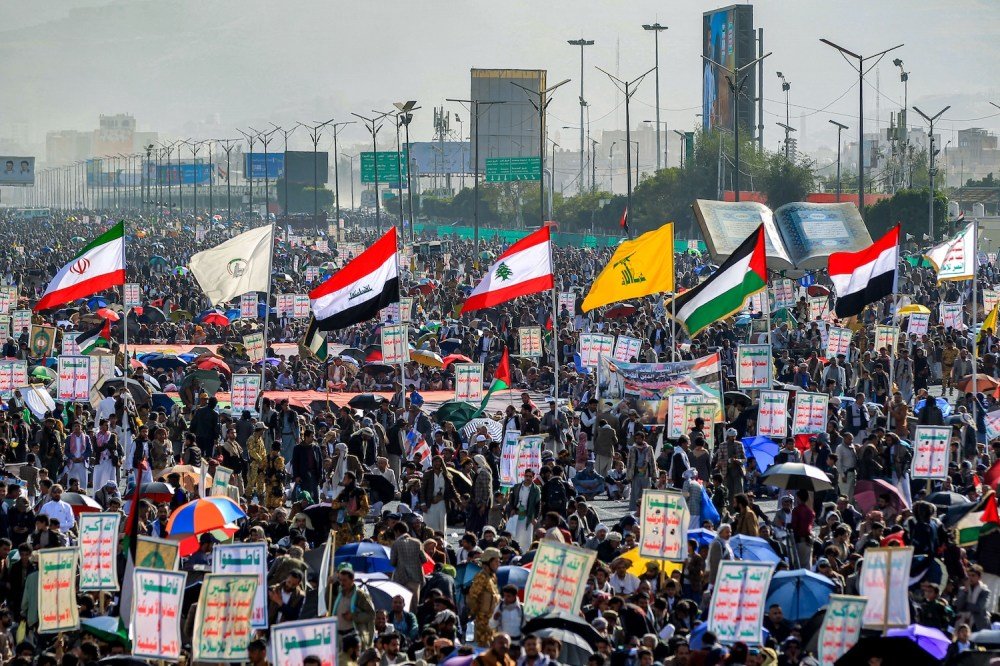
Recent developments in the Middle East have raised questions about the actions and motivations of Iran’s allied militias in Lebanon, Iraq, and Yemen. Historically, it has been believed that a regime change war against Iran would incite these proxies to create widespread chaos across the region. However, current responses from these groups suggest a more cautious approach, influenced by domestic politics and operational limitations.
In the wake of recent Israeli and U.S. strikes on Iran, Hezbollah in Lebanon declared that the killing of Iran’s Supreme Leader Ayatollah Ali Khamenei would be a “red line.” Following this declaration, Hezbollah launched rocket attacks against Israel, prompting a military response. Meanwhile, two Iran-backed groups in Iraq expressed their readiness to defend Iran, framing their potential involvement as a “holy undertaking.” Additionally, Houthi leaders in Yemen indicated plans to resume missile and drone attacks on shipping routes in the Red Sea.
Despite these aggressive statements, the overall response from these militias has been relatively restrained. Analysts note a significant gap between the rhetoric of these groups and their actual capabilities, which have been diminished by years of conflict and domestic constraints. For instance, Hezbollah’s military capabilities have been reduced due to ongoing Israeli assaults, and the group faces pressure from Lebanese authorities and its own supporters to prioritize national interests over regional conflicts.
In Iraq, the situation is similarly complex. While groups like Kataib Hezbollah have historically engaged in attacks against U.S. bases, the various factions within the Popular Mobilization Forces (PMF) do not operate under a unified command. This fragmentation complicates any coordinated response to regional tensions. Some factions, having integrated more into the Iraqi state, are likely to be more cautious in their actions, especially under the influence of Iraqi Prime Minister Mohammed Shia al-Sudani.
The Houthis in Yemen, who have previously targeted Saudi oil facilities, also face a dilemma. They have the capability to threaten shipping lanes but may choose to refrain from escalating tensions to avoid jeopardizing their agreements with the U.S. Furthermore, they have begun to develop their own military capabilities, reducing their reliance on Iran. As the situation evolves, it remains uncertain how these proxies will ultimately respond, particularly if Iran finds itself in a precarious position that necessitates their involvement.