

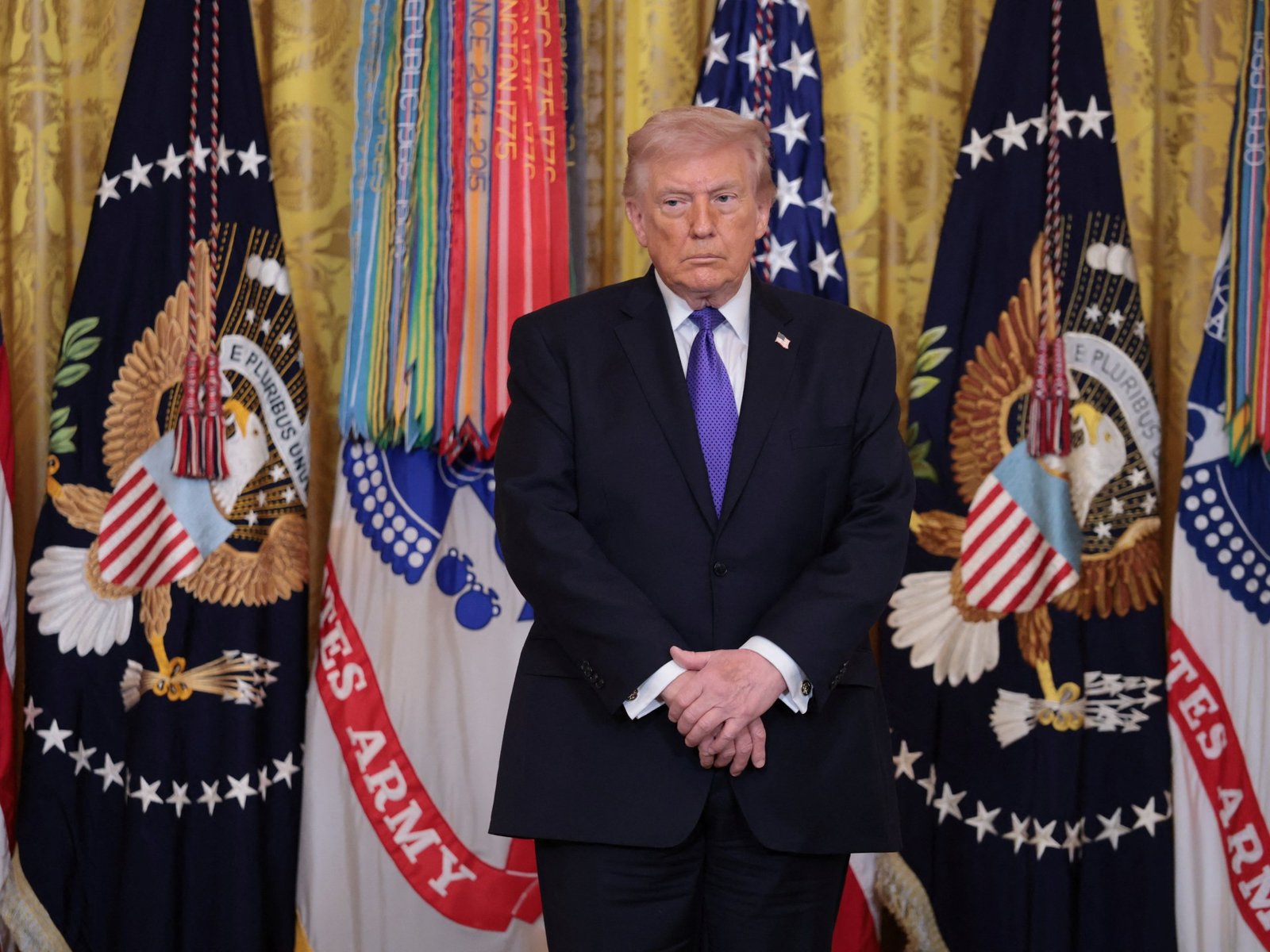
United States President Donald Trump is navigating a complex military campaign against Iran, marked by his unpredictable messaging regarding the conflict’s duration and objectives. Following the recent killing of Supreme Leader Ayatollah Ali Khamenei, a significant escalation in hostilities has occurred, yet Iranian leaders have publicly dismissed any immediate prospects for negotiations with the U.S. This resistance underscores the challenges Trump faces in achieving a swift resolution that he can tout as a victory.
Despite heavy bombing campaigns and the high-profile assassination of Khamenei, Iran has responded with a series of aggressive actions, including attacks on U.S. assets and threats against civilian shipping in the strategically vital Strait of Hormuz. The Iranian government appears determined to establish a deterrent before considering any negotiations, signaling its readiness for a prolonged conflict.
Trump’s inconsistent statements regarding the timeline of the military campaign reflect his discomfort with the prospect of a drawn-out engagement. While he has suggested that the conflict could conclude in a matter of days, he has also indicated that it could extend for weeks or longer. This ambiguity complicates the situation, as Trump has framed the conflict as a fight for the freedom of the Iranian people while simultaneously expressing a willingness to negotiate with elements of the current Iranian regime.
The potential for a protracted conflict raises concerns about increased U.S. casualties, economic repercussions, and the failure to safeguard regional allies. Historically, Trump has preferred military actions that yield quick results, as seen in previous engagements, such as the campaign against Yemen’s Houthis, which he curtailed when it became clear that a swift victory was unattainable.
The Iranian government, weakened by years of economic sanctions and internal unrest, remains resilient, believing that any negotiations without established deterrence would leave it vulnerable to future attacks. Trump’s approach, which he likened to the U.S. strategy in Venezuela, suggests he may be seeking a regime change scenario, but the Iranian leadership is currently uninterested in negotiations under such conditions.
As the situation evolves, the ambiguity surrounding Trump’s strategy may allow him to pivot if the costs of the conflict escalate. However, the potential fallout from a prolonged military engagement could lead to significant regional instability and humanitarian consequences, raising questions about the long-term implications of U.S. actions in Iran.