Shell Declares Force Majeure on Qatari LNG After Ras Laffan Shutdown Halts All Exports
 Yemen Herald News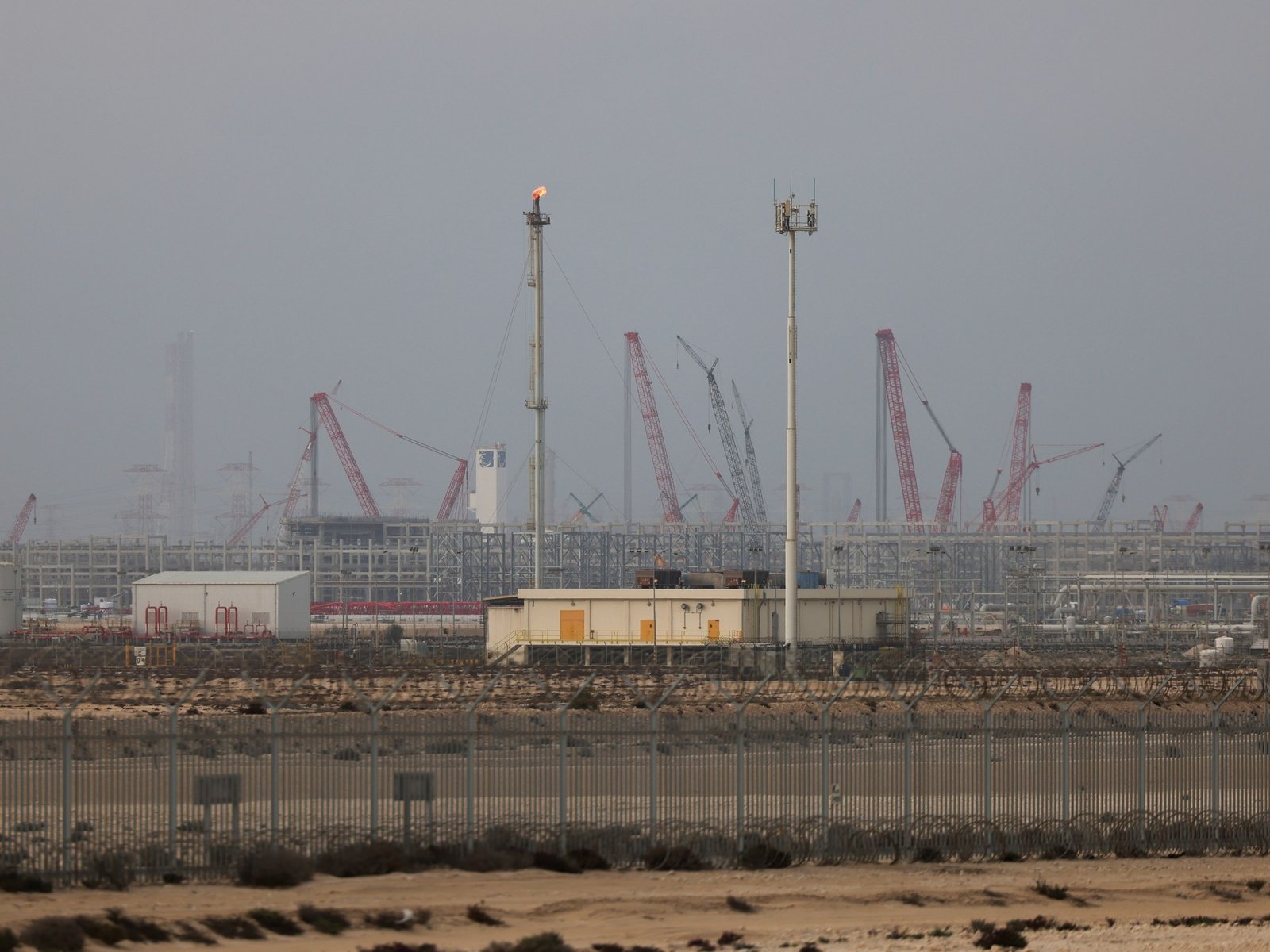
Shell declared force majeure in March 2026 on liquefied natural gas cargoes it buys from QatarEnergy and resells to customers around the world, formally suspending deliveries after the shutdown of Qatar’s entire LNG production system. The declaration, reported on 11 March 2026, made the world’s largest LNG trader the most visible link in a chain of contractual failures running outward from the Gulf.
The trigger was the halt at Qatar’s export facilities. QatarEnergy shut in production on 2 March 2026 following drone attacks on the Ras Laffan and Mesaieed industrial complexes, and subsequently declared force majeure on its own supply obligations. Ras Laffan is the hub through which effectively all Qatari LNG is liquefied and loaded, and Mesaieed handles refined products and petrochemicals. With both offline, a national export industry with capacity of roughly 77 million tonnes a year stopped at once.
Force majeure is a contractual mechanism, not a commercial choice. It allows a party to suspend performance when circumstances beyond its control make delivery impossible, and it protects that party from penalties for non-delivery. Its use in the LNG trade is rare and closely watched, because long-term Qatari contracts underpin power generation and industrial demand across Europe and Asia. Once QatarEnergy invoked it upstream, buyers holding those cargoes had little option but to pass the same declaration down to their own customers.
Shell lifts about 6.8 million tonnes a year of Qatari LNG under long-term agreements, and TotalEnergies about 5.2 million tonnes. Both received force majeure notices from Qatar, and a number of Asian buyers were served with the same notice. Those companies in turn told their customers that sales of Qatari-origin LNG were suspended for as long as the facilities remained shut. The cascade illustrated how concentrated the market’s dependence on a single production site had become.
The shutdown was total rather than partial, which distinguished it from previous interruptions in the LNG trade. Maintenance outages and technical faults typically take individual trains offline while the rest of a plant keeps loading, allowing a producer to reallocate cargoes and delay only some shipments. In this case there was nothing to reallocate, because every train at Ras Laffan stopped, and no alternative Qatari terminal exists.
Buyers responded by turning to the spot market and to alternative suppliers in the United States, Australia and West Africa, but replacement volumes at short notice are expensive and finite. European storage levels and the timing of the outage relative to the end of the northern winter shaped how severe the immediate shortfall was, while Asian buyers with less storage flexibility faced a sharper adjustment.
Qatar’s energy minister, Saad al-Kaabi, said restoring normal deliveries would take weeks to months rather than days, a timeframe that reflected the nature of the damage and the caution required in restarting liquefaction trains. LNG plants cannot simply be switched back on; each train must be brought up in sequence, with safety systems and cryogenic equipment verified before feed gas is reintroduced. Any damage to jetties, storage tanks or loading arms extends that process further.
The attacks that caused the shutdown formed part of the wider confrontation that began on 28 February 2026, when Iran started striking Gulf states hosting United States forces and assets in retaliation for the American and Israeli air campaign against Iranian territory. Qatar, which hosts Al Udeid Air Base, was among the states targeted. Doha has treated the strikes as attacks on a non-combatant, and the Gulf Cooperation Council issued statements condemning them as aggression against the bloc.
The market consequences extended beyond the buyers directly affected. Qatar has for years been one of the two largest LNG exporters in the world alongside the United States, and its cargoes are a structural part of European supply following the reduction of Russian pipeline gas after 2022. Removing that volume without warning left importers competing for a smaller pool of flexible cargoes, with the burden falling hardest on price-sensitive buyers in South and Southeast Asia who cannot outbid European utilities in a tight market.
For Yemen, the disruption mattered less as a gas story than as an energy-price story. Yemen depends on imported fuel for electricity generation, water pumping and transport, and its own LNG export facility at Balhaf has been out of commercial operation since 2015. Sharp movements in global gas and oil markets feed through to the cost of diesel delivered to Aden and Hodeidah, and from there into the price of everything that has to be moved or pumped. Aid agencies operating in Yemen have repeatedly identified fuel costs as one of the largest single line items in their operating budgets.
The episode also underlined how exposed the Gulf’s export infrastructure is to relatively cheap weapons. A small number of drones reaching a single coastal complex was enough to halt an industry that supplies a fifth of the world’s traded LNG, without the attacker needing to sink a ship or close a strait. That asymmetry has been a recurring theme of the maritime and energy security debate around the Red Sea and the Gulf over the past several years.
Shell said at the time that it was working to manage the impact on its customers, and Qatari officials gave no firm date for the resumption of loadings. QatarEnergy later issued further force majeure notices on some contracts as the conflict continued into late March.
About the Author