Italy’s Envoy Marks Century of Ties in Talks with Yemen’s New Foreign Minister
 Yemen Herald News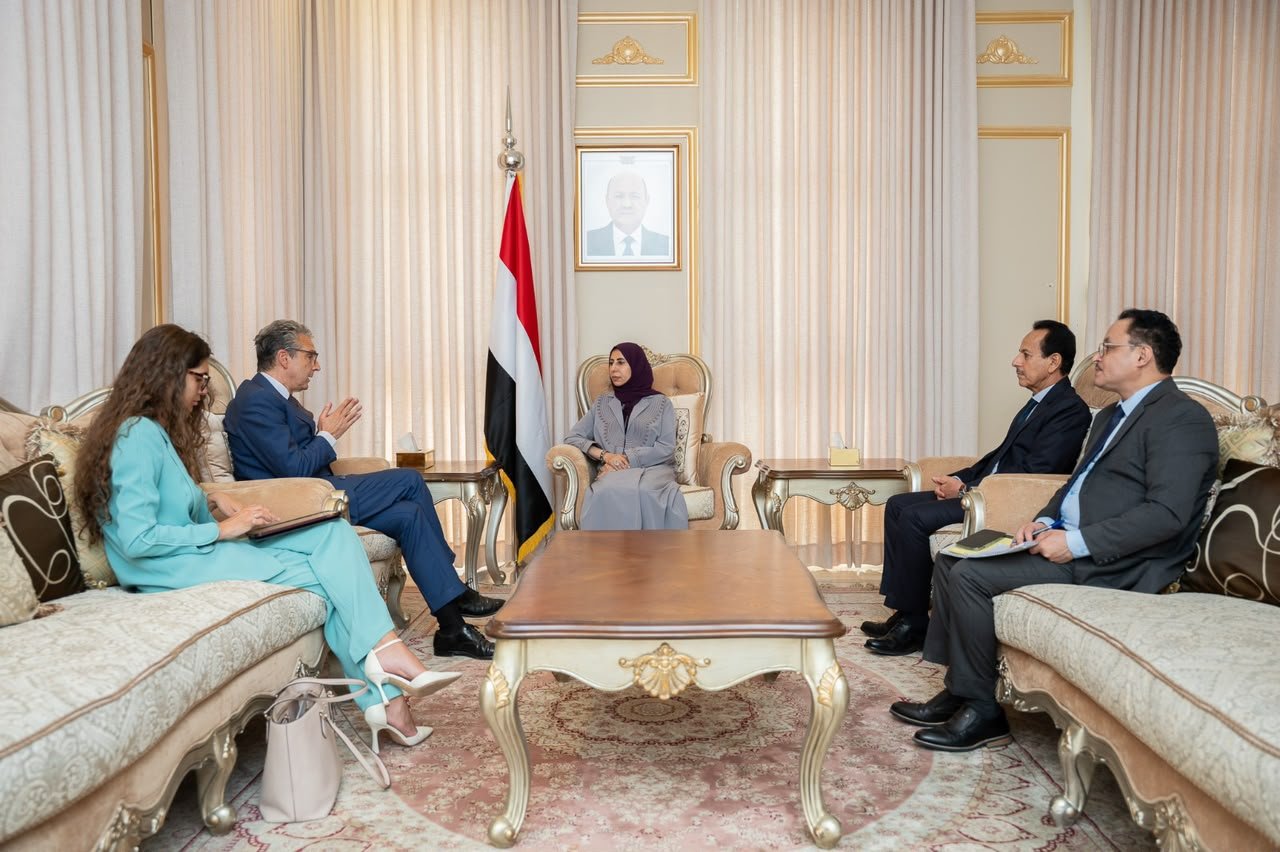
Italy’s non-resident ambassador to Yemen, Carlo Baldocci, has held talks with Yemen’s minister of foreign affairs and expatriates, Dr Afrah al-Zouba, in a meeting the two sides used to mark a century of diplomatic relations between Rome and Sanaa. The Yemeni state news agency Saba reported that the discussion ranged across the historical relationship and a series of practical areas where the two governments believe cooperation can be revived.
During the meeting, Baldocci presented al-Zouba with a copy of One Hundred Years of Italian-Yemeni Relations, a volume that documents the milestones of the partnership since the two countries first established formal ties. According to the account carried by Saba, the officials went on to review cooperation in capacity building and the training of diplomatic personnel, the protection of cultural heritage, environmental management, the running of Yemen’s ports, and the agriculture and fisheries sectors.
The centenary has been a recurring theme in Italian statements about Yemen this year. Italy’s deputy foreign minister, Edmondo Cirielli, said in June that Italy was the first country to recognise Yemen’s independence, describing the century since as the foundation of a lasting bond. Cirielli made the remarks at the closing ceremony of a two-week training programme for young Yemeni diplomats held in Turin and Rome, organised by the Italian foreign ministry together with the International Training Centre of the International Labour Organisation.
That programme helps explain why diplomatic training featured on the agenda of the Baldocci meeting. Yemen’s foreign service has operated under severe strain since the government relocated from Sanaa, and a generation of junior diplomats has entered the profession with limited access to conventional institutional training. Building that capacity has become one of the more concrete forms of assistance European partners can offer a government whose resources are stretched.
Baldocci’s own posting reflects the constraints of working with Yemen. Italy appointed its ambassador in Riyadh to serve concurrently as envoy to Yemen in February 2025, a decision the Italian foreign ministry has presented as a step towards closer dialogue with the internationally recognised government. Like most foreign missions accredited to Yemen, the Italian embassy does not operate from Sanaa, which has been under Houthi control since 2014, and contact with Yemeni ministers generally takes place in Aden, Riyadh or on the margins of international meetings.
For al-Zouba, the meeting comes only days into a tenure that has drawn considerable attention. She was appointed foreign minister on 23 July 2026 as part of a cabinet reshuffle, becoming the first woman to hold the post in Yemen’s history. Her appointment was widely reported across the region as a notable departure for a government whose senior ranks have been almost entirely male.
Originally from al-Bayda in central Yemen, al-Zouba holds a pharmacy degree from Sanaa University alongside qualifications in business administration and health economics. Her career of more than two decades has moved between development work and government service. She came to national prominence after the 2011 uprising as the first deputy secretary-general of the National Dialogue Conference, the transitional body charged with steering Yemen away from the rule of Ali Abdullah Saleh and drafting a new constitution. In 2019 she advised then prime minister Maeen Abdulmalik on humanitarian relief and development, and in February 2026 she was named minister of planning and international cooperation before moving to the foreign ministry five months later.
That background gives particular weight to several items on the agenda with Baldocci. Cultural heritage is among the most pressing. Three of Yemen’s UNESCO World Heritage sites, the Old City of Sanaa, the walled city of Shibam in Hadramawt and the historic town of Zabid, are on the organisation’s List of World Heritage in Danger, threatened by conflict damage, flooding and the collapse of routine maintenance. Italy, which maintains one of the world’s largest heritage conservation programmes, has long-standing archaeological ties to Yemen dating back to excavations conducted before the war.
Port management carries a different kind of significance. Yemen’s western coastline sits alongside the Bab al-Mandab strait, one of the busiest maritime corridors in the world and a route that has seen sustained disruption to commercial traffic in recent years. The country’s ports handle the bulk of its imports, including most of its food and fuel, which makes their functioning a humanitarian question as much as a commercial one.
The humanitarian backdrop remains severe. The United Nations Office for the Coordination of Humanitarian Affairs estimated in its 2026 response plan that more than 22 million people in Yemen require humanitarian assistance and protection, including some 5.2 million internally displaced people. The plan sought $2.16 billion to deliver that assistance, but had received only a small fraction of the total by the middle of the year, forcing agencies to narrow the number of people they aim to reach.
No specific agreements or funding commitments were announced following the meeting, and the Saba report described the discussion in general terms. What the encounter does signal is that Rome intends to keep the centenary from being a purely ceremonial occasion, and that Yemen’s new foreign minister is moving quickly to establish contact with the European governments that fund a substantial share of the country’s aid programme.
About the Author