Yemeni armed forces launch multi-front operation against Houthi positions
 Yemen Herald News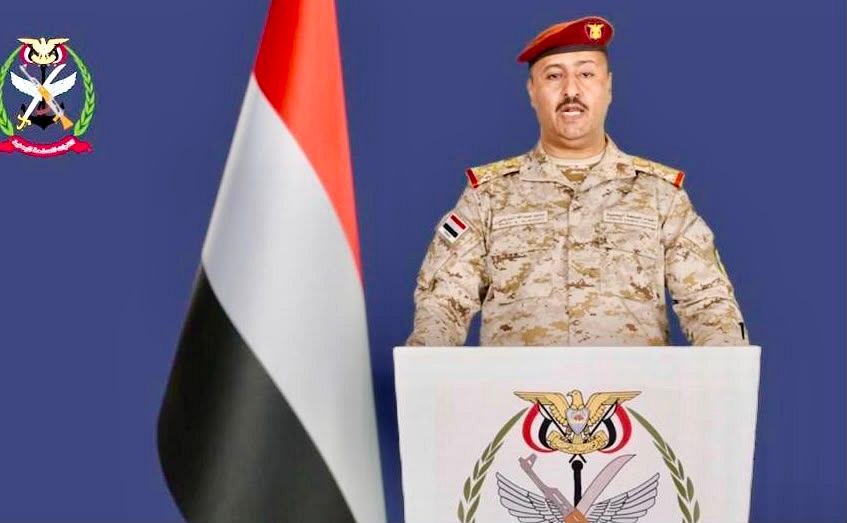
Yemen’s armed forces said on Saturday that they had begun a broad military operation against Houthi positions along several front lines, describing it as a response to a week of attacks by the group on army units in Marib and Hadramout that left dozens of soldiers dead.
Colonel Majed al-Nuzaili, the spokesman for the armed forces, said the operation was being carried out along contact lines on multiple fronts and axes, and that it targeted Houthi personnel and military equipment. He framed it as an exercise of the forces’ right to defend their own positions and to protect civilians from repeated attacks, using the language the government applies to the group it describes as a terrorist militia.
Al-Nuzaili said the operation demonstrated unified command and control across formations that have often operated with considerable independence, and he set out a principle the government has been pressing for some time: that an attack on one front is to be treated as an attack on all of them. He held the Houthis and those supporting them responsible for the escalation.
That emphasis on unified command reflects a long-running structural problem rather than a rhetorical flourish. The forces ranged against the Houthis include the regular army, the National Resistance on the Red Sea coast, southern formations, and tribal and provincial units, each with its own chain of command, funding and regional priorities. Coordinating them across the several hundred kilometres separating Marib from Hadramout has historically been one of the government’s weakest points, and the Houthis have exploited the seams between them.
The immediate trigger was a series of missile and drone strikes earlier in the week. Yemen’s defence ministry said Houthi forces had hit camps and units deployed in Marib and Hadramout provinces, and news reports put the toll at more than 30 government soldiers killed and around 15 wounded. The Houthis said they had targeted military deployments in those areas. Neither side’s account has been independently verified, and casualty claims in Yemen are frequently disputed.
Rashad al-Alimi, who chairs the Presidential Leadership Council, convened an emergency session of the National Defence Council on Friday in response to the same attacks. That meeting approved directives raising military readiness, strengthening civil protection near the front lines, and tightening coordination between military, security and intelligence agencies. The council also decided to remain in permanent session.
Marib has been the government’s principal stronghold in northern Yemen and the focus of the war’s heaviest fighting. The governorate holds the country’s main onshore oil and gas infrastructure, including facilities that once supplied the bulk of Yemen’s domestic energy, and it has absorbed a very large displaced population from areas under Houthi control. Attacks there carry consequences well beyond the military balance.
Hadramout presents a different picture. Yemen’s largest governorate by area, it stretches from the eastern desert to a long stretch of the Arabian Sea coast and has been comparatively insulated from the main front lines. Strikes on units stationed there suggest a widening of the campaign into territory that had been relatively quiet, and they touch a governorate where questions of local control and the distribution of oil revenue have been politically sensitive for years.
The government’s capacity to sustain a multi-front operation is uncertain. Its forces have faced persistent shortages of ammunition, spare parts and pay, and salary arrears have periodically prompted units to withdraw from positions. Air support depends on partners rather than on an air force the government itself operates at scale. Announcements of broad operations have been made before without producing lasting territorial change.
The Houthis, who control Sanaa and most of Yemen’s densely populated north-west, have spent the past several years developing missile and drone capabilities that outrange most of what the government fields. That asymmetry has shaped the pattern of the war: government forces can hold ground and mount local advances, while the Houthis can strike camps, installations and infrastructure at depth without moving front lines.
The escalation on land has coincided with renewed activity at sea. On Friday evening, naval patrols of the National Resistance destroyed an explosive-laden boat as it approached an oil tanker berthed at al-Mokha Port on the Red Sea, an attempt the government attributed to the Houthis. The Ministry of Transport said the incident endangered maritime safety, port installations and the marine environment.
The humanitarian situation frames all of it. United Nations agencies estimate that more than 18 million people in Yemen need assistance and that roughly four and a half million remain displaced. Cholera and measles have returned repeatedly in areas where water systems and health facilities have been damaged, and aid agencies have reported funding shortfalls forcing cuts to food distributions. Fighting that moves front lines even slightly tends to displace people again and interrupt the delivery of relief.
There is no active negotiating track between the two sides. The truce the United Nations brokered in 2022 has long since lapsed as a formal arrangement, and subsequent efforts have not produced a durable framework. For now the exchange is military: attacks answered by counter-operations, with each side describing its actions as a response to the other’s.
What the operation achieves will become clearer over the coming days. The armed forces have not specified which fronts are involved or what objectives they have set, and independent reporting from the areas concerned is limited.
About the Author