Yemen’s Water Minister and UNOPS Country Manager Review Joint Projects in Aden
 Yemen Herald News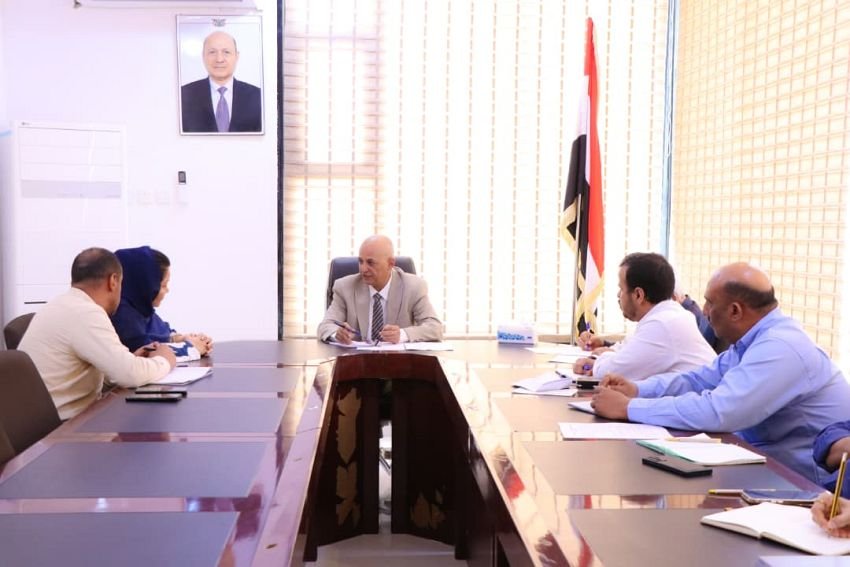
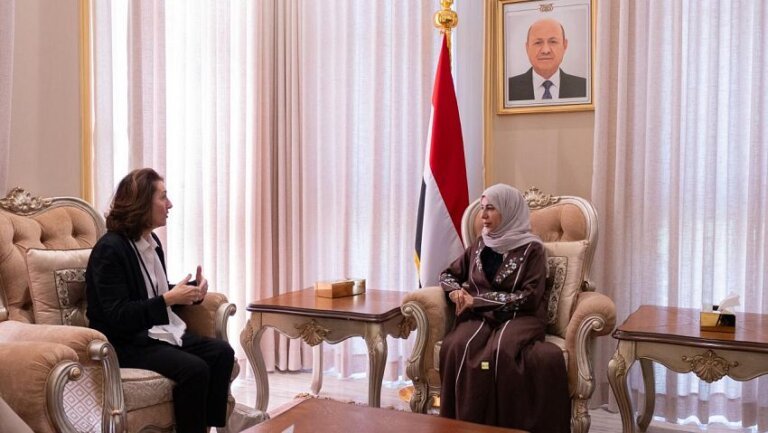
Yemen’s Minister of Water and Environment, Tawfiq al-Sharjabi, met in Aden with Rehana Zawar, who heads the United Nations Office for Project Services in Yemen, for a review of the water and sanitation projects the agency is implementing across several governorates. The two went through which schemes have been completed, which remain under construction, and what it would take to move the slower ones forward.
According to the official readout of the meeting, both sides judged that the finished projects had broadly delivered the results expected of them, improving access to drinking water and to basic sanitation in the districts where they were built. That assessment carries weight in a country where infrastructure damaged or left unmaintained through more than a decade of conflict has stripped utilities of the capacity to supply reliable service to large parts of the population.
The review did not gloss over the problems. Al-Sharjabi and Zawar acknowledged that several projects had run behind schedule, a recurring feature of construction work in Yemen, where contractors contend with fuel shortages, currency instability, restricted movement between areas held by different authorities and, in some governorates, insecurity. Both said the delays had not compromised the quality of the work eventually delivered.
The minister described UNOPS as one of the ministry’s principal partners in managing development projects in the water and environment sectors, and said the government wanted to widen that cooperation, giving priority to schemes that answer demand from the communities with the least reliable service.
Zawar, who took over as UNOPS country manager for Yemen at the start of 2024, reaffirmed the agency’s commitment to the partnership and praised the coordination between the two institutions, which she said had allowed projects to proceed despite the operating conditions. She came to the post after more than two decades in programme management and humanitarian operations, including country director roles with the Norwegian Refugee Council and the International Rescue Committee and a regional brief covering Jordan, Syria and Lebanon for Caritas Switzerland, with earlier postings in Afghanistan, South Sudan and Pakistan.
Much of the discussion turned to money. Both sides agreed that the ministry needs to open new financing channels if it is to keep pace with demand, and Zawar pointed to climate finance as one avenue worth pursuing. Yemen’s water problem is not only a consequence of the war: the country is among the most water-scarce in the world, groundwater is being drawn faster than aquifers can recharge, and rainfall has grown more erratic, arriving in intense bursts that damage infrastructure rather than replenish supply.
Funds earmarked for climate adaptation and biodiversity have become an increasingly important source of capital for countries in Yemen’s position. Access to them, however, generally depends on institutional capacity, reliable monitoring data and financial safeguards that Yemeni public bodies have struggled to maintain through years of fragmentation and unpaid salaries.
The scale of the need is set out in the United Nations humanitarian plan for 2026, which estimates that more than 22 million Yemenis will require some form of humanitarian assistance this year, and that 14.4 million of them need water, sanitation and hygiene support specifically. The same planning documents record that more than 80 per cent of the population is not connected to a sewer network and that 39 per cent lack access to safe sanitation disposal.
Those failures feed directly into Yemen’s public-health emergencies. The country has recorded repeated cholera outbreaks since 2016, and health agencies have consistently traced transmission to contaminated water supplies and broken sewage systems. The risk compounds an already severe nutrition crisis: the 2026 plan estimates that more than 2.2 million children under five are acutely malnourished, a group for whom a waterborne infection is far more likely to prove fatal.
UNOPS is among the larger implementers of infrastructure work in Yemen, frequently acting as the delivery agent for projects financed by the World Bank and other donors. Its portfolio has included rehabilitating pumping stations, supplying equipment to local water corporations and repairing sewerage networks; earlier this year the agency delivered new equipment to strengthen water services in al-Mahrah under a World Bank-funded programme.
The Ministry of Water and Environment oversees both the country’s water corporations and its environmental protection mandate, a combined remit that has become harder to exercise as the state’s revenue base has contracted. Salaries, fuel for pumping stations and spare parts all compete for the same shrinking pool of funds, and local corporations have periodically warned that they cannot cover their running costs from tariffs alone.
Aden, where the meeting was held and where the internationally recognised government is seated, illustrates the pressure. Residents and local officials have repeatedly reported prolonged interruptions to the piped supply during the summer months, pushing households towards private tanker deliveries at prices many households cannot sustain.
The meeting fits a pattern of similar reviews the ministry has held in recent months with international partners, among them talks with the United Nations Development Programme on the water crisis in Taiz and with international relief organisations on sanitation resilience. Each follows the same logic: with almost no domestic capital budget available, keeping donor-funded programmes moving is the ministry’s main instrument of policy.
No new agreements or funding commitments were announced. The readout described the session as a review of existing work rather than the launch of anything new, and neither side gave a timetable for the projects still outstanding.
About the Author