Trump Rejects British Carrier Offer as Iran War Strains the US-UK Alliance
 Yemen Herald News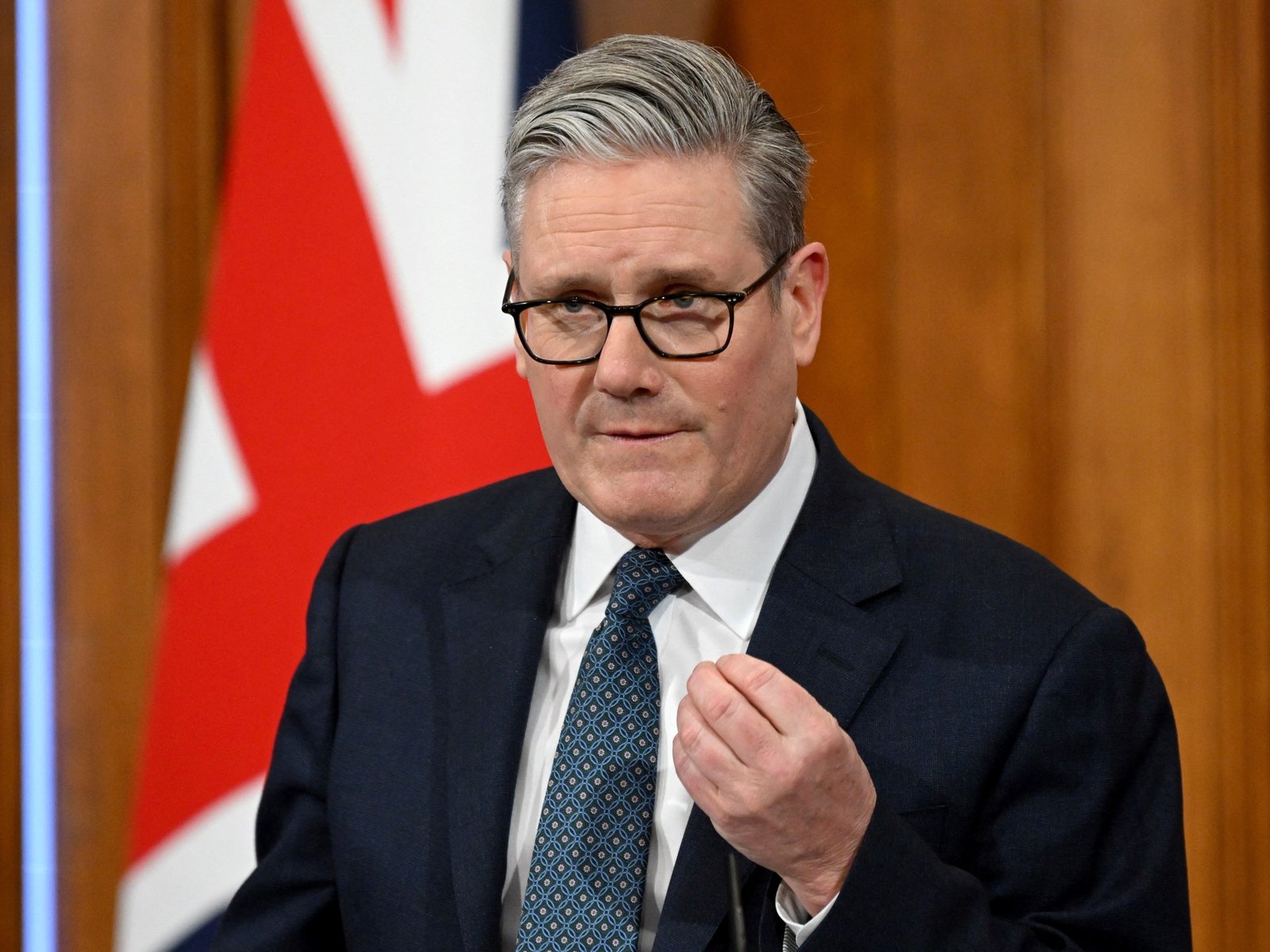
United States President Donald Trump used a social media post on 8 March 2026 to tell the United Kingdom that its aircraft carriers were no longer wanted in the Middle East, a rebuff that laid bare how far relations between Washington and London had deteriorated in the opening fortnight of the American and Israeli war on Iran.
Writing on Truth Social, Trump said the United Kingdom, which he called a once great ally, was at last giving serious thought to sending two carriers to the region. He added that Washington no longer needed them, that it would remember, and that it had no use for countries joining wars after the United States had already won them.
The post followed a statement from Britain’s Ministry of Defence that one of the Royal Navy’s two flagship carriers, HMS Prince of Wales, had been placed on high readiness. Reports at the time indicated the ship’s company had been told to be ready to put to sea within five days, a posture short of deployment but well above the vessel’s normal peacetime footing.
Downing Street said the following day that the two leaders had spoken by telephone. A spokesperson for the Prime Minister said they discussed the situation in the Middle East and military cooperation between the two countries through the use of Royal Air Force bases in support of the collective self-defence of partners in the region, and that Sir Keir Starmer had offered his condolences over the American service members killed in the conflict.
The war had begun on 28 February 2026, when the United States and Israel launched strikes on Iran. By 8 March, an estimated 1,332 people had been killed in Iran and the United States had confirmed the deaths of seven of its service members. Further deaths were reported in Lebanon, Kuwait, the United Arab Emirates and Iraq as Iranian retaliatory fire reached American allies across the region.
Britain’s formal position was that it was not a belligerent. The Ministry of Defence said on 7 March that the government had agreed to let American forces use British bases for what it described as limited defensive purposes, including RAF Fairford in Gloucestershire and the Diego Garcia facility in the Chagos Islands. Earlier reporting had suggested Starmer initially withheld that permission.
In the days immediately after the first strikes, Starmer joined the leaders of France and Germany in a statement stressing that any action they took would be defensive. The three said they would move to protect their own interests and those of allies in the region, potentially by enabling necessary and proportionate defensive action against Iran’s ability to fire missiles and drones, and that they had agreed to work with the United States and regional partners.
Addressing Parliament, Starmer said Britain was not joining the American and Israeli offensive strikes, citing the national interest and the protection of British lives. The distinction between defensive facilitation and offensive participation became the central line his government defended, and it satisfied neither the critics who wanted no British involvement nor those who argued the country should stand openly with Washington.
Public opinion offered him little cover. A Survation survey of 1,045 British adults conducted over the preceding week found 43 percent describing the war as not justifiable. Asked about Starmer’s initial refusal to let American forces use British bases, 56 percent approved and 27 percent said it had been the wrong call. Thousands of demonstrators gathered outside the United States embassy in London on 7 March to demand an end to the fighting.
The friction between the two leaders had been building for some time. On 3 March, hosting German Chancellor Friedrich Merz in the Oval Office, Trump said repeatedly that he was not happy with the United Kingdom, and remarked of Starmer that this was not Winston Churchill he was dealing with.
A longer-running grievance concerned the Chagos Islands. In 2024 the Starmer government agreed to transfer sovereignty over the archipelago to Mauritius, following an International Court of Justice finding that Britain had acted unlawfully in 1965 when it detached the islands from Mauritius to create a separate colony. The agreement preserved the joint British and American base on Diego Garcia, but Trump repeatedly attacked it, writing that giving away extremely important land was an act of great stupidity.
Relations had also soured in January 2026, when Trump told Fox News that NATO allies had stayed somewhat off the front lines during the American war in Afghanistan. Starmer called the remarks insulting and appalling, an unusually blunt public response from a British prime minister to an American president.
The exchange over the carriers fitted a wider pattern. Trump’s second administration has signalled a shift away from Washington’s traditional European partners towards governments it regards as more politically aligned.
The legality of the campaign against Iran was contested from the outset, and that question shaped the British debate directly. Ministers were understood to have been advised that facilitating offensive operations from British territory carried legal risk, which helps explain where the government drew its line.
Whether HMS Prince of Wales would ultimately sail was left unresolved. High readiness is a preparatory state, not an order to deploy, and the Ministry of Defence did not announce a destination. What the episode settled in public was that Britain’s offer of naval support had been dismissed rather than declined.
About the Author