Al-Subaihi Presses Ministers to Improve Public Services in Aden Meeting
 Yemen Herald News
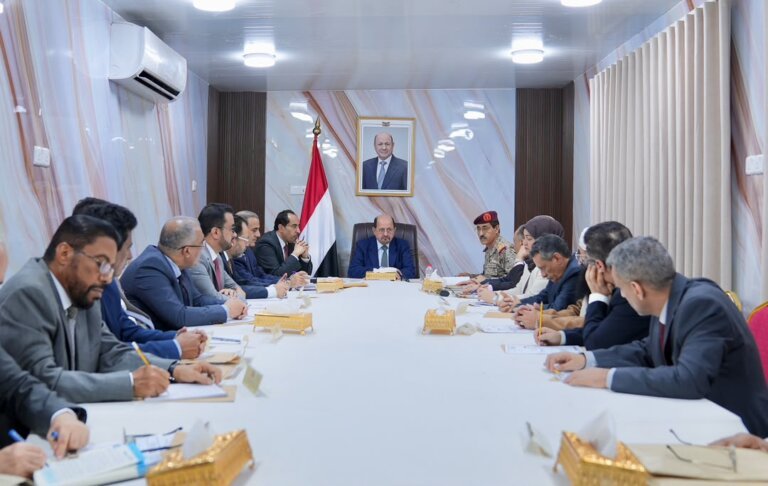
Yemen’s al-Subaihi has urged ministers to improve public services and to strengthen social and economic stability, in a meeting with several members of the government in Aden. Lieutenant General Mahmoud Salem al-Subaihi, a member of the Presidential Leadership Council, convened the session on Thursday with officials from the ministries of Agriculture, Education, Public Works, Local Administration, and Planning and International Cooperation.
During the meeting, described as the second of its kind, al-Subaihi reviewed the ongoing work and conditions within the ministries, emphasising the necessity of enhancing their performance in order to strengthen public services and to promote social and economic stability. The gathering reflected an effort to coordinate across ministries and to press for improvements in their functioning.
He underscored the critical role of agriculture and fisheries in achieving self-sufficiency, advocating support for farmers, the development of irrigation systems and the preservation of marine resources to bolster food security. In a country heavily dependent on imported food, strengthening domestic production is regarded as important both to food security and to the broader economy.
Al-Subaihi also called on the Ministry of Education to focus on improving educational processes and outcomes, highlighting the importance of curricula and of the quality of education. Education has been severely affected by the conflict, and efforts to sustain and improve it are seen as essential to safeguarding the prospects of the country’s young people.
The involvement of multiple ministries in the meeting reflects the interconnected nature of the challenges facing the government. Public services, food security, education and infrastructure are bound together, and coordinating the efforts of different ministries is important to addressing them effectively and to advancing the government’s broader agenda.
The emphasis on enhancing the performance of ministries speaks to a central concern of the government. Years of conflict have strained the institutions of the state, and improving their effectiveness is essential to the delivery of services and to the functioning of government, making the performance of ministries a priority for the leadership.
Strengthening public services, a goal highlighted in the meeting, addresses one of the most tangible concerns of citizens. Services such as water, electricity, health and education are among the most immediate measures of governance, and improving their delivery is central to relieving hardship and to demonstrating the government’s capacity to serve the population.
The focus on agriculture and fisheries reflects their importance to food security and livelihoods. Support for farmers, the development of irrigation and the preservation of marine resources can contribute to increasing domestic production and to sustaining the livelihoods of those who depend on these sectors, addressing needs that are both economic and humanitarian.
The development of irrigation systems, advocated by al-Subaihi, is particularly significant in a water-scarce country such as Yemen. Efficient irrigation can help make the most of limited water resources while supporting agricultural production, addressing the intersection of water management and food security that is central to the country’s challenges.
The preservation of marine resources, another concern raised, points to the potential of Yemen’s fisheries. With a long coastline, the country possesses significant fisheries resources, and their sustainable management could contribute to food security, employment and exports, complementing efforts to strengthen land-based agriculture.
The attention to education reflects an awareness of its importance to the country’s future. Improving educational processes and outcomes is essential to preparing the country’s young people for the future and to supporting recovery, and the emphasis on curricula points to a concern with the quality and relevance of what is taught.
Promoting social and economic stability, an overarching goal of the meeting, reflects the government’s broader objectives. Stability is a prerequisite for recovery and for the wellbeing of citizens, and efforts to strengthen services, food security and education contribute to it by meeting needs and reducing the hardships that can fuel instability.
The coordination role played by a Presidential Leadership Council member reflects the engagement of senior leadership in overseeing and pressing for improvements in the work of the government. Such engagement can help mobilise attention and effort and lend weight to the pursuit of the government’s priorities across the ministries.
Translating the priorities emphasised in the meeting into tangible improvements will require sustained effort, resources and effective implementation. Enhancing the performance of ministries and strengthening services are demanding undertakings, particularly amid the constraints of conflict, and progress will depend on the capacity and commitment of the institutions involved.
The description of the gathering as a second meeting suggested an attempt to institute a more regular process of oversight, in which senior leadership periodically reviews the work of ministries and holds them to account for progress. Such mechanisms, if sustained, can help translate broad priorities into concrete follow-up, ensuring that commitments made in one session are revisited and measured in the next. In a government whose effectiveness has been questioned amid the strains of conflict and the competing pressures within the anti-Houthi camp, the establishment of routines of coordination and review carries its own significance, offering a means of imposing a measure of coherence and continuity on the day-to-day business of governance across a fractured administrative landscape.
For now, the meeting reflected the government’s focus on improving the performance of its ministries and on strengthening services, food security and education. As Yemen works to address its challenges and advance recovery, coordination and pressure for improvement across the government remain important elements of the effort to serve citizens and promote stability.
About the Author