Yemen’s Health Minister and UNOPS Review Sixth Phase of KfW-Funded Health Projects
 Yemen Herald News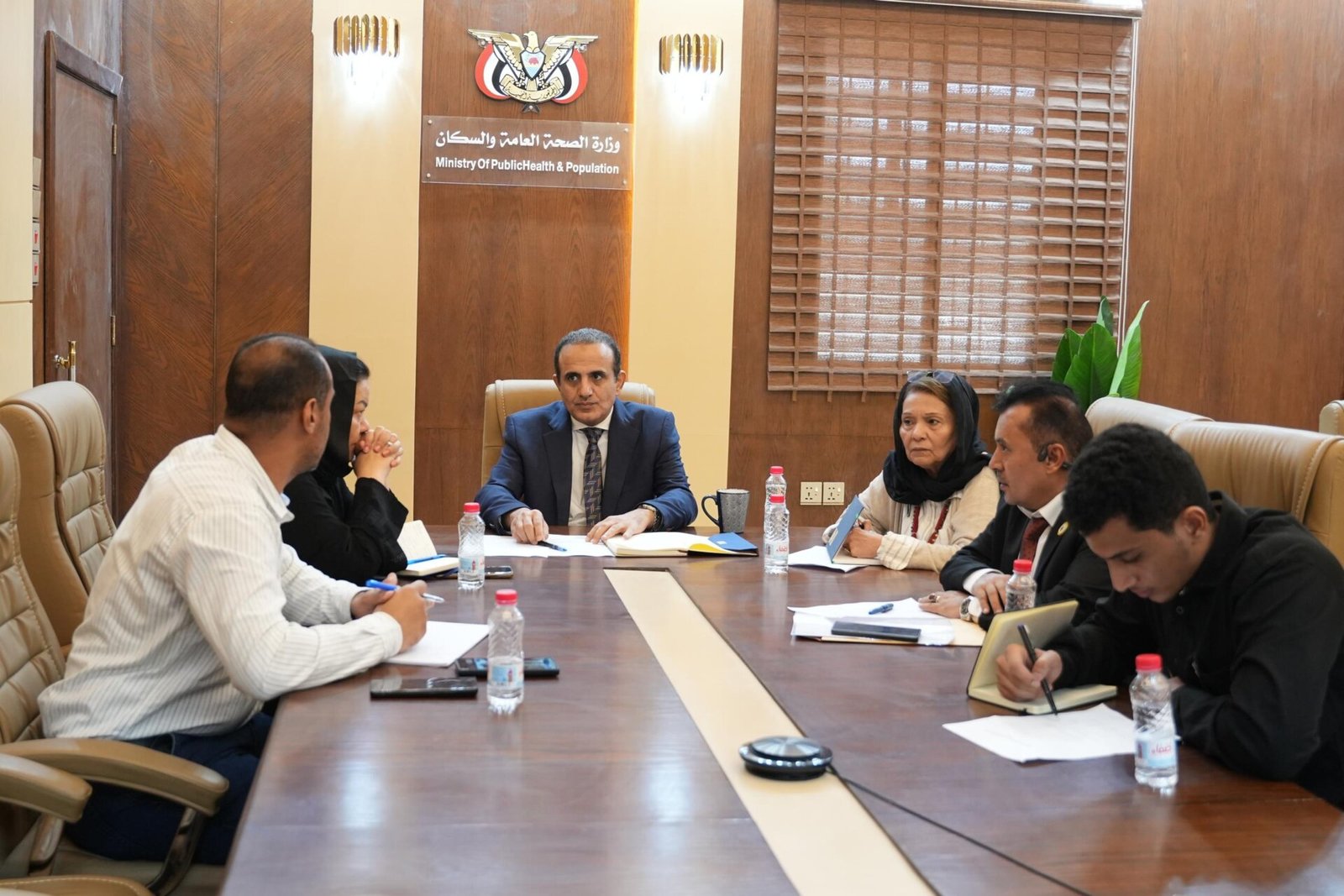
Yemen’s Minister of Public Health and Population, Dr. Qasim Buhaib, held a video conference on Wednesday with Dr. Khaldoun Salem, a project adviser at the United Nations Office for Project Services (UNOPS), to review international support for the country’s health sector, agree upcoming priorities and discuss the sixth phase of health projects financed by the German development bank KfW. The state news agency Saba, reporting from Aden, said the two sides went over the interventions already under way and the work still to come.
Buhaib used the call to press for closer coordination between the ministry and UNOPS, arguing that outside support should be directed at the needs the ministry itself has identified as urgent rather than spread thinly across competing priorities. According to Saba, he asked that interventions focus on improving the quality of health services, strengthening the readiness of facilities and building up emergency response capacity. He also said projects should be designed to deliver lasting benefits rather than short-term relief, a point ministry officials have made repeatedly as donor budgets tighten.
UNOPS officials, for their part, reaffirmed their commitment to continued coordination with the ministry and to implementing health interventions in line with the priorities and needs the two sides have agreed, Saba reported. The agency did not publish a separate account of the meeting.
The KfW-funded programme is one of the larger and longer-running lines of support for health infrastructure in government-held Yemen. Under the project titled “Strengthening resilience through enhancing health service facilities in Yemen”, implemented by UNOPS with financing from the German government through KfW, the agency has been rehabilitating and constructing health facilities, installing isolation units and procuring medical equipment. UNOPS has said the work covers 18 health facilities and 17 isolation units, along with the procurement of more than 12,000 pieces of equipment.
The programme has been rolled out in stages. UNOPS previously signed additional agreements with KfW worth about $10.6 million to extend the fourth phase, funding four therapeutic feeding centres, the rehabilitation of health facilities and a laboratory, the supply of essential equipment and furniture, and training for health staff. Wednesday’s discussion of a sixth phase follows repeated ministry calls for the next tranche to be confirmed and begun.
In April, Saba reported that Buhaib met a UNOPS team in Aden to review the distribution and quality of interventions under the fourth and fifth phases and to look ahead to the sixth. At that meeting the minister described UNOPS as a key partner in health infrastructure and urged that the sixth phase be completed, saying it mattered for the operational readiness of hospitals and clinics. UNOPS regional director Mohammed Othman set out the organisation’s work across several governorates, including infrastructure rehabilitation, equipment supply and support for keeping services running in targeted facilities.
That April meeting also highlighted a theme that has become central to health planning in Yemen: electricity. Buhaib has argued that solar power for health facilities is a strategic solution rather than a stopgap, given prolonged outages and the rising cost of running generators. Reliable power keeps emergency and intensive care units working and maintains the cold chain that vaccines and many medicines depend on. Earlier this month Saba reported that Yemen had received solar-powered equipment intended to strengthen its immunisation programme.
The scale of the task is set out in the 2026 Yemen Humanitarian Needs and Response Plan, launched by the United Nations and its humanitarian partners on 18 March. It estimates that 22.3 million people — more than two-thirds of the population — need humanitarian assistance and protection services this year, among them 5.2 million people displaced inside the country. The plan seeks $2.16 billion to deliver that response.
Health services have absorbed much of the damage of more than a decade of conflict. According to the response plan, close to 40 per cent of health facilities are only partially functional or not functioning at all, leaving millions without dependable access to routine or emergency care. Alongside that, 18.3 million people are acutely food insecure and 14.4 million need water and sanitation assistance — needs that feed back into the health system through malnutrition and waterborne disease.
That is the context in which infrastructure projects of the kind UNOPS runs are judged. Rebuilding a hospital wing, installing solar arrays or delivering laboratory equipment does not by itself resolve a funding shortfall or a staffing crisis, but it determines whether a facility can admit patients at all. Ministry officials have consistently framed the KfW phases in those terms, as investment in the physical capacity of the system rather than emergency relief that has to be renewed every year.
What Wednesday’s call did not settle is timing. Neither the ministry nor UNOPS has published a schedule for the sixth phase or a figure for its value, and Saba’s account of the meeting did not give one. Humanitarian financing for Yemen has tightened over the past two years and appeals have repeatedly closed well short of their targets, which makes committed multi-year funding from a bilateral donor more significant than the sums alone would suggest.
For now the ministry’s position is the one Buhaib restated on the call: that support should follow the priorities the ministry has set, that facilities should be equipped to handle emergencies as well as routine care, and that what is built should still be standing and working when the funding ends.
About the Author