Yemen’s Ambassador to Japan Thanks Tokyo for Support and Warns Over Red Sea Shipping Attacks
 Yemen Herald News
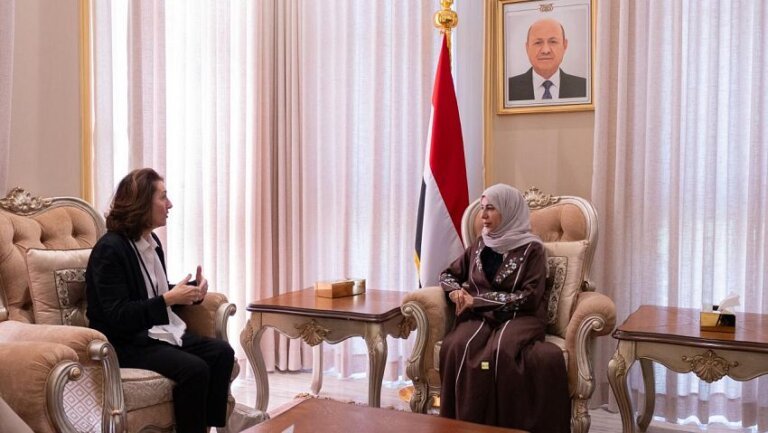
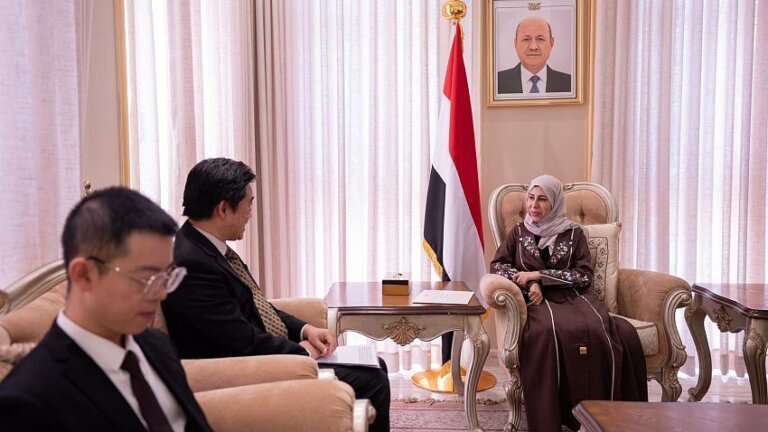
Yemen’s Ambassador to Japan, Adel al-Sunaini, has thanked Tokyo for its continued support for his country’s unity, sovereignty and territorial integrity during talks at Japan’s Ministry of Foreign Affairs. The meeting, held in Tokyo on Thursday, focused on the accelerating crises inside Yemen and across the wider region, and in particular on the threat the Yemeni government says is posed by the Houthi movement, which it describes as backed by Iran.
According to the Yemeni embassy’s account of the talks, al-Sunaini told his Japanese hosts that Japanese assistance matters not only to the internationally recognised government but to ordinary Yemenis living through one of the world’s largest humanitarian emergencies. He set out the government’s reading of recent political, economic and security developments, and pressed for sustained international engagement rather than short-term relief alone.
The scale of need in Yemen has grown rather than eased. The United Nations Office for the Coordination of Humanitarian Affairs estimates that 22.3 million people, more than two-thirds of the population, will require humanitarian assistance or protection services during 2026. That figure includes 5.2 million internally displaced people, alongside migrants and refugees who have continued to arrive in Yemen despite the conflict. Acute food insecurity affects an estimated 18.3 million people.
Health and nutrition indicators are similarly stark. OCHA reports that more than 2.2 million children under five are acutely malnourished, of whom more than half a million suffer from severe acute malnutrition. Close to 40 per cent of health facilities are only partially functional or not functioning at all, and 14.4 million people need water, sanitation and hygiene support. The United Nations and its partners have appealed for 2.16 billion dollars to reach 12 million people during 2026.
Against that backdrop, the ambassador framed his appeal to Japan less as a request for emergency relief than as an argument for a durable partnership. Yemeni officials have argued consistently over the past year that humanitarian spending alone cannot stabilise the country, and that donors should also fund the institutions, salaries and basic services that allow the state to function. Japan has been among the donors that Yemeni diplomats cite approvingly in that context.
A substantial part of the Tokyo discussion turned to maritime security. Al-Sunaini and his Japanese interlocutors reviewed the implications of Houthi attacks on shipping in the Red Sea and the Bab al-Mandab Strait, waterways through which a significant share of global trade and energy cargo passes. Repeated strikes on merchant vessels since late 2023 have pushed many operators to route ships around the Cape of Good Hope instead, adding time and cost to voyages between Asia and Europe.
That shift matters directly to Japan. As a resource-poor island economy dependent on seaborne imports of energy and raw materials, Japan has a concrete interest in the security of the routes that connect the Gulf and the Indian Ocean to the Mediterranean. Japanese shipping interests were drawn into the crisis early: the vehicle carrier Galaxy Leader, operated by a Japanese company, was seized by Houthi forces in the Red Sea in November 2023 and its crew held for more than a year before being released.
Yemeni diplomats have used meetings of this kind to press two related arguments. The first is that attacks on shipping are not a self-contained maritime problem but an extension of the war on land, and that the flow of weapons and components into Houthi hands is what makes them possible. The second is that international partners should treat the movement as a designated terrorist organisation and place its leaders and financiers under sanctions. Yemen’s ambassadors in several European capitals have made the same case in recent months.
Those are the positions of the internationally recognised government, and they are contested. The Houthi authorities in Sanaa reject the characterisation of their operations as terrorism and present their maritime campaign as pressure connected to the war in Gaza. Iran denies directing the movement, though it acknowledges political sympathy with it. Independent verification of command relationships remains difficult, and reporting on the subject depends heavily on the claims of the parties involved.
Japan and Yemen have maintained diplomatic relations for decades, and Tokyo has continued to fund humanitarian programmes in the country through United Nations agencies even as its embassy operations have been curtailed by the security situation. Japanese contributions have supported food assistance, water and health projects, and mine-clearance work in areas returned to government control.
The ambassador is also reported to have briefed his hosts on economic measures taken by the government, including efforts to stabilise the currency and to bring public finances under tighter control. Yemen’s economy has been battered by the loss of oil exports, which stopped after attacks on southern export terminals, and by the division of the central bank between Aden and Sanaa. Restoring a functioning revenue base is central to the government’s argument that it can deliver services if given the fiscal room to do so.
No specific new commitments were announced following the meeting, and neither government published a joint statement. Exchanges of this kind form part of a steady pattern of Yemeni diplomatic activity in Asian capitals, aimed at keeping the conflict on the agenda of governments whose attention is drawn elsewhere. For Yemen, the argument to Tokyo is that the security of the sea lanes on which Japan depends and the stability of the country that overlooks them cannot be separated.
About the Author